Pure Film?

Quotes

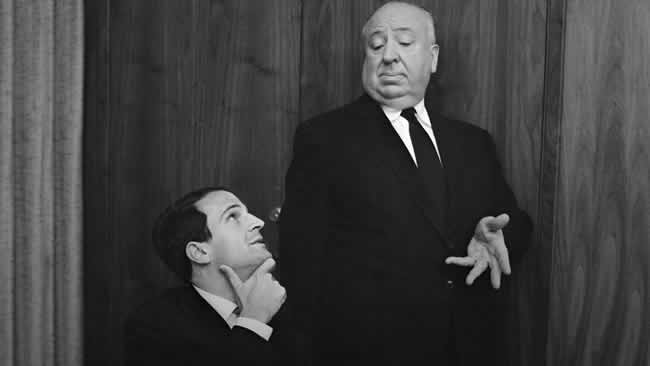
Françoise Truffaut: Would you say that Psycho [1960] is an experimental film?

Alfred Hitchcock: Possibly. My main satisfaction is that the film had an effect on the audiences, and I consider that very important. I don’t care about the subject matter; I don’t care about the acting; but I do care about the pieces of film and the photography and the sound track and all the technical ingredients that make the audience scream. I feel it’s tremendously satisfying for us to be able to use the cinematic art to achieve something of a mass emotion. And with Psycho we most definitely achieved this. It wasn’t a message that stirred the audiences, nor was it a great performance or their enjoyment of the novel. They were aroused by pure film.

— Alfred Hitchcock, interviewed in 1962 by Françoise Truffaut
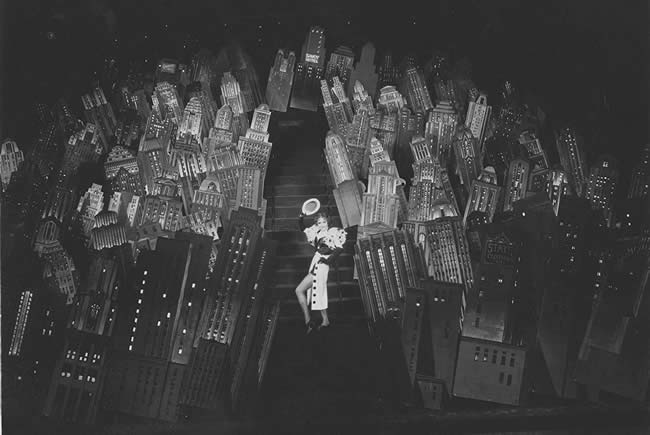
42nd Street

Quotes

Lorraine: You remember Anne Lowell?
Andy: Not Anytime Annie? Say, who could forget ‘er? She only said “No” once, and then she didn’t hear the question!

Ann: You know, it’s a shame your mother didn’t have any children!

Julian: Sawyer, you listen to me, and you listen hard. Two hundred people, two hundred jobs, two hundred thousand dollars, five weeks of grind and blood and sweat depend upon you. It’s the lives of all these people who’ve worked with you. You’ve got to go on, and you’ve got to give and give and give. They’ve got to like you. Got to. Do you understand? You can’t fall down. You can’t because your future’s in it, my future and everything all of us have is staked on you. All right, now I’m through, but you keep your feet on the ground and your head on those shoulders of yours and go out, and Sawyer, you’re going out a youngster but you’ve got to come back a star!

— Dialogue from 42nd Street (1933)

My Man Godfrey

Trivia

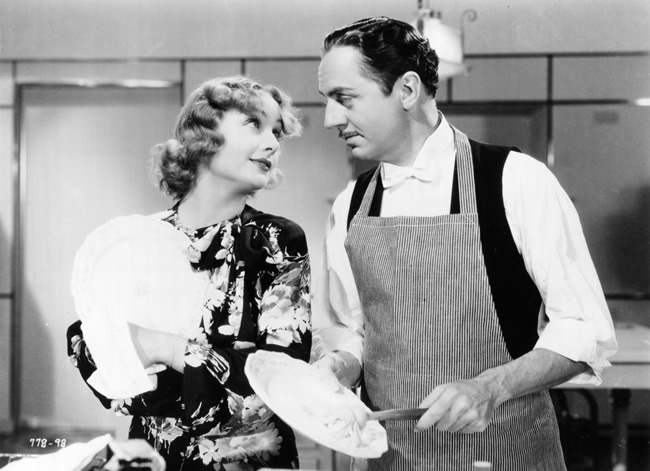
My Man Godfrey (1936) was the first film to be nominated for all four acting Oscars: Best Actor, Best Actress, Best Supporting Actor, and Best Supporting Actress. Coincidentally, it was the first year for the two supporting awards. My Man Godfrey was also nominated for the writing and directing Oscars.

To this day, it’s the only film to be nominated for all six awards and not be nominated for Best Picture. And to this day, it’s the only film to be nominated for all six awards and not win any of them.

Ford’s Monument Valley

Trivia
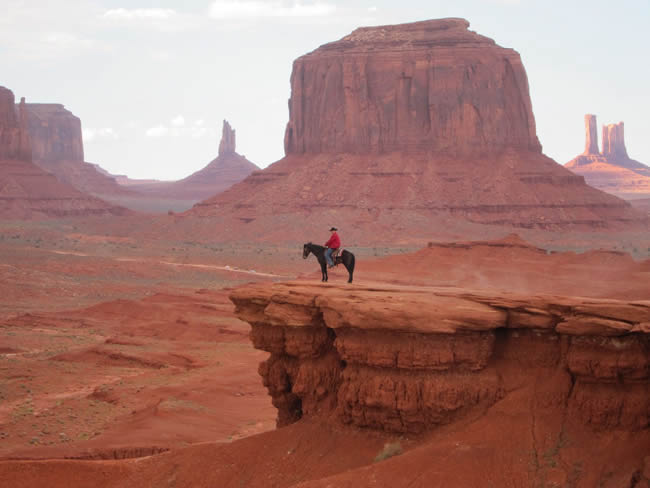
John Ford Point, Monument Valley, Utah

John Ford loved to shoot his westerns in Monument Valley, Utah. Those films include Stagecoach (1939), My Darling Clementine (1946), Fort Apache (1948), She Wore a Yellow Ribbon (1949), Wagon Master (1950), Rio Grande (1950), The Searchers (1956), Sergeant Rutledge (1960) and Cheyenne Autumn (1964).

So how did he discover this rugged and picturesque location? Here’s the story as explained by the Internet Movie Database:

“In 1939 there was no paved road through Monument Valley, hence the reason why it hadn’t been used as a movie location before (it wasn’t paved until the 1950s). Harry Goulding, who ran a trading post there, had heard that John Ford was planning a big-budget Western so he traveled to Hollywood, armed with over 100 photographs, and threatened to camp out on Ford’s doorstep until the director saw him. Ford saw him almost immediately and was instantly sold on the location, Particularly when he realized that its remoteness would free him of studio interference.”

Natural Interiors

Quotes

Greed [1924] was, up to that time, and perhaps even to now the only film in which there was not one set in a studio used. I had rented an old uninhabited house on Gower Street in San Francisco, furnished the rooms in the exact way in which the author had described them, and photographed there with only very few lamps, and the daylight which penetrated through the windows. Of course this was not to the cameraman’s liking, but I insisted — and we got some very good photographic results. In order to make the actors really feel the characters they were to portray I made them live in those rooms.”

— Erich von Stroheim, as quoted in Hollywood Scapegoat (1950)

Conrad Veidt

Trivia

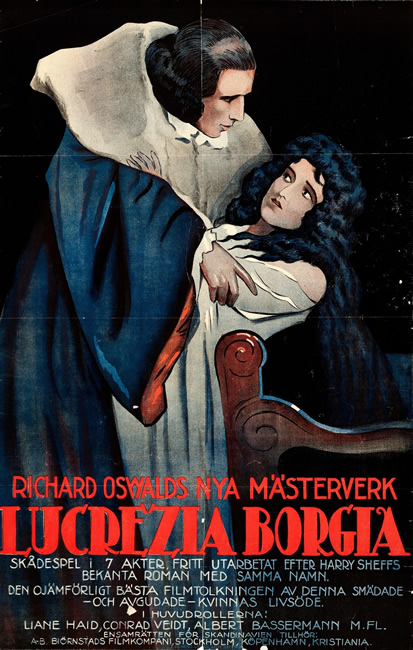
Poster for Lucrezia Borgia (1922)

This silent German film featured Conrad Veidt as Cesare Borgia. In an odd coincidence, he had famously played a character named Cesare just two years earlier in The Cabinet of Dr. Caligari (1920). His best part was probably the title role in The Man Who Laughs (1928), though he is best known for his portrayals of Jaffar in The Thief of Bagdad (1940) and Maj. Strasser in Casablanca (1942).

Goebbels’ Favorite Hitchcock

Trivia

In his article “The Strange Case of Alfred Hitchcock, Part Three,” Raymond Durgnat writes that “Dr. Goebbels loved watching Foreign Correspondent.” Goebbels predicted it would make “an impression upon wide broad masses in the enemy countries.” Hitchcock later speculated that a print was probably brought in through Switzerland. Was this a case of an evil manipulator recognizing the skills of a more benign manipulator?

Harpo Talks!

Trivia

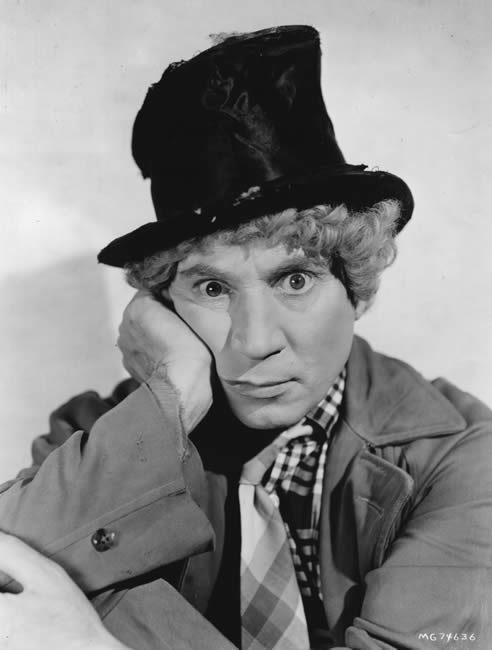
On November 28, 2000, a British radio program titled “The Birth of Screen Comedy” included something most people had never heard before — the voice of Harpo Marx. The program’s staff had found an old interview tape of Harpo explaining how he had once fallen off a piano stool and how that had prompted a doctor’s visit.

If you prefer to imagine Harpo as never having a voice, maybe you should skip this one. But if you’ve always wondered what Harpo might have sounded like, here is your chance. The link to stream or download the MP3 audio file is here.