Sparkle and Shine

Sparkle and Shine

Reviews

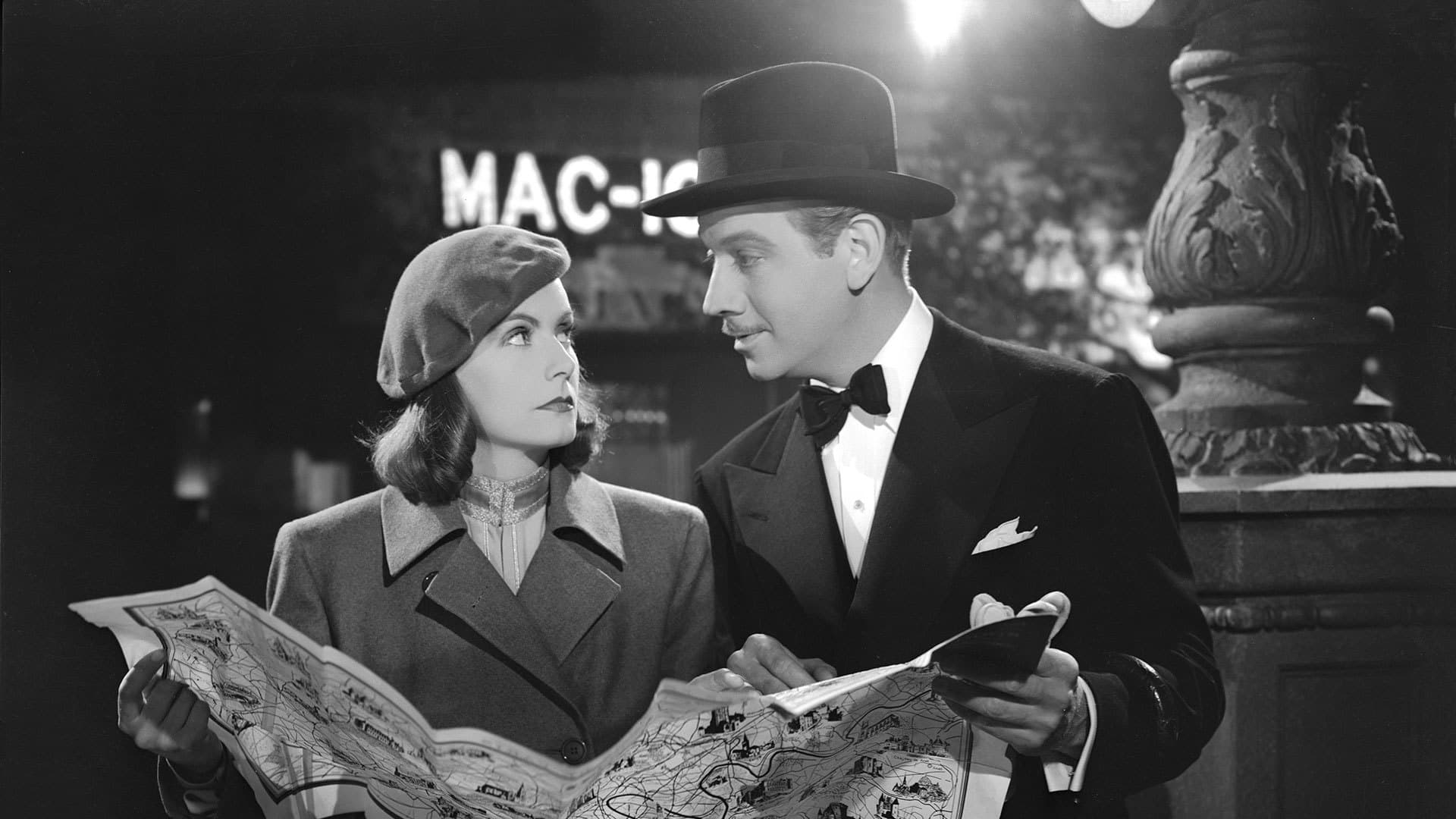
Nine decades after its release, how do we sort out the merits of a movie like Camille (1936)? Strictly in terms of Garbo’s performance, it may be her finest sound film. Yet with all her films (with the exception of Lubitsch’s atypical Ninotchka), there was always something that kept the whole from being better than the sum of the parts. In this case, the flaw is Robert Taylor. Granted, the part calls for an actor who can appear young and inexperienced, but that doesn’t mean the part should actually be played by a young and inexperienced actor.

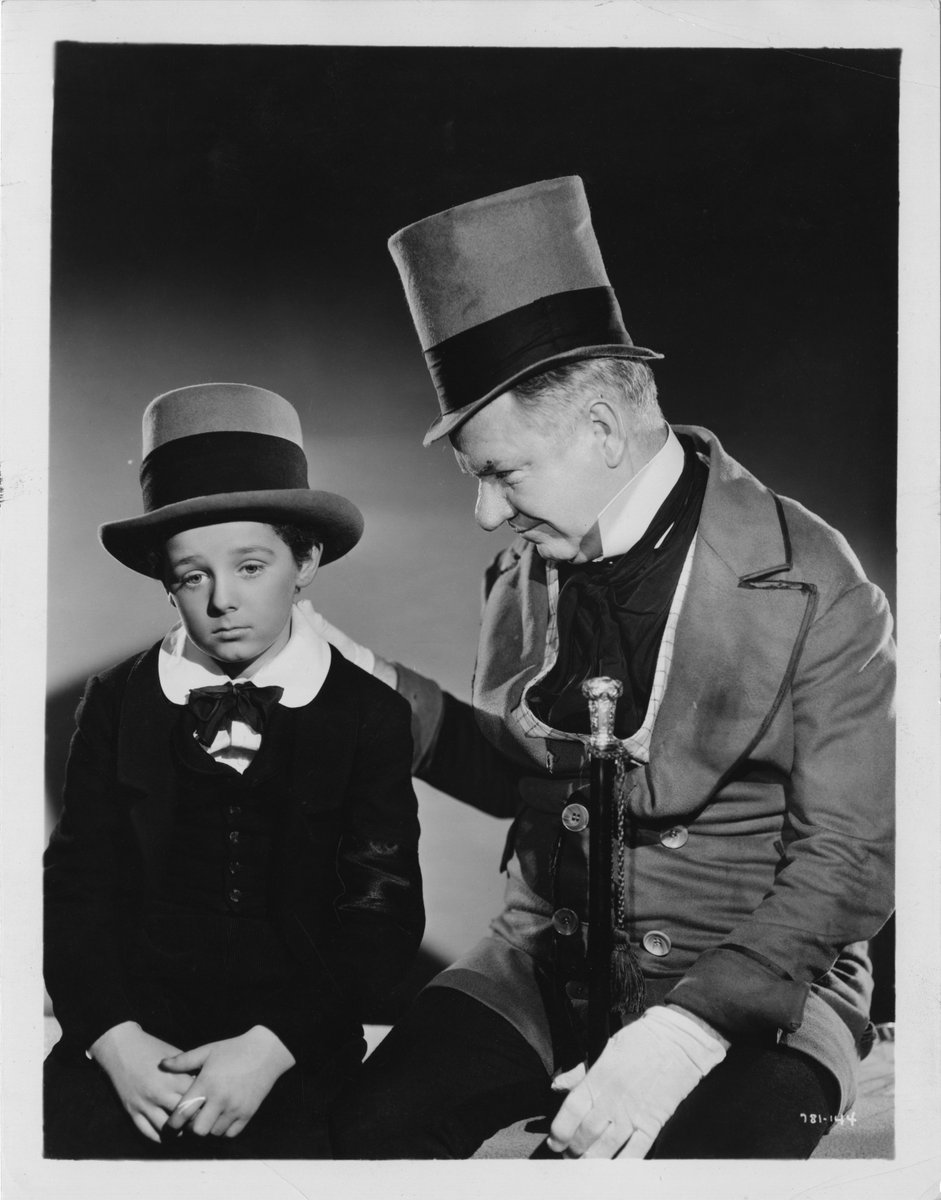
George Cukor, who Clark Gable is supposed to have ejected from Gone with the Wind (1939) because he was a “woman’s director,” was the ideal choice from the stable of MGM directors. His previous adaptations of Little Women (1933) and David Copperfield (1935) show a remarkable talent for transforming classic novels into flesh-and-blood movies with enough warmth and intelligence to balance out the overt sentimentality.

What makes Camille fascinating isn’t Cukor’s transformational directing style but Garbo’s transformational persona. Back in the 1970s, TV-host Dick Cavett would often ask his guests who knew Garbo in her prime, whether the magic was there when you encountered her in person. The answer was just as elusive as Garbo’s personality. Some said you did see the magic; others said it was reserved exclusively for the silver screen.

There is no other actor or actress who rises above the craft in the same way that Garbo does. She appears not to be acting, but simply to be truly alive. If you’ve never seen a Garbo film, this all may sound rather strange, but she was able to achieve something — whatever you might to call it — that actors and actresses are continually striving for. She was unable to sustain it for long, similar to how a jazz musician or athlete might be in the zone for a fleeting second or two. Camille has more than its share of these kinds of moments and is well worth watching just to see Garbo sparkle and shine.

Camille
(1936; directed by George Cukor)
Warner Archive Collection (Blu-ray)
Warner Home Video (DVD)

Thursday, May 28 at 2:00 p.m. eastern on Turner Classic Movies

Honor in Defeat

Honor in Defeat

Reviews

John Ford always seemed to pull for the little guy. And if he wasn’t pulling for the little guy, he was pulling for individuals who take setbacks with a stoic sense of honor and common decency, as well as a sense of humor and self-deprecation. The heroism and unselfishness of Dr. Mudd despite being wrongly accused in The Prisoner of Shark Island (1936), the sailors’ good will and comradeship despite their hard lives in The Long Voyage Home (1940), the optimism and practical wisdom of Mayor Skeffington despite the darkening political landscape in The Last Hurrah (1958), the gallantry and idealism of the confederate army despite their inevitable defeat in The Horse Soldiers (1959), and the dignity and patience of the Indians despite their gross mistreatment in Cheyenne Autumn (1964) — Ford often views human nature through the prism of the noble failure.

In a 1955 interview, writer Jean Mitry asked Ford if he deliberately chose stories that thrust a small group of people by chance into dramatic or tragic circumstances. Ford replied:

On purpose? It seems so to me. It enables me to make individuals aware of each other by bringing them face to face with something bigger than themselves. The situation, the tragic moment, forces men to reveal themselves, and to become aware of what they truly are. The device allows me to find the exceptional in the commonplace. I also like to find the humor in the midst of tragedy, for tragedy is never wholly tragic.

Another example of honor in defeat is Ford’s They Were Expendable (1945). It’s based on the true story of John Bulkeley, who helped develop the PT boat for naval combat in World War II. The backdrop is the attack on Pearl Harbor and the bravery of the American forces in what was their worst military defeat up until that time. Robert Montgomery plays Lt. John Brickley (changed from “Bulkeley” for the film), John Wayne plays Lt. Rusty Ryan (Brickley’s friend), and Donna Reed plays Lt. Sandy Davis (the love interest). As in all of Ford’s films, the characters are never lost in the sweep of history. The characterizations are strengthened through the accumulation of personal details — a subtle gesture, a casual look, or an act of kindness that forges a bond between two characters.

They Were Expendable is one of my favorite World War II films. Another is Air Force (1943), directed by Howard Hawks. Apart from having a similar plot (the attempt to recover militarily after an initial defeat in the Pacific), both films are top-notch character studies. They’re also seeped in the feel-good (even propagandistic) wartime ethos that urges us to set aside our differences and join together to overcome a common enemy.

Here’s an interesting bit of trivia. Ward Bond was injured in an automobile accident just before production began on this film. To explain the crutches Bond needed to move around, Ford added a scene in which Bond’s character is wounded.

They Were Expendable
(1945; directed by John Ford)
Warner Archive Collection (Blu-ray)
Warner Home Video (DVD)

Saturday, May 16 at 5:30 p.m. eastern on Turner Classic Movies

Better Than Kane?

Better Than Kane?

Reviews

Is Ambersons better than Kane? If you’re talking about the first part of the film, then the answer is yes. The problem with The Magnificent Ambersons (1942), which Orson Welles directed just a year after Citizen Kane, is it was re-edited and given a happier ending. In his book Orson Welles, Joseph McBride quotes Welles as saying:

About forty-five minutes were cut out — the whole heart of the picture really — for which the first part had been a preparation . . . The film has a silly ending . . . just ridiculous . . . It bears no relation to my script.

Welles didn’t exaggerate about the missing 45 minutes. At its sneak preview in the spring of 1942, the film ran 132 minutes. After a re-edit, second preview, second re-edit, and third preview, the studio released it at 88 minutes — on a double bill with a Lupe Velez film. Welles was filming in South America at the time, presumably unaware of the extent of the changes. Almost all of the last part of the film was scrapped, a new ending was shot, and some earlier scenes were trimmed, including what had been a long and intricately conceived dolly-shot of the party at the mansion.

Compared with Kane, Ambersons has a more seamless visual and narrative flow. Speaking of Ambersons’ fluid style, Françoise Truffaut wrote, “This film was made in violent contrast to Citizen Kane, almost as if by another filmmaker who detested the first and wanted to give him a lesson in modesty.” The two films do have a lot in common including deep-focus photography, overlapping dialogue, and a tightly integrated musical score by Bernard Herrmann.

In its present form, The Magnificent Ambersons is a flawed masterpiece. Up until the last few minutes, it holds up well. The ending is abrupt and inconsistent with the rest of the story, but on the whole, Ambersons is a very satisfying film. Look for the sleigh ride scene, which is an unparalleled mix of dialogue, movement, and music. It may be the finest piece of nostalgic fictional film ever recorded.

The Magnificent Ambersons
(1942; directed by Orson Welles)
The Criterion Collection (Blu-ray and DVD)

Sunday, May 10 at 8:00 a.m. eastern on Turner Classic Movies

Once Upon a Time

Once Upon a Time

Reviews

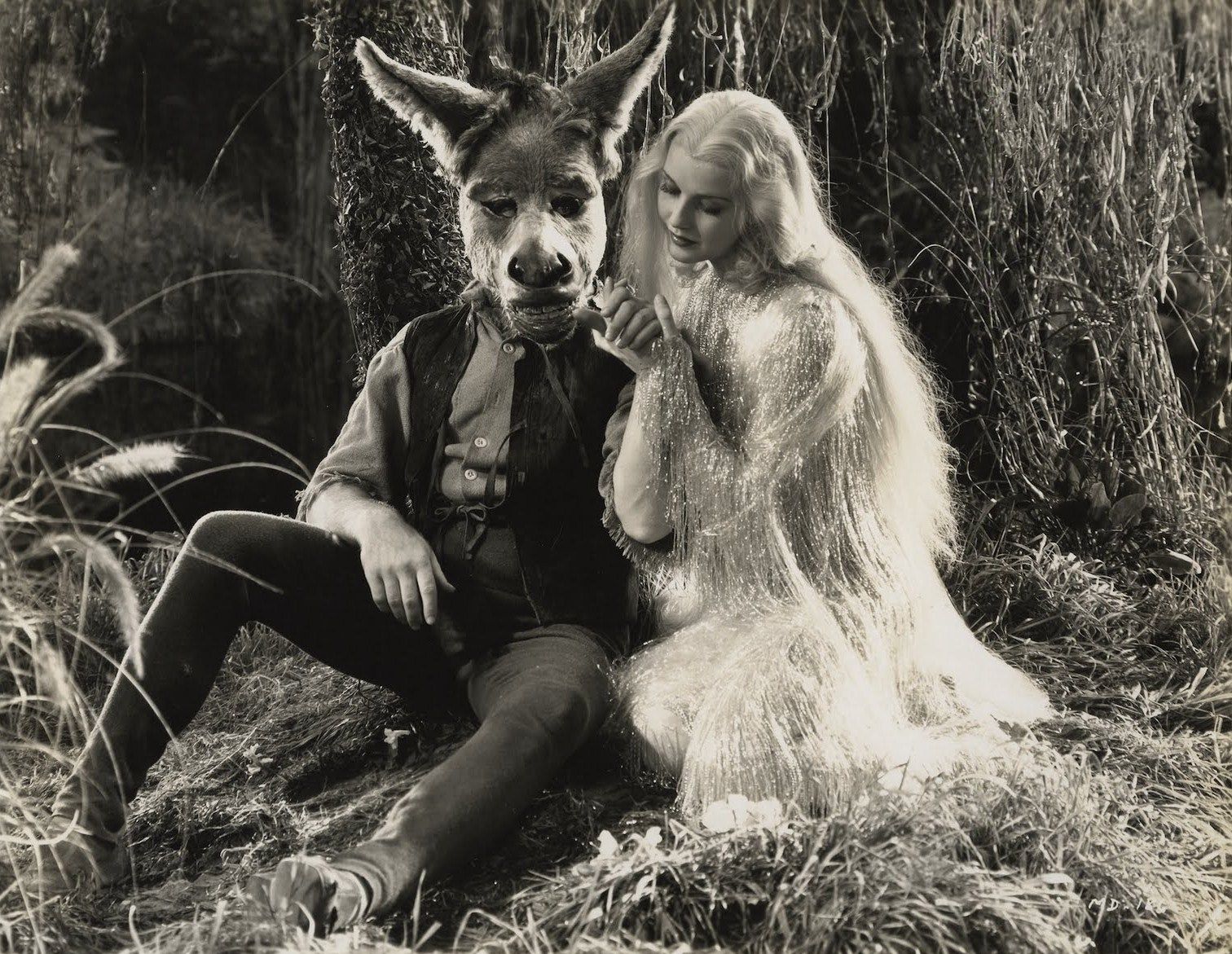
No movie comes closer to being the visual equivalent of a fairy tale than Beauty and the Beast (1946). Jean Cocteau had already achieved fame in his native France and throughout the world as a poet, playwright, artist, and avant-garde filmmaker. Then he did what must have seemed totally unexpected. He transformed a little-known fairy tale into a film that was both accessible and artistic.

Beauty and the Beast looks and feels like the fairy tale a child might imagine. The acting, make-up, sets, gestures, and magical effects — all combine to produce a childlike sense of wonder and awe. There’s nothing quite like it, including the Disney animated version, which was strongly influenced by this movie. Perhaps it takes a painter’s eye and poet’s sense of layered meaning to create a film that’s equally fitting for children and adults.

Cocteau enjoyed collaborating with other artists, and his willingness to share the credit helped attract the best cast members and crew. In the book Cocteau on the Film, he explains how the two main actors brought specific qualities to the project:

The only tragic part of the making of La Belle et la Bête was Jean Marais’ terrible make-up which used to take five hours and from which he emerged as though after a surgical operation. Laurence Olivier said to me one day that he would never have had the strength to undergo such torture. I maintain that it took both Marais’ passion for his profession and his love for his dog to have persisted with such fortitude to pass from the human race into the animal one. What was in fact due to the genius of an actor was ascribed by the critics to the perfection of a mask. But there was no mask, and to live the part of the Beast, Marais in his dressing-room went through the terrible phases of Dr. Jekyll’s transformation into Mr. Hyde. As to Mademoiselle Josette Day’s performance in the part of la Belle, it had a peculiarity that very few people noticed. She has been a dancer. Now it is very dangerous to use slow motion for a person who is running. Every fault of the movement is revealed. This is why a race horse or a boxing match can be so beautiful in slow motion, and why a crowd is so ridiculous.

Credit should also go to Henri Alekan, whose cinematography struck just the right balance between reality and fantasy. Alekan left retirement three decades later to photograph Wings of Desire (1987), another film that hovers between reality and fantasy. Similarly, Georges Auric’s orchestral score is ideally suited to the material. The music is solidly traditional, yet never boring.

Beauty and the Beast was recently remastered by Janus Films/The Criterion Collection. As a result, the newly re-released DVD and current television prints are much improved. Even if you’ve seen it before, this new print may surprise you and win your admiration all over again.

Beauty and the Beast
(1946; directed by Jean Cocteau)
The Criterion Collection (Blu-ray and DVD)

Friday, April 24 at 10:00 a.m. eastern on Turner Classic Movies

Archetypal Western

Archetypal Western

Reviews

Greatest Western of all time? Most influential Western? Archetypal Western? Stagecoach (1939) may be all three, depending on your point of view. John Ford hadn’t made a Western since 3 Bad Men (1926) and was eager to make another. Stagecoach was originally slated to be shot in Technicolor with David O. Selznick as the producer. Selznick wanted Gary Cooper to play the part of the Ringo Kid and Marlene Dietrich to play the part of Dallas. Ford disagreed, broke with Selznick, and teamed instead with producer Walter Wanger. Ford had already planned to cast John Wayne as the Ringo Kid. He cast Claire Trevor as Dallas.

Stagecoach was both a critical and financial success. Ford and screenwriter Dudley Nichols created a quintessential Western with easily understood moral distinctions that pit right against wrong and an underlying yearning for traditional open-sky freedoms. Yet it was also a subversive Western that turned the tables on many of the genre’s clichés. As Joseph McBride explains in his definitive Ford biography, Searching for John Ford, “Stagecoach literally was a political vehicle for Ford and Nichols, a way of looking at America’s past and present. This meta-Western can be read as a justification of American Manifest Destiny on the eve of World War II, a scathing critique of capitalistic corruption and Republican hypocrisy, and a celebration of the egalitarian values of the New Deal.”

McBride recounts the impish delight the pair displayed when they spoke with a New York journalist, just days before the opening:

“We’re particularly attached to this one,” said Nichols, “because it violates all the censorial canons.”

“There’s not a single respectable character in the cast,” declared Ford. “The leading man has killed three guys.”

“The leading woman is a prostitute,” Nichols added.

“There’s a banker in it who robs his own bank,” Ford noted.

“And don’t forget the pregnant woman who faints,” Nichols went on.

“Or the fellow who gets violently ill,” said Ford, referring to the drunken doctor.

From our perspective, Stagecoach looks and feels like a conventional Western expertly put together. There’s no fluff. Ford was famous for cutting out dialogue and expository scenes that weren’t absolutely necessary to the plot or the development of the characters. Even though his style was strikingly different from Ford’s, Orson Welles referred to Stagecoach as his “movie textbook.” Welles said he watched the film “over forty times” in order to learn how to make movies. While preparing to direct Citizen Kane (1941), he studied Stagecoach each night for more than a month, often accompanied by one or more of the technicians at RKO.

If you’re a fan of Hollywood movies from the 1930s and 1940s, don’t pass this one by. Even if you don’t care for Westerns, you’ll find this one rich in history with multi-dimensional characters real enough to walk out from the screen. That Ford was able to release both Stagecoach and Young Mr. Lincoln in 1939 was an incredible accomplishment, followed by The Grapes of Wrath and The Long Voyage Home in 1940, and How Green Was My Valley in 1941. With these and many other outstanding movies to his credit, Ford would become the greatest director in the history of film.

Stagecoach
(1939; directed by John Ford)
The Criterion Collection (Blu-ray and DVD)

Wednesday, April 22 at 6:00 p.m. eastern on Turner Classic Movies

Whatever It Takes

Whatever It Takes

Reviews

You could go around in circles trying to decide who is better: Chaplin or Keaton? Setting aside personal preferences, they’re close enough to call it a tie. Chaplin taps directly into your emotions, while Keaton’s work is more cerebral. Two of Chaplin’s feature-length films tug at the heart strings more than the others. They are The Kid (1921) and City Lights (1931). City Lights is the superior film in almost every way, yet The Kid has a sincerity that makes it almost as powerful emotionally.

The Kid was the first feature produced and directed by Chaplin. By the 1920s, he could invest the time and resources needed to construct the film the way he wanted it. In his book Charlie Chaplin, Theodore Huff describes Chaplin’s creative process:

The scene in which Jackie makes pancakes and Chaplin rises from his bed in the suddenly improvised blanket-lounging robe, is said to have taken two weeks and fifty thousand feet of film to shoot. Even counting in the fact that two cameras were used (one negative was for Europe), this is exceptional footage for a scene scarcely a minute in length. But perfect timing and precision were desired and achieved.

Chaplin’s slow, methodical approach was confirmed by Jackie Coogan, who played the title role. In Brownlow and Kobal’s book Hollywood: The Pioneers, Coogan explained, “Sometimes we wouldn’t turn a camera for ten days while he got an idea.”

Coogan joined his parent’s vaudeville act when he was just two-years old, and Chaplin spotted Coogan when he was five. Chaplin knew right away he wanted to work with the young boy, but what kind of story would best show off his talents? The story Chaplin devised was close to his own childhood poverty. He modeled the Tramp’s dilapidated room after the room he had shared with his mother in the London slums.

Despite the grim surroundings and sentimental plot, there’s more than enough humor to tip the scales toward comedy. Highlights include Chaplin’s stationary running as he pretends to pursue the orphanage van, the Tramp’s dream of a heaven where everyone flies (including the dogs) with angelic wings, and the easy familiarity between Chaplin and Coogan.

The Criterion discs feature a new digital transfer using a print from the Chaplin family vault. Included are three scenes that Chaplin deleted from the film’s 1971 reissue. They further develop the background story of the boy’s mother.

The Kid
(1921; directed by Charles Chaplin)
The Criterion Collection (Blu-ray and DVD)

Wednesday, April 8 at 4:15 a.m. eastern (late Tue. night) on Turner Classic Movies
Loss of Innocence

Loss of Innocence

Reviews

Some film historians lament that we’ll never recapture the magic of a film noir, screwball comedy, or musical comedy. There’s some truth to that, but why would you want to? Ideally, you learn the lessons from the past and apply what’s equally good from the present. That’s not possible, you say? One of the best examples it can be done is The Last Picture Show (1971).

Peter Bogdanovich, the film’s director, spent years studying and interviewing the top Hollywood directors, including Orson Welles, John Ford, and Howard Hawks. His articles, books, and monographs are a vital part of the canon for anyone interested in film history. In addition, his documentary Directed by John Ford is still the best introduction to that director’s work. In the early 1970s, Bogdanovich successfully make the transition from writing about films to directing films, just as Truffaut, Godard, Chabrol, Rivette and Rohmer had done previously. His first fictional film directed under his own name was Targets (1968). Made on a shoestring budget, it was structured around the chance opportunity to use Boris Karloff in the lead role.

Bogdanovich’s next film, The Last Picture Show, was one of the best American films of the 1970s. He applied many of the lessons he had learned from the classic film directors, especially Ford and Hawks. The measured pacing, open landscapes, and directness of the performances echo such films as The Grapes of Wrath, Red River, Wagon Master, and Rio Bravo. Yet Larry McMurtry’s script is thoroughly modern both in its moral sensibilities and sexual frankness.

There’s also a masterful blending of themes relating to change and nostalgia. Just as the small Texas town is changing and declining (represented by the closing of the only movie theater), the film is an elegy to an old style of filmmaking that’s rapidly disappearing (also represented by the closing movie theater). The older films are emblematic of an America that was beginning to lose its innocence, just as the town’s kids lose their innocence as they confront the complexities of adulthood.

Bogdanovich doesn’t quote Ford and Hawks directly. Instead, he borrows stylistically and alters the lessons to suit the material. The result is a stunning piece of filmmaking that should stand the tests of time.

The Last Picture Show
(1971; directed by Peter Bogdanovich)
Sony Pictures (Blu-ray and DVD)

Thursday, April 2 at 11:30 p.m. eastern on Turner Classic Movies

Best Film Ever Made?

Best Film Ever Made?

Reviews

If you’re going to write about classic films, you have to stick your neck out — and take the chance others will stick their tongues out in response. OK, here goes. As much as I love Citizen Kane (1941), I think Sunrise (1927) is the better film. In fact, it may be the best film ever made.

If you’re not acquainted with the great silent films, such as Sunrise, Napoleon, October, and Greed, you may wonder how any film that’s missing an important component such as sound could possibly be superior to the best films that have the full palette of creative possibilities. That’s the wrong way to think about it. Silent film became a highly expressive art form precisely because it lacked sound. If you listen to your favorite songs on the radio, are you upset they don’t have accompanying pictures? Is a Vermeer painting incomplete because it doesn’t have a soundtrack? By the late 1920s, film directors had established a rich visual vocabulary and were continuing to explore new possibilities. That was cut short in 1927 with the marriage of film with sound. And there was no turning back.

Released on the cusp between the silent and sound eras, Sunrise (1927) played in theaters with synchronized music and sound effects via the newly developed Western Electric Movietone sound-on-film sound system. Even so, it’s a pure silent film. The story is told visually with a minimal number of intertitles. The director F. W. Murnau had complete control, just as Welles would have for Citizen Kane. Murnau had impressed Hollywood with his previous films from Germany, including Nosferatu (1922), The Last Laugh (1924), and Faust (1926). Though produced in Hollywood, Sunrise looks and feels more like a film from the German studio, UFA.

Murnau was trained as an art historian, and he brought a painter’s eye to all his films. Sunrise in particular is stunningly beautiful. In a 1958 Cahiers du Cinema poll, it was voted “the most beautiful film in the world.” Welles used his film techniques to move the characters and story forward, but Murnau was ultimately the more talented director because his techniques were more tightly integrated into the fabric of the film.

Some of the techniques are almost breathtaking in their originality and subtlety. For example, when the husband walks through the marsh, the camera follows him, then moves on ahead to discover the woman he is secretly meeting. The camera movement feels exactly right, as though it was taking the same steps we would take if we were there in the middle of the action. Other techniques are almost invisible to the viewer, yet the end result is a stronger visual composition that creates the right mood for the characters or the ideal space for the story to unfold.

For example, Murnau wanted to have deep focus shots, similar to the ones Welles would use in Citizen Kane. A painter could easily achieve the effect, but the lenses and film stocks of the 1920s couldn’t quite do it. So Murnau cheated. He created the illusion of extreme deep focus by playing with the perspective. He placed midgets and small tables in the back of the room to make it appear as though the focus was extending further than it really was. He also placed furniture up front that was larger than it would normally be, in order to simulate a closer focus than was physically possible. All for a single shot.

Fortunately, you don’t have to dig below the surface like this in order to enjoy Sunrise. This is an extremely accessible film where everything serves a single goal — to tell a simple story in the best possible way.

Sunrise
(1927; directed by F. W. Murnau)
20th Century Fox (Blu-ray and DVD)

Monday, March 9 at 8:00 p.m. eastern on Turner Classic Movies

I’ll Never Forget What’s-His-Name

I’ll Never Forget What’s-His-Name

Reviews

In what kind of crazy mixed-up world could a Japanese samurai film simultaneously launch the genre of spaghetti westerns and propel Clint Eastwood to stardom? If the director is Akira Kurosawa, it wouldn’t be that unusual. Many of his best samurai films, including Rashomon (1950), Seven Samurai (1954), and Yojimbo (1961), were remade — or westernized — by Hollywood and Europe. The Hidden Fortress (1958), another Kurosawa samurai film, is acknowledged by George Lucas to be a primary influence for Star Wars. Yojimbo’s remake is Sergio Leone’s A Fistful of Dollars (1964), which ironically named its central character, played by Clint Eastwood, “the man with no name.”

In Yojimbo, the nameless samurai is portrayed by Kurosawa favorite, Toshiro Mifune. He skillfully pits one feuding faction against the other, because both sides are equally bad. Then he quite literally sits back and watches the fun. Kurosawa’s sequel to Yojimbo (Sanjuro; 1962) takes a more comic approach, almost to the point of becoming a spoof of its predecessor. Yojimbo strikes the better balance between comic and dramatic elements. If you’ve ever wondered why some consider Mifune to be one of cinema’s finest and most versatile actors, this film would be an excellent introduction.

Yojimbo
(1961; directed by Akira Kurosawa)
The Criterion Collection (Blu-ray and DVD)

Friday, March 6 at 8:15 a.m. eastern on Turner Classic Movies

A Most Unusual Day

A Most Unusual Day

Reviews

Roger Thornhill should have known he was in trouble when he walked through the lobby, and the hotel’s music system played “It’s a Most Unusual Day.” Of rather, we should have known. He may not know it, but we do — he lives inside a Hitchcock film, so we can expect a healthy dose of sly humor and calculated thrills. If you’ve never seen it, don’t miss this one. I would pick North by Northwest (1959) as the third best Hitchcock film (after Vertigo and Psycho).

As an advertising executive, Thornhill (Cary Grant) deals in public perceptions and appearances. His job is to make real life seem more than it really is. It’s a fitting profession for someone who is less than he seems. Thornhill is bored with life and his predictable role in it. That’s about to change when he becomes entangled in a case of mistaken identity. He will be steadily stripped of his identity and forced to assume the role of another man. Along the way, he’ll encounter a mysterious woman (Eva Marie Saint), a suave-but-sinister villain (James Mason), and a larger-than-life monument (Mount Rushmore). And once again, we have a terrific musical score from Bernard Herrmann.

The most famous part of the movie is the stark sequence in which Cary Grant is chased by a crop duster. In a 1962 interview with Françoise Truffaut, Hitchcock explained how he got the idea:

I found I was faced with the old cliché situation: the man who is put on the spot, probably to be shot. Now, how is this usually done? A dark night at a narrow intersection of the city. The waiting victim standing in a pool of light under the street lamp. The cobbles are ‘washed with the recent rains.’ A close-up of a black cat slinking along against the wall of a house. A shot of a window, with a furtive face pulling back the curtain to look out. The slow approach of a black limousine, et cetera, et cetera. Now, what was the antithesis of a scene like this? No darkness, no pool of light, no mysterious figures in windows. Just nothing. Just bright sunshine and a blank, open countryside with barely a house or tree in which any lurking menaces could hide.

Here’s an interesting bit of trivia. Jessie Royce Landis, who portrays Grant’s mother in the film, was either 10 months younger or seven years older than Grant (she may have lied about her age).

North by Northwest
(1959; directed by Alfred Hitchcock)
Warner Home Video (Blu-ray and DVD)

Monday, March 3 at 5:30 p.m. eastern on Turner Classic Movies