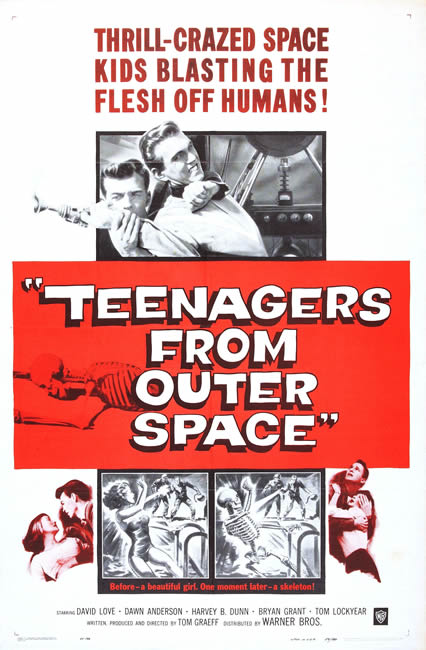
Teenagers from Outer Space (1959) had a very limited budget. Instead of a full-size giant lobster, or even a model-sized replica, producer-director-writer Tom Graeff choose to use the shadow of a regular-size lobster. And one of the skeletons serving as a dead body still has its medical ID tag attached.
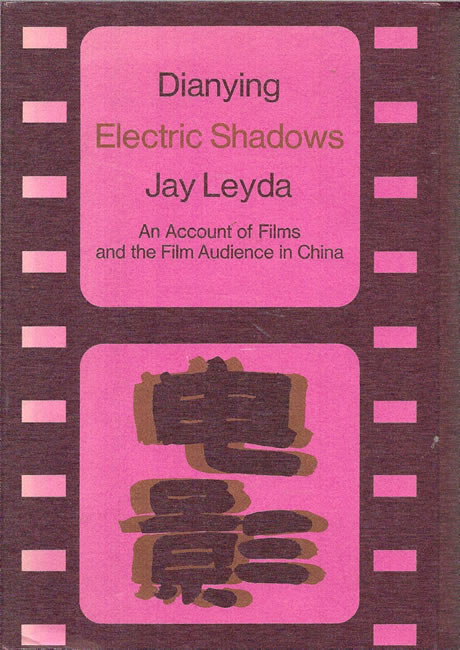
The traditional Chinese name for cinema is made up of the two characters dian and ying, which translate as “electric shadows.”
Dianying: Electric Shadows is the name of an excellent history of Chinese films from 1896 through 1967. The book was written by Jay Leyda, who worked with the Chinese film industry in Peking from 1959 to 1964. Leyda is best known for his books on Sergei Eisenstein and the Soviet cinema, though he also published studies of Herman Melville, Sergei Rachmaninoff, and Emily Dickinson.
Unfortunately, Dianying: Electric Shadows is currently out of print. You can still find it in both hardback and paperback through used booksellers.
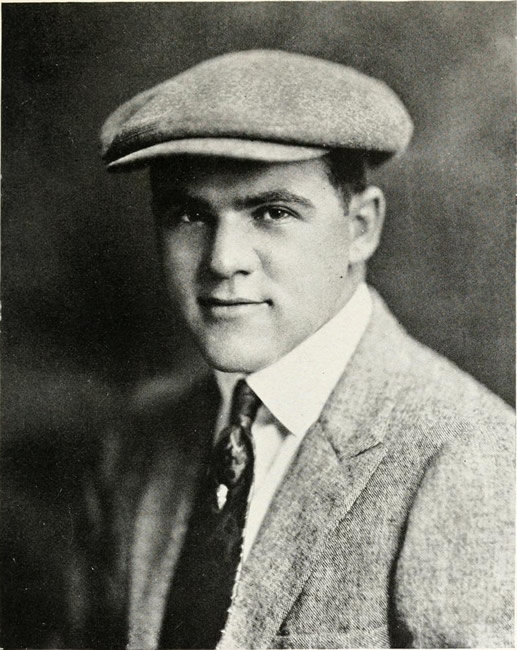
“This is the way we made those one-reelers: Monday morning I would bring the group in and say, “You make up as a cop, you make up as a garbageman, you make up as a pedestrian.” We’d go out in the park, and we’d start to do something. By that time, I’d have an idea of what the sets were going to be. By noon, I would tell the set man what I wanted, and he would go back to the studio to get them ready.
“I don’t think we ever had anything on paper until we started making 2-reelers with lights. Nobody but me had any idea what the hell we were going to do. We’d try one thing, it wasn’t funny; we’d try something else.”
— Hal Roach, interviewed for The Real Tinsel (1970)