Solid Value

Solid Value

Reviews

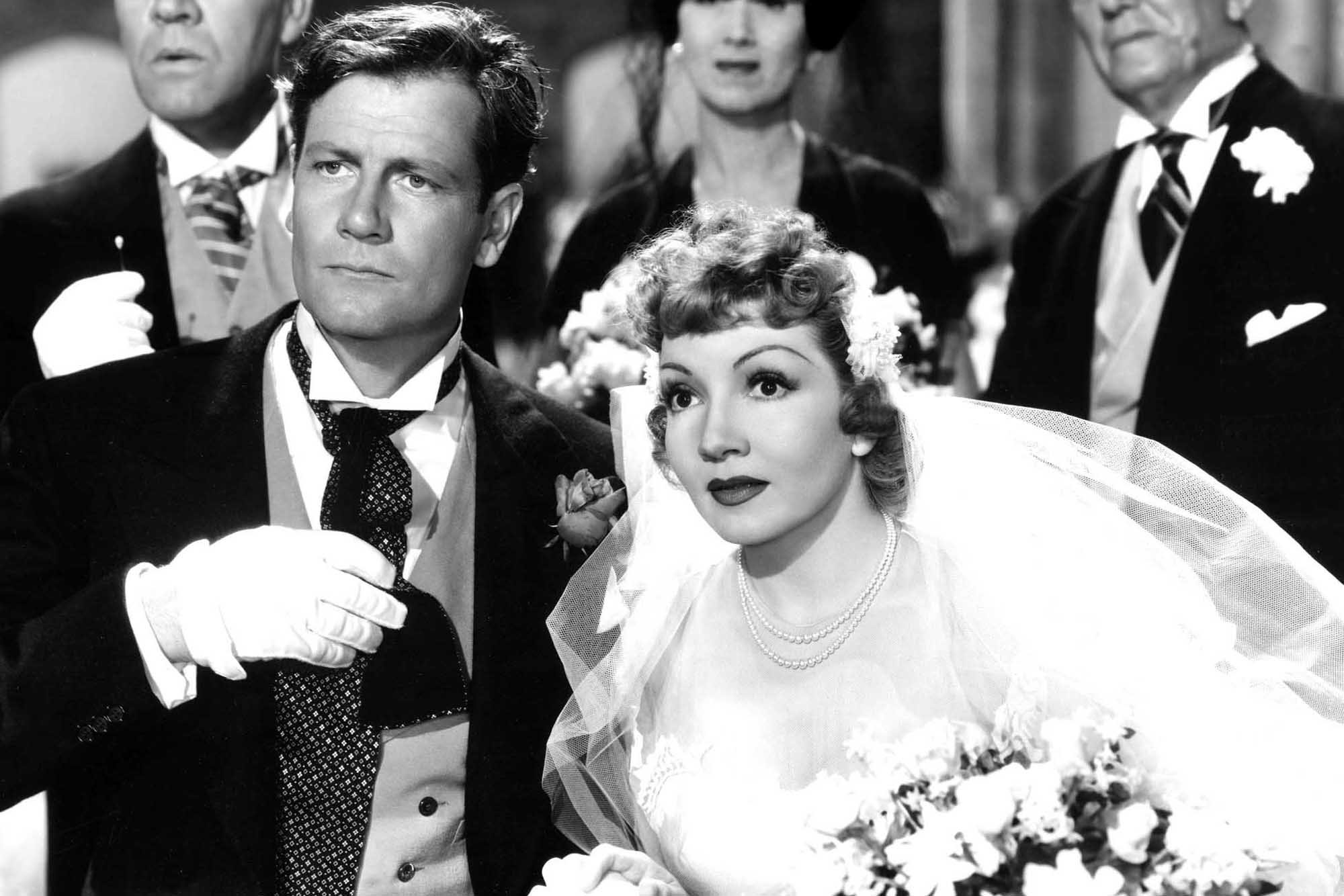
Only Preston Sturges could begin a movie with a frantic-paced ending to another movie that doesn’t even exist, and then weave the story so it circles back to explain the improbable beginning. The Palm Beach Story (1942) is Sturges’ funniest film. That’s high praise when you consider that so many of his other directorial efforts — Christmas in July (1940), The Lady Eve (1941), Sullivan’s Travels (1941), The Miracle of Morgan’s Creek (1944), and Hail the Conquering Hero (1944) — are among the best comedies ever made.

Why is The Palm Beach Story the best of the lot? It has everything that makes a Sturges comedy an undeniable delight. It was the frantic pacing that almost takes your breath away, the deadpan comic delivery that makes you wonder if the actors are fully aware of what they’re saying, and a script that mixes sophisticated and low-brow humor in what became a Sturges trademark.

Here are some excerpts from the film’s dialogue. Claudette Colbert plays Geraldine “Gerry” Jeffers, Joel McCrea plays Tom Jeffers (a.k.a. “Capt. McGlew”), Rudy Vallee plays John D. Hackensacker III (a.k.a. “Snoodles”), and Robert Dudley plays the Wienie King.

Tom: So this fellow gave you the look?
Gerry: At his age it was more of a blink.
Tom: Seven hundred dollars! And sex didn’t even enter into it, I suppose?
Gerry: Sex always has something to do with it, dear.

Hackensacker: If there’s one thing I admire, it’s a woman who can whip up something out of nothing.
Gerry: You should taste my popovers.
Hackensacker: I’d love to. The homely virtues are so hard to find these days . . . a woman who can sew and cook and bake, even if she doesn’t have to . . . and knit and . . .
Gerry: And weave.
Hackensacker: You’re joking. But I mean seriously that is a woman.
Gerry: Were you going to buy me some breakfast or would you like me to bake you something right here at the table?
Hackensacker: I like a witty woman too. (pause) Now what will you have? The 35 cent breakfast seems the best at first glance but if you analyze it for solid value the 55 cent is the one.
Gerry: I wouldn’t want to impose.
Hackensacker: No, feel free to choose anything you like. There’s even a 75 cent breakfast if it appeals to you.
Gerry: We might share one.

Wienie King: I’m the Wienie King! Invented the Texas Wienie! Lay off ’em, you’ll live longer.

During the 1940s, Sturges had no equal when it came to directing (and writing) Hollywood comedies. Lubitsch, Capra, Hawks, and Cukor have their standout comedy classics, but their output can’t stack up against Sturges’ spectacular run from 1940 through 1944. You could argue Sturges was able to single-handedly extend the screwball genre well into the war years. If you’ve never see a Sturges film, you’ve got a lot of catching up to do. And this is a great place to start.

The Palm Beach Story
(1942; directed by Preston Sturges)
The Criterion Collection (Blu-ray and DVD)

Tuesday, May 9 at 9:45 p.m. eastern on Turner Classic Movies
Benign Manipulation

Benign Manipulation

Reviews

Foreign Correspondent (1940) was Hitchcock’s second Hollywood film, though it was Hitchcock’s first Hollywood film in the sense that it was the first true Hitchcock film made in Hollywood. Rebecca (1940) was as much David O. Selznick’s movie as it was Hitchcock’s, which may explain why Rebecca was the only Hitchcock film to win an Oscar for Best Picture.

Foreign Correspondent, on the other hand, is pure Hitchcock. It’s the story of an innocent bystander who becomes involved in an intrigue — a storyline exploited successfully in The 39 Steps (1935), Young and Innocent (1937), and The Lady Vanishes (1938). It also blends suspense, comedy, and romance in a way that would later become synonymous with Hitchcock’s name.

All the actors seem perfectly cast, yet Hitchcock didn’t get his first choice for the title role. In a 1962 interview with Françoise Truffaut, Hitchcock explained how he ended up with Joel McCrea:

In Europe, you see, the thriller, the adventure story is not looked down upon. As a matter of fact, that form of writing is highly respected in England, whereas in America it’s definitely regarded as second-rate literature; the approach to the mystery genre is entirely different. When I had completed the script of Foreign Correspondent, I went to Gary Cooper with it, but because it was a thriller, he turned it down. This attitude was so commonplace when I started to work in Hollywood that I always ended up with the next best — in this instance, with Joel McCrea. Many years later Gary Cooper said to me, ‘That was a mistake. I should have done it.’

Most moviegoers wouldn’t consider Hitchcock to be a trailblazer with special effects, though he certainly was. Take a look at the perspective-distorting zoom or the psychological application of color in Vertigo (1958). Or check out the use of electronic sounds as bird noises or advanced optical printing techniques to simulate large flocks in The Birds (1963).

Foreign Correspondent includes a spectacular shot near the end of the film where a plane is diving into the ocean. You see the water appearing closer, as viewed through the cockpit windshield. When the plane hits the ocean, the water suddenly rushes into the cockpit. All this is contained within a single shot with no apparent edits or special effects, so how was it done? This is Hitchcock’s explanation from the Truffaut interview:

I had a transparency screen made of paper, and behind that screen, a water tank. The plane dived, and as soon as the water got close to it, I pressed the button and the water burst through, tearing the screen away. The volume was so great that you never saw the screen.

Here’s an odd bit of trivia for you. In his article “The Strange Case of Alfred Hitchcock, Part Three,” Raymond Durgnat writes that “Dr. Goebbels loved watching Foreign Correspondent.” Goebbels predicted it would make “an impression upon wide broad masses in the enemy countries.” Hitchcock later speculated that a print was probably brought in through Switzerland. Was this a case of an unscrupulous political manipulator recognizing the skills of a more benign artistic manipulator?

Foreign Correspondent
(1940; directed by Alfred Hitchcock)
The Criterion Collection (Blu-ray and DVD)

Thursday, March 9 at 10:45 a.m. eastern on Turner Classic Movies

Falling in Love Again

Falling in Love Again

Reviews

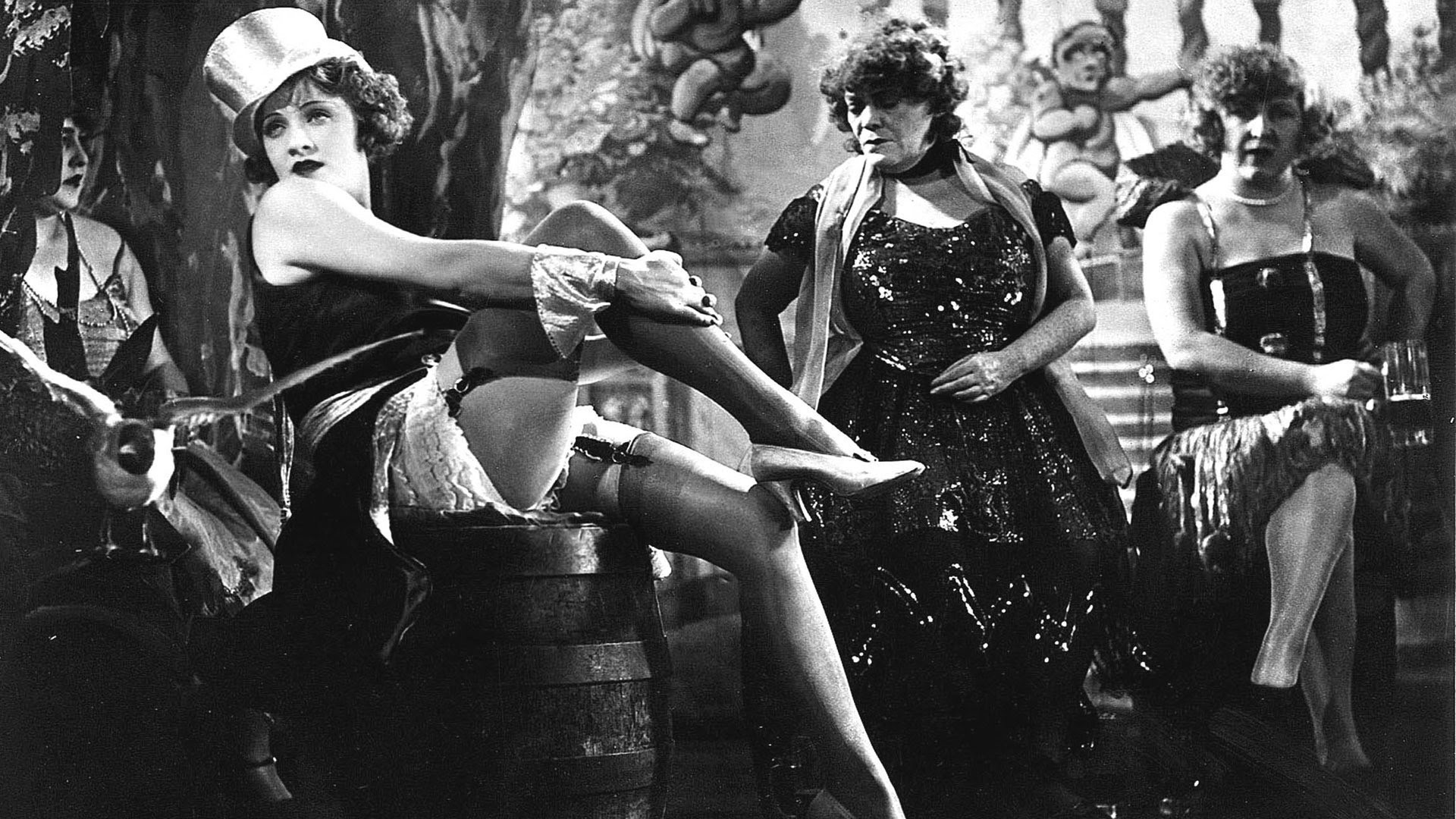
Ask film buffs about director Josef von Sternberg, and you may receive a blank stare. Others assume that The Blue Angel (1930), his best known film, was probably the work that brought him to Hollywood. In fact, Sternberg had already made a name for himself in Hollywood, directing such silent gems as The Salvation Hunters (1925), Underworld (1927), Last Command (1928), and The Docks of New York (1928).

When Emil Jannings returned to the German studio Ufa following the advent of sound, he requested that Sternberg direct his first sound film. Once the script was written, Sternberg and producer Erich Pommer weren’t sure who should play the part of Lola, the cabaret singer. Ufa was about to spend half a million dollars on the production, so the casting for the part was critical. By chance, Sternberg saw Marlene Dietrich on stage in Berlin (he had attended the play to see another actor). In his book Josef von Sternberg, Herman G. Weinberg writes:

From the moment Sternberg noticed Dietrich on the stage he knew he had found his Lola, but neither she nor the heads of Ufa were sure she could do it. It took a lot of persuasion before she agreed to a screen test. Sternberg was pleased with it and Pommer, who always protected the artistic choice of his directors, approved the signing of Miss Dietrich.

The film was a big success in Germany. Sternberg had shot both German and English versions of the film. By the time it opened in the United States, Dietrich had already signed a contract with Paramount, where she and Sternberg would make six more films together: Morocco (1930), Dishonored (1931), Shanghai Express (1932), The Blonde Venus (1932), The Scarlet Empress (1934), and The Devil Is a Woman (1935).

With Sternberg’s later films at Paramount, especially The Scarlet Empress and The Devil Is a Woman, he crafted lighting techniques and a visual style that set him apart from other filmmakers. For Sternberg, the plot and characters are less important than the overall atmosphere. For lesser directors that would be a recipe for disaster, but for Sternberg, it set him free to explore and create films unlike any others, that are no less interesting than films driven primarily by plot and character.

Don’t worry, The Blue Angel doesn’t go that far. Plot and character are among its strong suits. It’s worth watching for a host of reasons, not the least of which are the outstanding performances by Emil Jannings and Marlene Dietrich. This is the film where Dietrich first sings, “Falling in Love Again.”

The Blue Angel
(1930; directed by Josef von Sternberg)
Kino Video (Blu-ray and DVD)

Sunday, February 26 at 6:00 a.m. eastern on Turner Classic Movies

Imaginary Creatures

Imaginary Creatures

Reviews

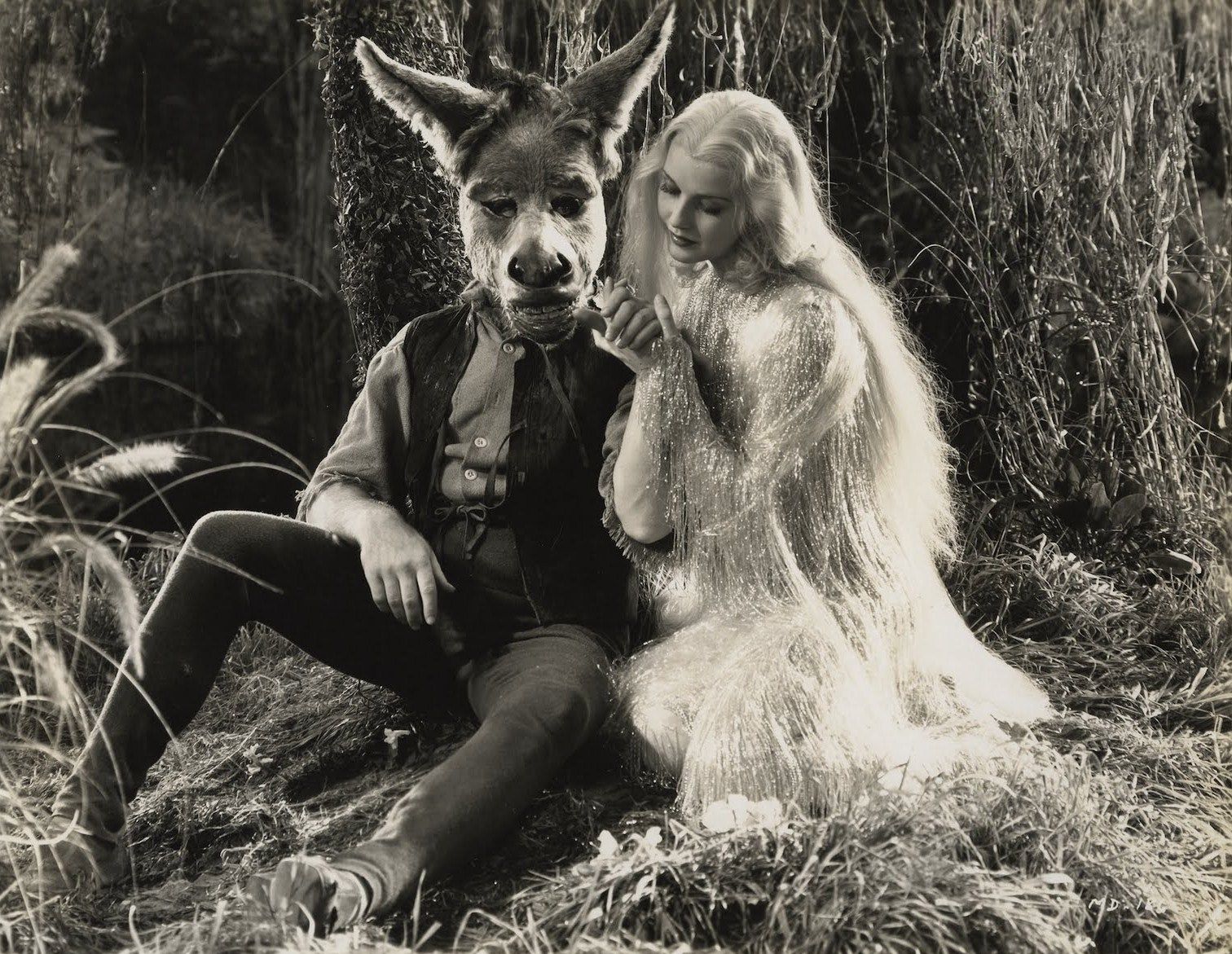
If you looked at the cast list for A Midsummer Night’s Dream (1935), you couldn’t be blamed for passing it by. How could Shakespeare’s most beloved comedy be well served by the likes of James Cagney, Joe E. Brown, Dick Powell, Olivia de Havilland, and Mickey Rooney?

What you wouldn’t know from glancing at the cast list is that this film was co-directed by Max Reinhardt, the famed Austrian theatrical producer and director. His stage production of A Midsummer Night’s Dream was considered to be without equal, and he brings a fairytale quality to this production that goes far beyond any other film rendition of the play. The lighting, special effects, costumes, and sets combine to create a magic that’s rarely seen on the screen.

As for the casting, the Warner Brothers contract players are generally competent in their roles. Mickey Rooney is surprisingly good as Puck, though the up-and-down cadences he gives to his lines can be irritating. As Titania, Anita Louise looks just as we imagine a fairy queen should look. And Victor Jory has the commanding presence we expect from an Oberon. Even so, it’s the imaginary world the actors inhabit that grabs our attention. The choreographed movements of the creatures, the light that shimmers from the forest floor, and the misty veils that separate the viewer from the spectacle that unfolds — those are the qualities that make this a must-see film.

Also notable is the accompanying music. Most of it is based on Mendelssohn’s A Midsummer Night’s Dream, which was inspired by the play. There wasn’t enough of the composition to fill the 114 minutes of music needed for the film, so composer Erich Korngold supplemented it with passages from other Mendelssohn compositions. Reinhardt had worked with Korngold previously and brought him over from Vienna for this film. It was Korngold’s his first project in Hollywood. He went on to become one of the top film composers of the 1930s and 1940s. His credits include the rousing scores for The Adventures of Robin Hood (1938) and The Sea Hawk (1940).

This film was a critical and box office flop. It did so poorly, Warner Brothers canceled Reinhardt’s contract for two additional films.

A Midsummer Night’s Dream
(1935; directed by William Dieterle and Max Reinhardt)
Warner Home Video (DVD)

Monday, November 14 at 6:30 a.m. eastern on Turner Classic Movies

Fragmentary Images

Fragmentary Images

Reviews

When I think of classic short films, I usually recall the silent comedies of Charlie Chaplin, Buster Keaton, or Harold Lloyd. Or I might remember my favorite cartoons from Walt Disney, Dave Fleischer, or Chuck Jones. Of course, there are many other fine short films that span the decades.

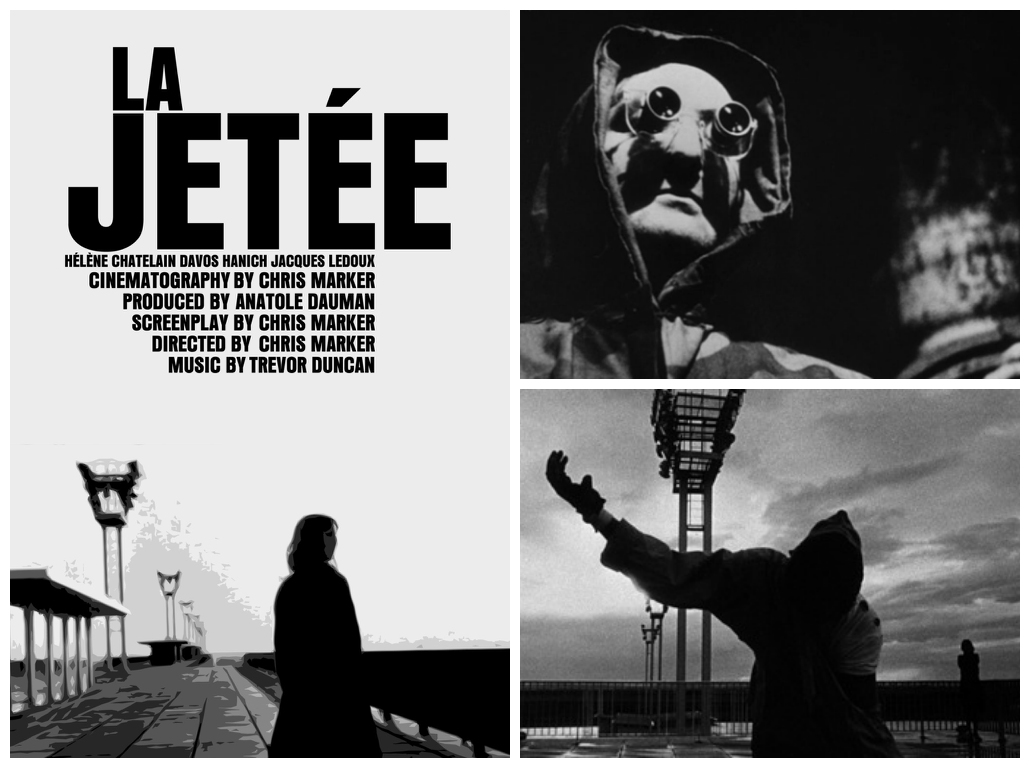
One of the best shorts from the 1960s is Chris Marker’s La Jetée (1962). It’s remarkable for several reasons. First, it tells an absorbing story that builds to a never-to-be-forgotten climax. Second, it’s technically innovative in a way that’s perfectly in keeping with the subject matter. And third, it shows you don’t have to spend a lot of money on a film production — if you have the imagination to transform the technical deficiencies into creative assets.

I’ve never encountered anyone who wasn’t impressed by this superb 26-minute film, yet strictly speaking, it may not quality as a motion picture. With the exception of a few seconds in the middle, the story is told entirely through still images. That had to save a ton of money, yet Marker was able to create the illusion of movement by panning, fading, cross-fading, and sequencing the images to match the narration, emotionally charged music, and occasional sound effects.

The story, which involves time travel and the persistence of memory, is an ideal fit for this approach. The protagonist is selected for the time travel experiments because he retains fragmentary images from the past and may be able to fill in the gaps (similar to the audience having to mentally fill in the missing film frames).

This short will appeal to a broader audience than just science fiction fans. It has a wistful romanticism that’s as vital to the story as any of the more fantastic elements. Marker was born in France, and La Jetée was filmed there. As a result, it’s much closer in tone to Françoise Truffaut than to Hollywood sci-fi.

A newer version of this short replaces the French narrator — and English subtitles — with an American narrator. The out-of-print DVD titled Short 2: Dreams had this version, which was Marker’s “preferred cut.” I prefer the original version, though either would qualify as one of the best shorts made during the second half of the twentieth century. The Criterion DVD and Blu-ray have what are essentially both versions. You can run it with either a French or English narrator, and add in English subtitles to supplement the French narration.

You may have read about La Jetée because of its connection with Terry Gilliam’s 12 Monkeys (1995). Gilliam explains in his La Jetée DVD commentary that 12 Monkeys was “inspired by” rather than “based on” the short. The screenwriters used it to generate ideas for their script. Gilliam, however, chose not to see it until 12 Monkeys was completed. After finally viewing La Jetée, Gilliam proclaimed Marker to be a genius.

La Jetée
(1962; directed by Chris Marker)
The Criterion Collection (Blu-ray and DVD)

Monday, November 7 at 8:45 a.m. eastern on Turner Classic Movies

A Modern Odyssey

A Modern Odyssey

Reviews

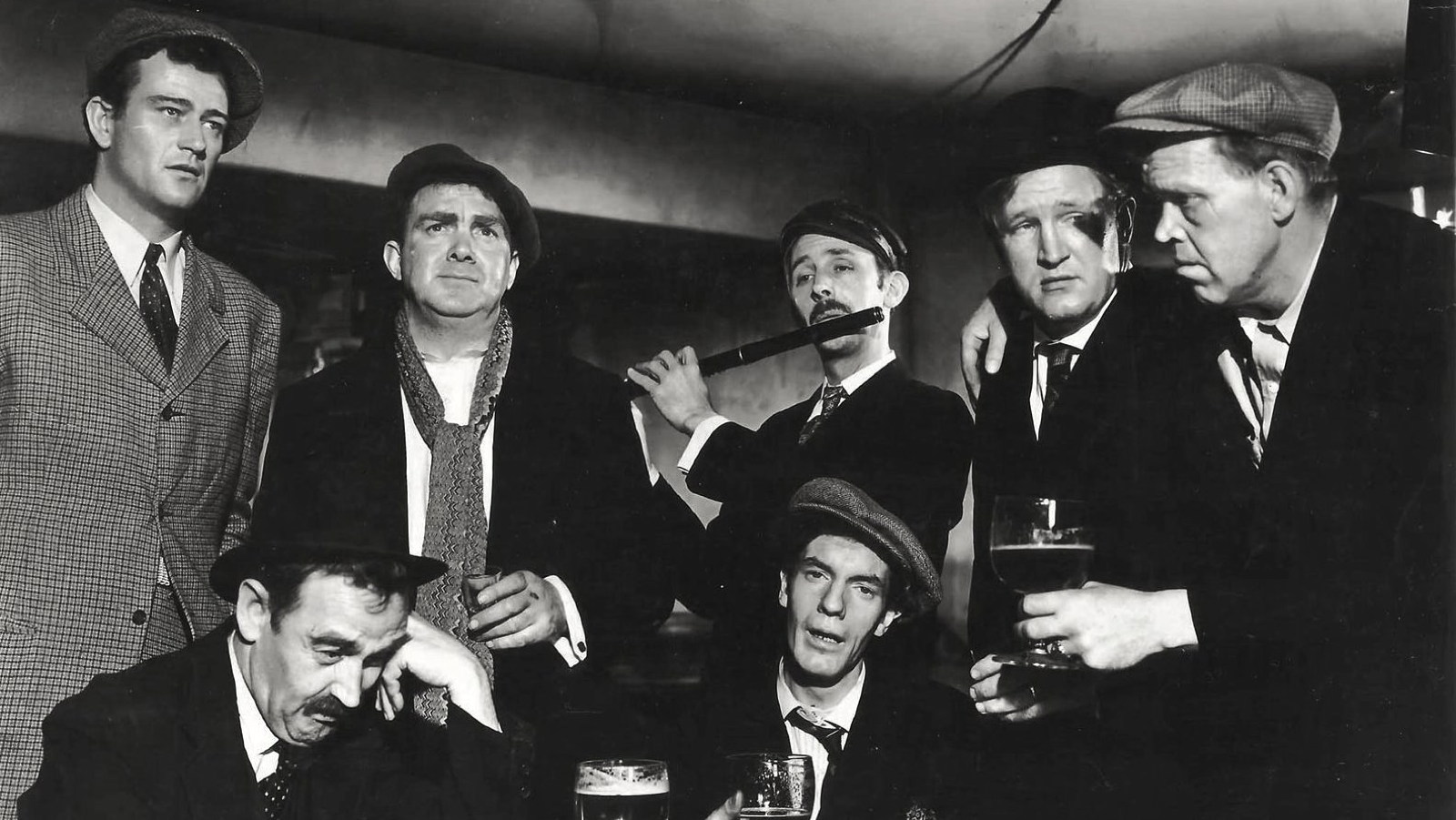
When asked by Jean Mitry in 1955 to list his favorite films among the ones he had directed, John Ford included The Long Voyage Home (1940) among a handful of titles. At the time of its release, John Mosher wrote in The New Yorker that this was “one of the most magnificent films in film history.” Eugene O’Neill considered it to be the best adaptation of his work. He liked it so much, he owned a personal print and regularly screened it. Yet The Long Voyage Home is probably the least known of Ford’s greatest films.

One reason is the poor quality of the prints regularly shown on television. This was the film that cinematographer Gregg Toland worked on just before Citizen Kane (1941). It features comparable deep-focus shots and contrasts in lighting, as well as extraordinary shadows that move and extend across the screen. With a poor quality print, you lose the visual tones Toland strived to create. Fortunately, the print Turner Classic Movies has shown recently is better. It still falls short of what it could be, but you can see much of what impressed the critics back in 1940.

One of those critics was Bosley Crowther, who wrote this in the New York Times:

John Ford has truly fashioned a modern Odyssey—a stark and tough-fibered motion picture which tells with lean economy the never-ending story of man’s wanderings over the waters of the world in search of peace for his soul. It is not a tranquilizing film, this one which Walter Wanger presented at the Rivoli Theatre last night; it is harsh and relentless and only briefly compassionate in its revelation of man’s pathetic shortcomings. But it is one of the most honest pictures ever placed upon the screen; it gives a penetrating glimpse into the hearts of little men and, because it shows that out of human weakness there proceeds some nobility, it is far more gratifying than the fanciest hero-worshiping fare.

This is very much an ensemble piece with outstanding performances from Ford’s stock company of actors, including Thomas Mitchell (as Aloysius ‘Drisk’ Driscoll), Barry Fitzgerald (as Cocky), John Qualen (as Axel Swanson), and Ward Bond (as Yank). Most notable is John Wayne’s performance as Ole Olsen, the good-hearted Swede who keeps trying to return home to the family farm — but always ends up signing on again. The role is the opposite of Wayne’s usual swaggering persona, and he is surprising good in the part.

Dudley Nichols wrote the screenplay based on four early O’Neill plays about life at sea. Both Ford and O’Neill had Irish backgrounds, and they share a strong sympathy for the downtrodden. Toland’s moody photography and O’Neill’s tendencies toward pessimism are perfectly balanced by Ford’s inherent optimism. Much as he took the hard edge off Steinbeck’s The Grapes of Wrath filmed that same year, Ford explores the depths of human deprivation in The Long Voyage Home without losing faith in the essential goodness of human nature.

The Long Voyage Home
(1940; directed by John Ford)
Warner Home Video (DVD)

Saturday, September 3 at 2:00 p.m. eastern on Turner Classic Movies
One Foggy Night

One Foggy Night

Reviews

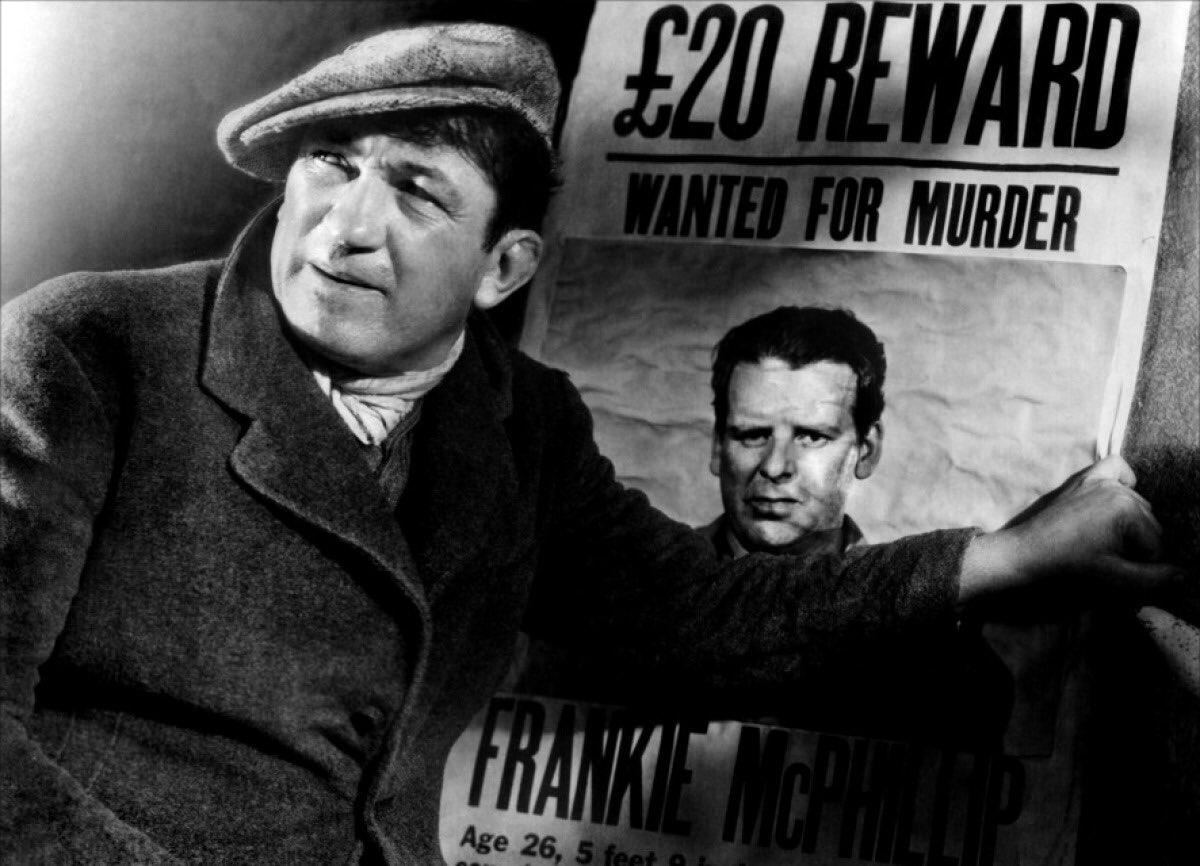
You wouldn’t normally think of John Ford as directing a low-budget art film, but that’s the best way to think of The Informer (1935). According to Joseph McBride’s excellent book Searching for John Ford, the project was rejected by Columbia, Fox, MGM, Paramount, and Warner Bros. before RKO agreed to let Ford make it on a shoestring budget (the final production costs were $242,756). That meant almost no money for sets and only 18 days for shooting.

Rather than fret about the restrictions, Ford, screenwriter Dudley Nichols, and cinematographer Joseph August crafted a visual story that’s defined primarily through shadows, fog, and backlighting. The style is reminiscent of the great silent German expressionist films, especially those of F. W. Murnau, whose work Ford admired.

In his 1943 essay “The Writer and the Film,” Nichols explained how this approach was an excellent match for the storyline:

I had an able mentor as well as a collaborator in the person of John Ford and I had begun to catch his instinctive feeling about the film. I can see now that I sought and found a series of symbols to make visual the tragic psychology of the informer, in this case a primitive man of powerful hungers. The whole action was to be played out in one foggy night, for the fog was symbolic of the groping primitive mind; it really is a mental fog in which he moves. . . .

Though often shy and reserved in real life, Ford could be a hard taskmaster when directing. He had to fight RKO to cast former boxer Victor McLaglen as Gypo, the central character. As McBride explains in his book:

Ford directed McLaglen with cunning calculation, bullying and tricking him into giving a great performance. Since he wanted McLaglen to grope for his lines to convey Gypo’s slow-witted, half-drunken condition, Ford continually changed the schedule to keep McLaglen unfamiliar with his scenes and surreptitiously filmed what the actor thought were rehearsals. He would send McLaglen off to run his lines with cast member J. M. Kerrigan at the nearby Melrose Grotto bar, and then would abruptly call a tipsy McLaglen back to the set to shoot his scenes.

The result is paradoxically realistic and expressionistic. The Informer was a popular success and widely praised by the critics. Though it came in second to Mutiny on the Bounty for the Oscar for Best Picture, Ford took home the Best Director award. In addition, McLaglen won Best Actor, Nichols won Best Screenplay, and Max Steiner won Best Musical Score. Though some of the symbolism may seem heavy handed, and the ending a bit forced, everything else works terrifically. And it doesn’t appear to be made under severe financial restraints. All the choices seem to be natural extensions of the plot.

The Informer
(1935; directed by John Ford)
Warner Home Video (DVD)

Tuesday, March 15 at 1:00 a.m. eastern (late Mon. night) on Turner Classic Movies

Dogged Determination

Dogged Determination

Reviews

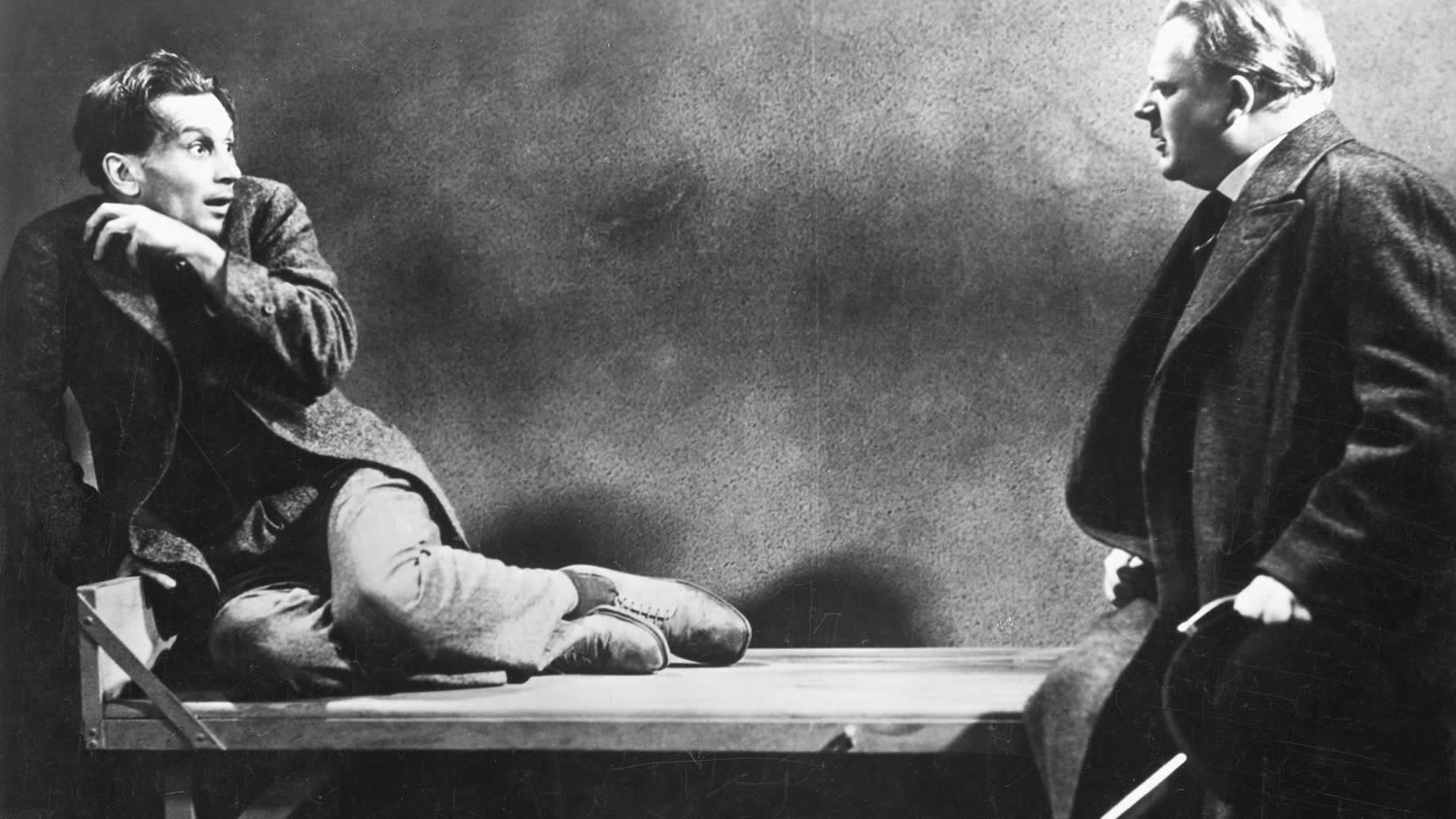
As the follow-up to his most successful silent film (Dr. Mabuse, the Gambler), Fritz Lang’s The Testament of Dr. Mabuse (1933) revives one of cinema’s most intriguing criminal masterminds. When we last saw Dr. Mabuse, he was driven insane by the collapse of his criminal empire. Eleven years later, he has progressed from a coma to only being able to write — first with unintelligible scribblings, then with arcane symbols and unrecognizable words, and finally with detailed instructions for carrying out devious crimes and acts of terror.

Meanwhile, we are reintroduced to Inspector Lohmann, the detective from M, Lang’s previous sound film. Lohmann has encountered the doctor’s name in connection with several puzzling investigations. Were these crimes perpetrated by the same group? And how could they involve a criminal mastermind who is physically incapacitated?

The Testament of Dr. Mabuse is a thrilling detective story, but also a not-so-subtle reproach of Hitler and the Nazis, who had just risen to power. It even foreshadows our own time with a diabolical character who commits terrorist acts — not for financial gain, but to create chaos and fear among the public.

In an interview with Mark Shivas, published in the September 1962 issue of Movie, Lang explains the origin of the project, and how the film was banned in Germany before it could be released:

In ’32, I guess, someone came to me and said, ‘Look, Mr. Lang, we have made so much money with Mabuse. . . ’ I said, ‘Yes, much more than I did. . . .’ He said, ‘Can’t you give us another Mabuse?’ So I started thinking about it and I said, ‘All right, what shall I do? This guy is insane and in an asylum — I cannot make him healthy again. It is impossible.’ So I invented, with the help of Mrs. Von Harbou, the next Mabuse — The Testament of Dr. Mabuse — and then said, ‘Now I am finished. Now I am killing him.’ I had been able to put into the mouth of an insane criminal all the Nazi slogans. When the picture was finished, some henchmen of Dr. Goebbels came to the office and threatened to forbid it. I was very short with them and said, ‘If you think you can forbid a picture of Fritz Lang in Germany, go ahead.’ They did so.

As Lang tells it, a few days after the ban was announced, he was summoned to meet with Goebbels, who told Lang that Hitler was a fan of Die Nibelungen (1924) and Metropolis (1927). Hitler wanted Lang to head up a group that would produce National-Socialistic films for the Nazi party. Lang feigned excitement over the offer, but fled to Paris that night. We have only Lang’s word for the meeting, which is at odds with The Testament of Dr. Mabuse having just been banned for its strong political content.

Whatever the truth, Lang left Germany and went on to have a productive career in Hollywood, directing such classics as Fury (1936), Man Hunt (1941), Ministry of Fear (1945), The Big Heat (1953), While the City Sleeps (1956), and Beyond a Reasonable Doubt (1956). He returned to Germany to direct yet another Mabuse film, titled The Thousand Eyes of Dr. Mabuse (1961).

The digitally restored print on the Criterion DVD is ample proof that this is one of Lang’s best films. Originally 124 minutes, the restored version runs 121 minutes and is based on a German Film Institute print, with missing scenes supplied by prints from the Federal Film Archive (Germany) and the Munich Film Museum. In addition to the top-quality restored print, Criterion provides a second disc with the 94-minute French-language version of the film, which Lang directed simultaneously with the German-language version (Lang was fluent in French). Until 1951, it was the only version available for film historians. The second disc also features a 1964 interview with Lang, background on Mabuse’s creator (the character first appeared in print), and a comparison of the German, French, and American-dubbed versions.

If you’re a fan of Hollywood film noir, you’ll feel right at home with this film’s dark and menacing world. And if you’re a fan of detective and crime movies, you’ll enjoy Lohmann’s dogged determination and the intricate layering of the plot.

The Testament of Dr. Mabuse
(1933; directed by Fritz Lang)
The Criterion Collection (DVD)

Friday, October 1 at 10:30 a.m. eastern on Turner Classic Movies

This Dodge Is a Ford

This Dodge Is a Ford

Reviews

Even the lesser films from director John Ford have a warmth of character and a respect for human frailty that’s rarely seen anywhere else. A good example is The Wings of Eagles, Ford’s sentimental tribute to Frank “Sig” Wead. An ace pilot in World War I, Wead turned to screenwriting after a fall left him partially paralyzed. He went on to write the script for They Were Expendable (1945), one of the best films about World War II.

While the first half of The Wings of Eagles suffers from occasional outbreaks of not-so-subtle physical comedy, on the whole, the movie is well worth watching. In this case, Ford may have been too close to the material. As he explains in a 1964 interview with Peter Bogdanovich:

I tried to tell the story as truthfully as possible, and everything in the picture was true. The fight in the club — throwing the cake — actually happened; I can verify that as an eye witness — I ducked it. I thought it was funny when they all fell into the pool; that actually happened — they ran like hell through the kitchen and all landed in the pool. And the plane landing in the swimming pool — right in the middle of the Admiral’s tea — that really happened.

Watch for Ward Bond who plays a gruff Hollywood director who looks, dresses, and acts suspiciously like John Ford. The giveaway to the joke is the fictional director’s name: John Dodge.

The Wings of Eagles
(1957; directed by John Ford)
Warner Home Video (DVD)

Monday, August 17 at 6:00 p.m. eastern on Turner Classic Movies
When Legend Becomes Fact

When Legend Becomes Fact

Reviews

Some films pack an extra wallop because they skillfully place the story and characters into a larger historical context. John Ford’s The Man Who Shot Liberty Valance (1962) is just that kind of film. It explores the slippery relationship between legend and fact. It also explores the tension between an older, more violent west and a newer, more civilized west — and what happens when the two cultures clash. As with his earlier film The Searchers (1956), Ford documents the changing values of the American west. Even heroic figures have faults and biases. They’re no less brave, despite the fact that their motivations are often less than pure.

John Wayne plays Tom Doniphon, a traditional hard-working rancher. When confronted, he knows how to settle an argument with a gun. James Stewart plays Ransom Stoddard, a newly qualified lawyer who will eventually become a United States Senator. He is reluctant to use violence because it debases society and conflicts with our highest values. Hallie (played by Vera Miles) is torn between the two men — as is the audience. Neither approach is completely right or wrong. They represent a necessary transition from an unsettled land administering frontier justice to a community built on laws and common goals.

In his book John Ford, Peter Bogdanovich asked Ford if his sympathies were with the John Wayne character and the Old West:

Well, Wayne actually played the lead; Jimmy Stewart had most of the scenes, but Wayne was the central character, the motivation for the whole thing. I don’t know — I liked them both — I think they were both good characters and I rather liked the story, that’s all. I’m a hard-nosed director; I get a script — if I like it, I’ll do it. Or if I say, ‘Oh, this is all right’ — I’ll do it. If I don’t like it, I’ll turn it down.

This is one of the most powerful and thoughtful westerns of the 1960s. It’s also worth repeating that based on his incredible body of work, John Ford was perhaps the greatest of all classic film directors.

The Man Who Shot Liberty Valance
(1962; directed by John Ford)
Warner Home Video (Blu-ray and DVD)

Thursday, November 21 at 8:00 p.m. eastern on Turner Classic Movies