Intimate Epic

Intimate Epic

Reviews

Sometimes it takes an extensive digital restoration to re-establish the greatness of a film. That’s certainly the case with Doctor Zhivago (1965). I’ve had a chance to watch the Blu-ray release of this popular classic, and it confirms that director David Lean was at the peak of his craft with Zhivago. It’s equal in epic stature to The Bridge on the River Kwai (1957) and Lawrence of Arabia (1962). More surprisingly, it matches the rich characters and intimate drama found in Lean’s earlier films, such as Brief Encounter (1945), Great Expectations (1946), and Hobson’s Choice (1954).

The restoration team at Warner Bros. faced some unusual challenges due to the poor condition of the original negative. Lean had wanted to film Doctor Zhivago in 65mm, but had to settle for 35mm. To maximize the print quality for the 70mm theaters, Lean agreed to strike the theatrical prints directly from the original 35mm A & B rolls—splices and all.

“The original negative, as it now exists, is in far less than stellar condition,” explains archivist Robert Harris in a posting at hometheaterforum.com. “Over the past couple of decades there have been abortive rescue attempts at best. But finally Warner Bros. has seen fit to properly digitally restore the film, bringing together the best of the surviving pieces of film.”

This restored version has caused me to reconsider my view of the film, now that it is available again as the director intended. I had written off Doctor Zhivago as a lesser work by Lean—overly emotional without a strong enough structure to sustain its ambitions. What I discovered was an intricate and quite believable drama set against the sweeping vistas of history. (It’s worth noting that the history presented isn’t entirely accurate. Russian poets weren’t politically repressed during the revolution. That didn’t happen until later, when Stalin came to power.)

The film does take some twists and turns that you won’t find in the novel, such as the opening and closing scenes where Yevgraf (Alec Guinness) is searching for Zhivago’s daughter. Lean and scriptwriter Robert Bolt had to reduce the massive work into a three-hour story that could fully stand on its own.

In the book The Making of Feature Films (1971), Bolt explained their approach:

If you are going to reduce a book to a twentieth of its length, you can’t go snipping out pieces here and there, up to nineteen-twentieths. You have to take in and digest the whole work to your own satisfaction and then say, ‘Well, the significant things, the mountain peaks which emerge from this vast panorama are such-and-such incidents, moral points, political points, emotional points, and those are all I can deal with in dramatic form–all I should deal with’…. Once the peaks have emerged, the problem is how to link them. You are under the necessity of inventing incidents which do not occur in the book–threads which will draw together rapidly a number of themes, where Pasternak might have taken 10 chapters.

Lean and Bolt were able to solve a problem that still plagues directors and screenwriters. How do you make a big-canvas movie without losing your focus on the characters and story? If you look at a list of inflation-adjusted all-time U.S. box-office winners, you can see that the top moneymakers were able to do just that. You can also see that Avatar hasn’t yet passed Doctor Zhivago in its inflation-adjusted theatrical receipts.

Doctor Zhivago
(1965; directed by David Lean)
Warner Home Video (Blu-ray and DVD)

Thursday, January 12 at 8:00 p.m. eastern on Turner Classic Movies
An Age of Ideals

An Age of Ideals

Reviews

The Importance of Being Earnest (1952) is not only the definitive Oscar Wilde adaptation, it’s the definitive comedy of manners. Often acknowledged to have the best cast ever assembled for the play — either on celluloid or on stage — this is one of the best film comedies of the 1950s.

Michael Redgrave (as Jack Worthing), Joan Greenwood (as Gwendolen Fairfax), Michael Denison (as Algernon Moncrieff), and Dorothy Tutin (as Cecily Cardew) are perfectly matched as the couples who have to overcome real and imagined obstacles to attain true love. Yet it’s the performances by Edith Evans as Lady Augusta Bracknell and Margaret Rutherford as Miss Letitia Prism that steal the show. Pity the poor actress who has to play Lady Bracknell to an audience that remembers Evans’ outraged voice from this unforgettable movie.

Of course, here the play’s the thing. Wilde’s comedic farce is revisited time and time again because inspired writing never grows old. Here is some of the dialogue from the movie:

Jack: I have lost both my parents.
Lady Bracknell: To lose one parent, Mr. Worthing, may be regarded as a misfortune; to lose both looks like carelessness.

Gwendolen: Even before I met you I was far from indifferent to you. [Jack looks at her in amazement.] We live, as I hope you know, Mr. Worthing, in an age of ideals. The fact is constantly mentioned in the more expensive monthly magazines, and has reached the provincial pulpits, I am told; and my ideal has always been to love someone of the name of Ernest. There is something in that name that inspires absolute confidence. The moment Algernon first mentioned to me that he had a friend called Ernest, I knew I was destined to love you.

Algernon: I really don’t see anything romantic in proposing. It’s very romantic to be in love but there’s nothing romantic about a definite proposal. Why, one might be accepted. One usually is I believe. Then the whole excitement is over. The very essence of romance is uncertainty.

Lady Bracknell: To be born, or at any rate bred, in a hand-bag, whether it had handles or not, seems to me to display a contempt for the ordinary decencies of family life that reminds one of the worst excesses of the French Revolution. And I presume you know what that unfortunate movement led to? As for the particular locality in which the hand-bag was found, a cloak-room at a railway station might serve to conceal a social indiscretion — has probably, indeed, been used for that purpose before now — but it could hardly be regarded as an assured basis for a recognized position in good society.

The film’s director, Anthony Asquith, was fully in his element when poking fun at British upper-class manners. His father was Herbert Asquith, first Earl of Oxford and Prime Minister of England from 1908 to 1915. Ironically, it was Herbert Asquith, who as British Home Secretary had ordered Wilde’s arrest in 1895 for immoral behavior. Perhaps Anthony Asquith saw his direction of this sumptuous Technicolor production as a form of restitution.

Whatever the motivation, Asquith was an excellent choice. His other films include A Cottage on Dartmoor (1929), Pygmalion (1938), The Way to the Stars (1945), The Winslow Boy (1948), and The Browning Version (1951).

The Importance of Being Earnest
(1952; directed by Anthony Asquith)
The Criterion Collection (DVD)

Sunday, February 8 at 2:45 p.m. eastern on Turner Classic Movies
Alas, Poor Yorick

Alas, Poor Yorick

Reviews

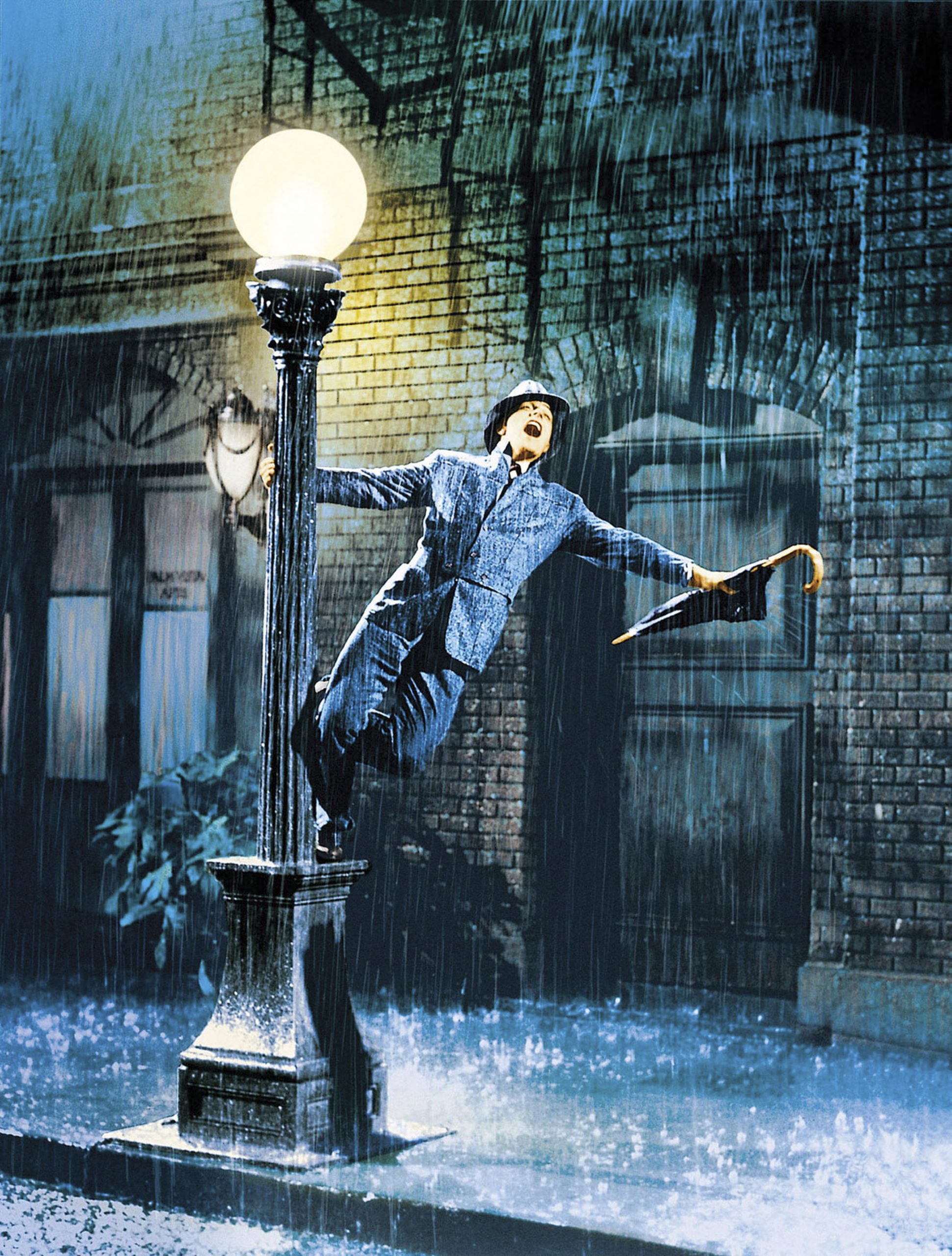
Until Laurence Olivier’s Hamlet (1948), Shakespeare films were considered to be box office poison. A Midsummer Night’s Dream (1935) and Romeo and Juliet (1936) lost money, despite having top Hollywood stars in the leading roles. Studios were all in favor of releasing an occasional prestige film, even if it took a loss, but previous adaptations of the Bard suggested the audience wasn’t ready.

Olivier made Shakespeare acceptable by taking a more cinematic approach. Hamlet was photographed and lit like a deep-focus film noir. The camera glides along the dark halls and winding steps as though it was a living, breathing person. Through a subjective use of the camera, Olivier treats the audience as a voyeur — we feel we’re spying on a family coming apart at the seams. This is very much in keeping with Olivier’s Freudian interpretation of the play. Olivier even suggests a possible Oedipal relationship between Hamlet and his mother. Hamlet is seeking to eliminate a rival as much as he is seeking revenge for his father’s death.

This production is also innovative in Olivier’s use of a voice over for Hamlet’s soliloquies. If the soliloquies are meant to be Hamlet’s inner thoughts, then a voice over is a more natural representation than having the actor speak his thoughts out loud. Would Shakespeare have approved? We’ll never know, though it’s a technique that wouldn’t have been practical on the Elizabethan stage.

Hamlet won four Academy awards: Best Picture, Best Actor (Olivier), Best Black and White Art Direction/Set Direction, and Best Black and White Costume Design. The film was praised for its magnificent photography with Olivier given much of the credit for deciding to film in black-and-white rather than in color. Olivier’s previous Shakespeare film, Henry V (1944), was photographed in Technicolor. Years later, Olivier revealed during a television interview that he was having a quarrel with Technicolor at the time, and he chose to shoot Hamlet in black-and-white out of spite — not for creative considerations. Whatever the reason, it’s hard to imagine how this film could be any better in color. It remains the definitive film adaptation of the play, though Kenneth Branagh’s Hamlet (1996) comes close. Branagh filmed the entire four-hour play, where Olivier had to throw out about ninety minutes of the text in order to make the movie more appealing to a general audience.

Hamlet
(1948; directed by Laurence Olivier)
The Criterion Collection (DVD)

Friday, February 6 at 1:30 a.m. eastern (late Thu. night) on Turner Classic Movies

War Starts at Midnight!

War Starts at Midnight!

Reviews

Don’t be put off by the title. The Life and Death of Colonel Blimp (1943) is one of the finest British films ever made.

Based on the popular Colonel Blimp political cartoon that satirized Britain’s military establishment, Winston Churchill was so worried the film would send the wrong wartime message to British and American audiences he tried to stop it in mid-production.

Michael Powell and Emeric Pressburger, the film’s co-directors, had hoped to use Laurence Olivier in the title role of Clive Candy, but the Ministry of War refused to release Olivier from military duty. In his place, Powell and Pressburger chose Roger Livesey, who gives a remarkable performance that convincingly portrays Candy over a 40-year period encompassing three wars.

Churchill allowed the film to be released in Britain in July 1943, but held up its release to the U.S. until 1945. That version was 10 minutes shorter than the British version (153 minutes versus 163 minutes). After an unsuccessful run, the U.S. print was trimmed to 93 minutes and wasn’t seen uncut in either England or the United States until the 1970s.

While the controversy over the Blimp character is important for understanding the context of the movie, it’s the excellent performances, as well as the subtle direction and intelligent script by Powell and Pressburger, that make this a real standout. Here are some examples of the dialogue:

Hoppy: I was awfully sorry to hear about your leg. [Looks down] Jumping Jehosaphat! They’re both there!
Clive Candy: What the hell did you think I was standing on?
Hoppy: They told me in Bloemfontein that they cut off your left leg.
Clive Candy: [Examines leg] Can’t have, old boy. I’d have known about it.

Clive Candy: The Kaiser spoke — and the Prince of Wales spoke . . .
Edith Hunter: Spoke about what?
Clive Candy: Nobody could remember.

Clive Candy: Well sir, I have a friend . . .
Colonel Betteridge: Good. Not everybody can say that. Continue!

Clive Candy: I heard all that in the last war! They fought foul then — and who won it?
Theo Kretschmar-Schuldorff: I don’t think you won it. We lost it — but you lost something, too. You forgot to learn the moral. Because victory was yours, you failed to learn your lesson twenty years ago and now you have to pay the school fees again. Some of you will learn quicker than the others, some of you will never learn it — because you’ve been educated to be a gentleman and a sportsman, in peace and in war. But Clive! [tenderly] Dear old Clive — this is not a gentleman’s war. This time you’re fighting for your very existence against the most devilish idea ever created by a human brain — Nazism. And if you lose, there won’t be a return match next year. . . perhaps not even for a hundred years.

Clive Candy: War starts at midnight!

Filmed in London and the surrounding countryside during the Blitz, this is an epic film. It’s epic not just in its physical and temporal scale, but also in its ambitious themes. The story is an elegy on friendship and divided loyalties, on lost opportunities and an unwillingness to adapt.

Unlike the blustery and bullheaded Blimp of the political cartoon, this Blimp is sympathetic. At heart, he’s a good man who can admit his mistakes. Because he’s entirely human, and not a cardboard figure, the criticism of Churchill’s military rings truer that it might have otherwise.

The Life and Death of Colonel Blimp
(1943; directed by Michael Powell and Emeric Pressburger)
The Criterion Collection (DVD)

Sunday, February 1 at 11:30 a.m. eastern on Turner Classic Movies

Living on the Edge

Living on the Edge

Reviews

Only Angels Have Wings (1939) is one of Howard Hawks’ best and most personal films. Hawks was a master of taking on the conventions of a genre and adding deeper meaning to its clichéd elements. At the same time, he was able to reinvigorate the entertainment aspects of the genre, so the end result is a far richer film than you would expect. Only Angels Have Wings is a teeth-clinching adventure film about a band of outcast pilots who bravely agree to fly a South American mail run — in weather conditions that would turn back any other pilot.

As in later Hawks films, you’ll find the themes of loyalty, personal responsibility, and group cohesion. Underneath those themes is a web of complex personal relationships. And within those relationships, you’ll encounter the problem of how we deal with — or choose not to deal with — the issue of our own mortality.

In an interview published in the February 1956 issue of Cahiers du Cinéma, Hawks describes a scene where two of the pilots deal openly with the inevitability of death:

Adventure stories reveal how people behave in the face of death — what they do, say, feel, and even think. I have always liked the scene in Only Angels Have Wings in which a man says, ‘I feel funny,’ and his best friend says ‘your neck is broken,’ and the injured man then says ‘I have always wondered how I would die if I knew I was going to die. I would rather you didn’t watch me.’ And the friend goes out and stands in the rain. I have personally encountered this experience, and the public found it very convincing.

It isn’t all doom and gloom. Only Angels Have Wings has a central life-affirming message and plenty of lighthearted moments. The pilots enjoy themselves all the more because they understand life can be fleeting. The audience’s misgivings are embodied in the Bonnie Lee character played by Jean Arthur. While she is initially repulsed by the men who appear to be insensitive to the loss of their friends, she comes to realize (as we do) that this may be the only way they can do their jobs and remain sane.

No other adventure film, that I’m aware of, does a better of job of presenting both the good effects (intense personal friendships) and bad effects (emotional scaring) that flow from a constant exposure to danger. Even more impressive is the film’s exploration of the intricate interplay between the good and bad effects. Insight into the human psyche on top of an exhilarating adventure story — what more could you ask from a Hollywood film?

Only Angels Have Wings
(1939; directed by Howard Hawks)
The Criterion Collection (Blu-ray and DVD)

Thursday, January 15 at 10:15 p.m. eastern on Turner Classic Movies
Ham Sandwich

Ham Sandwich

Reviews

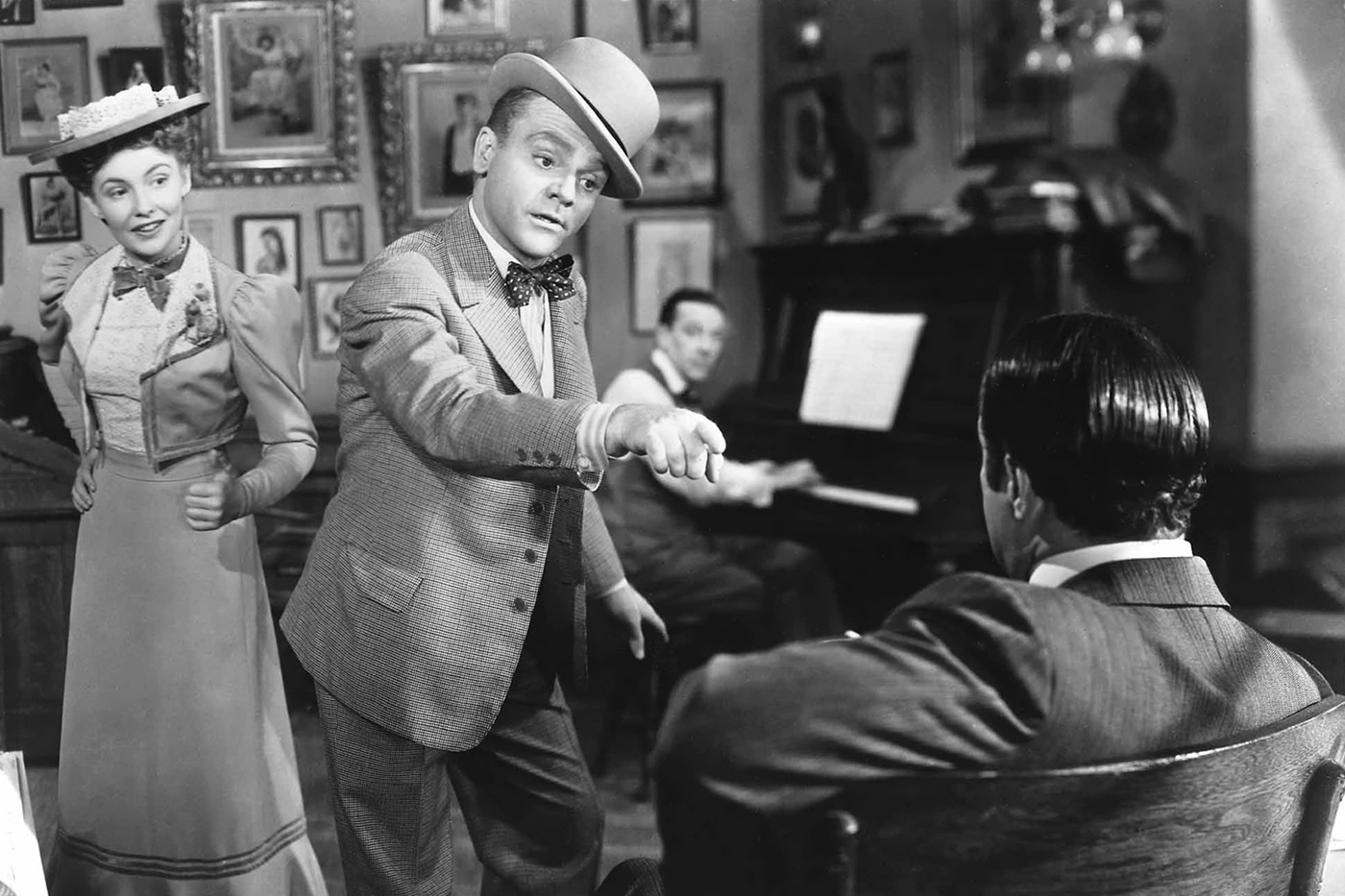
Lubitsch’s To Be or Not to Be (1942) was criticized at the time of its release for being too morbid and for taking a serious subject too lightly. Like Chaplin’s The Great Dictator (1940), it attacks Hitler and the Nazi movement with a broad brush. We would call this a black comedy, which is a film that takes an over-the-top, almost farcical approach to a sensitive subject. We’re quite comfortable with this style of comedy today, but in the 1940s, this type of satire in movies was still untested.

In his book Index to the Films of Ernst Lubitsch, Theodore Huff writes:

The Lubitsch burlesque, laid in Nazi-invaded Warsaw, was called callous, a picture of confusing moods, lacking taste, its subject not suitable for fun making. While others felt that such merciless satire and subtle humor were good anti-Nazi propaganda, the picture was, perhaps, ill-timed, doubly so as it opened not long after the death of Carole Lombard, killed in an airplane accident at the height of a brilliant career.

Based on an original idea by Lubitsch and Ninotchka-author Melchior Lengyel, To Be or Not to Be is the story of a small Polish theatrical troupe forced to shut down after the Nazi invasion. Actor Josef Tura (Jack Benny) suspects his wife Maria (Carole Lombard) may be cheating on him. Tura sees the same young Lieutenant (Robert Stack) leave his seat in the theater each night, just as he begins Hamlet’s soliloquy. After a series of comedic twists and turns, the acting group is called on to give the performance of a lifetime. They’ll have to impersonate their Nazi occupiers, or die trying.

The film is full of wonderful Lubitsch touches — nuggets of visual wit and clever dialogue. Memorable lines include:

Colonel Ehrhardt: They named a brandy after Napoleon, they made a herring out of Bismarck, and the Fuhrer is going to end up as a piece of cheese!

Greenberg: Mr. Rawitch, what you are I wouldn’t eat.
Rawitch: How dare you call me a ham?

Maria Tura: It’s becoming ridiculous the way you grab attention. If I tell a joke, you finish it. If I go on a diet, you lose the weight. If I have a cold, you cough. And if we should ever have a baby, I’m not so sure I’d be the mother.
Josef Tura: I’d be satisfied to be the father.

If all this sounds vaguely familiar, you may have seen Mel Brooks’ 1983 remake, also titled To Be or Not to Be. It follows the Lubitsch film almost scene for scene. Brooks takes the Jack Benny role, and Brooks’ real-life wife Anne Bancroft takes the Carole Lombard role.

To Be or Not to Be
(1942; directed by Ernst Lubitsch)
The Criterion Collection (Blu-ray and DVD)

Tuesday, January 6 at 6:15 p.m. eastern on Turner Classic Movies
 

Light and Shadow

Light and Shadow

Reviews

Rashomon (1950) might have been just a concept film — a fascinating idea trapped inside a mediocre movie. Instead, director Akira Kurosawa gave us a film that’s equally rich in character and imagery. It was so successful, the title became synonymous with its plot device, that four witnesses could recount radically different versions of the facts. Another director might have steered us toward the conclusion that one of the four versions is the true version. Kurosawa strives for a deeper understanding, that we inevitably filter reality through various psychological, social, and religious prisms.

While much is made of Rashomon’s inspired depiction of subjective truth, you rarely read about its other innovations. Compared with his previous efforts, including Drunken Angel (1948) and Stray Dog (1949), Rashomon represents a significant shift in Kurosawa’s approach to filmmaking.

In Something Like an Autobiography, Kurosawa explained how he wanted to recapture his childhood enthusiasm for film as a purely visual medium:

Since the advent of the talkies in the 1930s, I felt we had misplaced and forgotten what was so wonderful about the old silent movies. I was aware of the aesthetic loss as a constant irritation. I sensed a need to go back to the origins of the motion picture to find this peculiar beauty again; I had to go back into the past. In particular, I believed that there was something to be learned from the spirit of the French avant-garde films of the 1920s. Yet in Japan at this time we had no film library. I had to forage for old films, and try to remember the structure of those I had seen as a boy, ruminating over the aesthetics that had made them special. Rashomon would be my testing ground, the place where I could apply the ideas and wishes growing out of my silent-film research. To provide the symbolic background atmosphere, I decided to use the Akutagawa ‘In a Grove’ story, which goes into the depths of the human heart as if with a surgeon’s scalpel, laying bare its dark complexities and bizarre twists. These strange impulses of the human heart would be expressed through the use of an elaborately fashioned play of light and shadow.

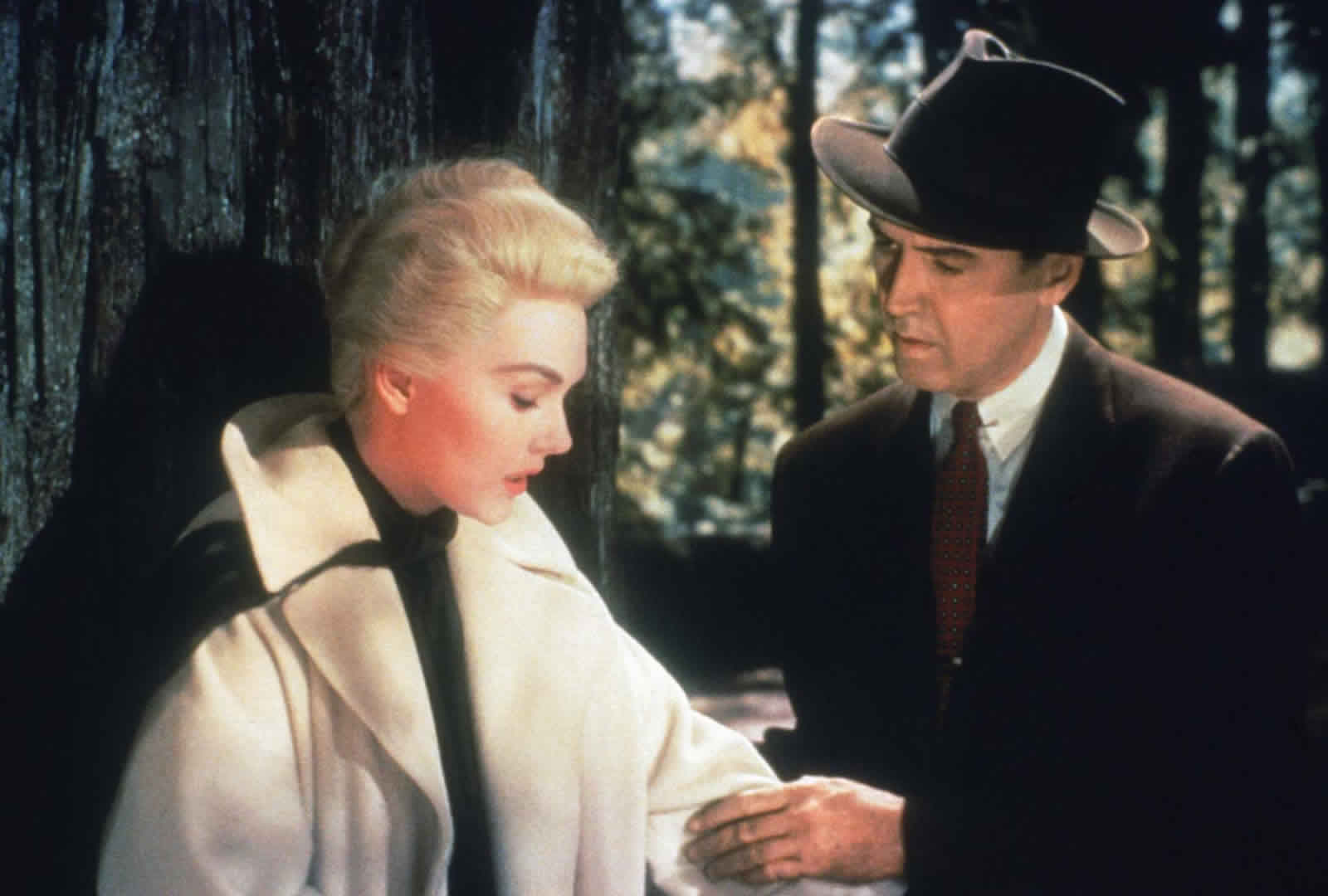
The lights and shadows are enhanced by intricately orchestrated camera movements. Much like the camera movements in Sunrise (1927), Rashomon’s camera sometimes follows the characters, sometimes leads the characters, and sometimes moves in opposition to the characters. In Sunrise, the camera movements reflect the husband’s moral hesitation in meeting with the city woman. In Rashomon, the camera movements reflect the viewer’s struggle to find a common path through the four stories.

Kazuo Miyagawa, the film’s cinematographer, carefully mapped out the scenes where the viewer is led through the forest, often at breakneck speeds. Miyagawa broke with cinematic conventions when he aimed the camera directly at the sun as it moved in and out of the trees. The same effect was copied in Hollywood throughout the 1950s and 1960s, both for movies and television. Kurosawa and Miyagawa chose to photograph the Rashomon gate in pouring rain to enhance its bleakness. After running a series of tests and determining the rain wouldn’t be visible, they added black ink to the rain so it could be seen against the gray sky.

This movie improves with each viewing, not because the plot is overly complex, but because it has so much to offer visually, aesthetically, and philosophically.

Rashomon
(1950; directed by Akira Kurosawa)
The Criterion Collection (Blu-ray and DVD)

Friday, January 2 at 10:15 p.m. eastern on Turner Classic Movies
Well-Oiled Machine

Well-Oiled Machine

Reviews

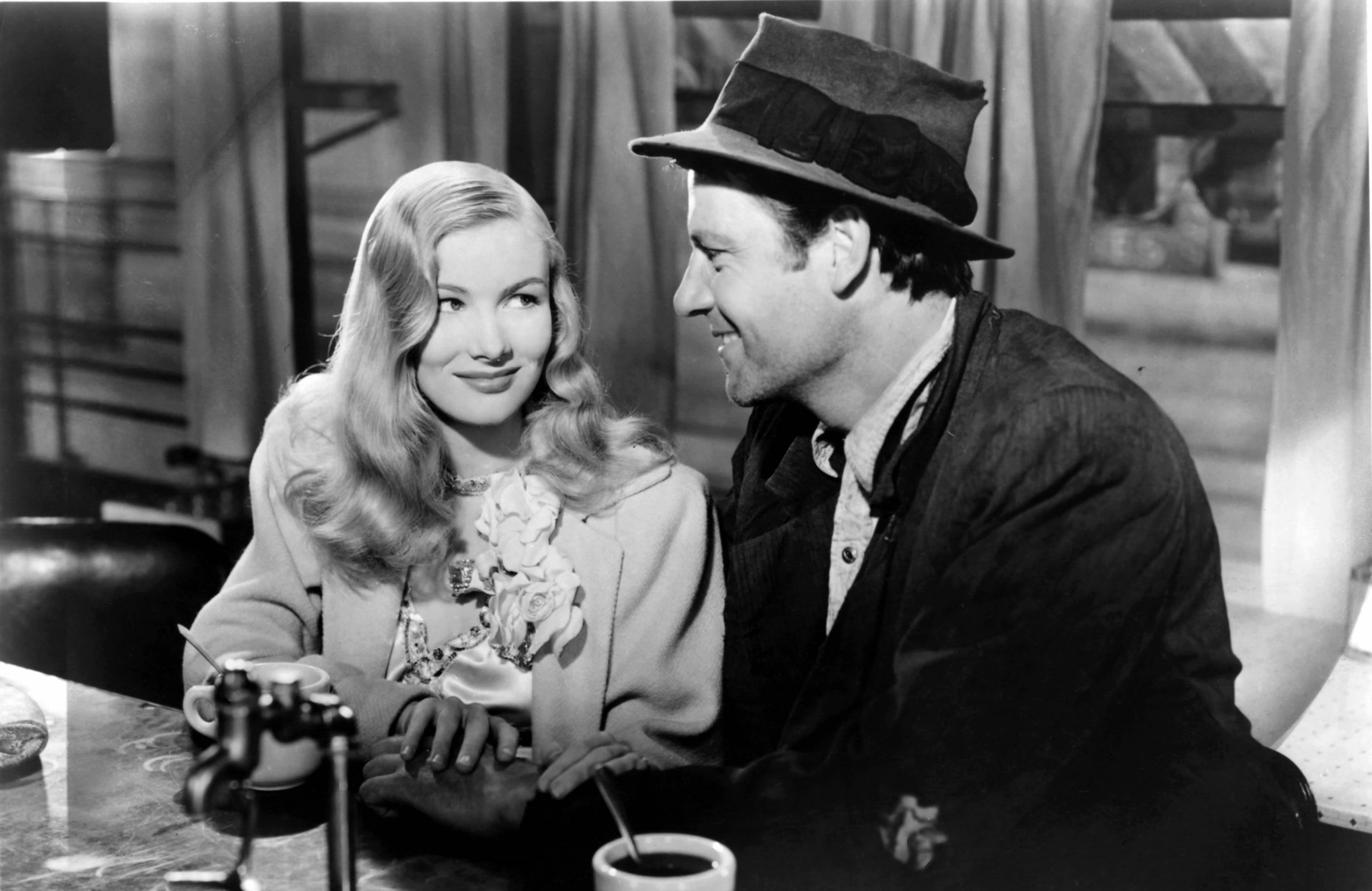
Mildred Pierce (1945) is the kind of competently directed Hollywood film from the 1940s that seems better each time you watch it. Like Michael Curtiz’s other outstanding drama from that decade, Casablanca (1943), everything seems to click — uniformly fine performances, a terrific script that never misses a beat, and a first-rate musical score (Max Steiner in both cases).

Joan Crawford won the title role only after it was turned down by Bette Davis and Rosalind Russell. Shirley Temple was considered for the part of the teenaged daughter, Veda Pierce. Fortunately, fate (or good sense) prevailed, and it’s now hard to imagine anyone else in any of the roles. Ranald MacDougall, Catherine Turney, and an uncredited William Faulkner adapted the screenplay from the novel by James M. Cain. The movie downplays much of the sexual frankness of the novel, which Curtiz handles obliquely. You may recognize Cain as the author behind The Postman Always Rings Twice (1946).

A key strength of the film version of Mildred Pierce is that it doesn’t fit easily into a single genre. It begins with a murder and failed attempt to frame an innocent man — classic elements of a film noir. The distinct lighting and emotionally charged music also point to that genre. In the flashbacks, however, we’re thrown into an entirely different film genre, sometimes referred to as “weepies” or “women’s pictures.” Here we’re sympathetically drawn into the story of a woman struggling to give her children a better life. The arc of the film is the collision of these two types of movies. Ultimately, one of the genres has to win out, and it’s the interplay between the two storylines that makes this film especially appealing.

It’s also remarkable how the various elements mix together so seamlessly. The comic lines (delivered by Jack Carson as Wally and Eve Arden as Ida) reinforce what we’ve already learned about the characters. For example, Ida sums up Mildred and Veda’s relationship with this biting comment, “Personally, Veda’s convinced me that alligators have the right idea. They eat their young.” Similarly, Wally acknowledges his own failings when he says, “Oh boy! I’m so smart it’s a disease!”

While you can make a case against the restrictiveness of the Hollywood studio system, movies such as Mildred Pierce represent the best argument for the advantages. The film’s high-buff polish and overall consistency are a direct result of a well-oiled studio machine.

Mildred Pierce
(1945; directed by Michael Curtiz)
The Criterion Collection (Blu-ray)
Warner Home Video (DVD)

Friday, January 2 at 6:00 p.m. eastern on Turner Classic Movies
Fiercely Original

Fiercely Original

Reviews

For many years, I considered The Gold Rush (1925) to be my favorite Chaplin film. It has everything you would want in a great comedy: thrills (sliding off the edge of a cliff), romance (Georgia Hale is strikingly beautiful), imagination (a pretend dance using forks and potatoes), pathos (the tramp waiting for Georgia to attend his dinner), and intelligent humor (almost everywhere you look). These days I would choose City Lights (1931) as Chaplin’s best, but only because it’s more polished and consistent. I would still choose The Gold Rush as the best introduction to Chaplin — as long as the print quality is good, and it’s not the 1942 reissue version where Chaplin speaks all the titles and provides a running commentary. Unfortunately, the print quality is usually better with the 1942 reissue over the 1925 silent version.

Though fiercely original, Chaplin could still be influenced by other filmmakers. In his book Charlie Chaplin, author Theodore Huff describes how Chaplin may have absorbed ideas from other films:

The close to hysterical suspense of the scene of the cabin half over the cliff may show the influence of Harold Lloyd who started a vogue for comedy-thrill sequences in his “Safety Last” and other skyscraper pictures. It is Chaplin’s first use of such effects but, imitated or not, his inimitable touches make it his own. The happy ending of the film, which in some ways breaks the mood, may have been inspired by the epilogue of Murnau’s “The Last Laugh,” which was then influencing picture-making all over the world.

Chaplin considered The Gold Rush to be “the picture I want to be remembered by.” Huff estimated its production costs to be in the neighborhood of $650,000 (compared with $300,000 for The Kid). It was money well spent. The Gold Rush was one of the highest grossing films of the 1920s, bringing in $2.5 million domestically and another $2.5 million internationally. Chaplin received about $2 million, which was an extraordinary amount of money at the time.

Based on the listed running time (89 minutes), it appears that TCM has scheduled the 1925 version this time around. The Blu-ray and DVD packages from Criterion include both versions, which gives you a chance to experience the film from two different perspectives.

The Gold Rush
(1925; directed by Charles Chaplin)
The Criterion Collection (Blu-ray and DVD)

Sunday, December 14 at 8:00 p.m. eastern on Turner Classic Movies
Heaven on Earth

Heaven on Earth

Reviews

Wim Wender’s Wings of Desire (1987) is an unusual film. It’s the story of the guardian angels who watch over the citizens of Berlin. One angel (named Damiel) yearns to become mortal, so he can experience firsthand what humans see and feel. On one level, this film explores universal themes: the loneliness of being human, the walls (both real and psychological) that prevent us from communicating, and the power of love to break down those barriers. On another level, this film can be an emotional challenge as it immerses the viewer into the often distressed thoughts of others.

It’s a fascinating idea for a film that’s beautifully photographed by Henri Alekan, best known for creating the fairytale-like imagery from Jean Cocteau’s Beauty and the Beast (1946). The shots from the angels’ point of view are rendered in a luminous and tinted black-and-white, while the shots from the human point of view are rendered in color, adding an extra dimension to represent the additional qualities Damiel is seeking. There’s a terrific sequence in a library where a team of angels gently move from person to person hearing their thoughts and attempting to sooth their troubled souls. In another scene, an angel tries to dissuade a man from committing suicide. In several scenes, young children can sometimes see the angels, or at least sense their presence.

Peter Falk portrays himself in the film, as the actor known for playing the television detective Columbo. He is visiting Berlin to act in a film. Wisely, Wenders doesn’t overplay the film-within-a-film aspects of Falk’s role, but rather gives him a crucial part in the larger film that helps to bring many of the plot elements together.

This movie isn’t for everyone. The first half can be confusing as you maneuver your way through the fleeting human thoughts and sometimes swirling imagery. Director Wim Wenders and writer Peter Handke created much of the script on the fly, which gives the story an ethereal quality but can also make it hard to navigate. Let it wash over you, and don’t worry about connecting the dots. As the film progresses, you’ll soon find solid ground under your feet.

Wings of Desire
(1987; directed by Wim Wenders)
MGM Home Entertainment (Blu-ray and DVD)

Friday, December 12 at 1:45 a.m. eastern (late Thur. night) on Turner Classic Movies