Taking a Chance

Taking a Chance

Reviews

Winchester ’73 (1950) is an important film for many reasons. It’s the first in a string of five top-notch westerns made over a five-year period that were directed by Anthony Mann and star James Stewart. The other four are Bend of the River (1952), The Naked Spur (1953), The Far Country (1955), and The Man from Laramie (1955).

You could argue that Winchester ’73 is the first modern western. It brings the flawed protagonist from the film noirs over to the westerns. Mann had already made a name for himself with his skillful direction of tough-guy psychological dramas, including T-Men (1947), Raw Deal (1948), and Side Street (1949). By 1950, he was well prepared to reinvigorate the western genre by giving it a darker, more anguished hero.

The success of Winchester ’73 is largely responsible for the rebirth of the genre in the 1950s, and its tone would lead to other revisionist westerns, such as John Ford’s The Searchers (1956) and Sam Peckinpah’s The Wild Bunch (1969). It isn’t fair, however, to say there were no dark westerns prior to 1950. Howard Hawks’ Red River (1948) points in this direction, though the John Wayne character isn’t the protagonist of that film.

Winchester ’73 is also notable for its contribution to the break up of the studio system. Mann couldn’t afford to pay Stewart his usual salary, so Stewart agreed to take a percentage of the profits. That turned out to be a smart move, because Winchester ’73 went on to gross $4.5 million in the U.S. That encouraged similar deals between other actors and production companies, and this alternative method of compensation broke the studios’ control in determining which movies actors would appear in and how much they would be paid.

Stewart was a big star at the time (Harvey was released that same year), though he hadn’t appeared in a western since Destry Rides Again (1939). He was taking a risk, as was Mann, in making a moody western. The public may not have accepted the usually upbeat Stewart as having deep unresolved psychological issues. Obviously, the public was able to handle the complexity, and this type of role proved to be a creative shot in the arm for Stewart, who would go on to play brooding roles in the other Mann-Stewart westerns, as well as Hitchcock’s Rear Window (1954) and Vertigo (1958).

Winchester ’73
(1950; directed by Anthony Mann)
Universal Studios (DVD)

Wednesday, May 28 at 1:00 a.m. eastern (late Tues. night) on Turner Classic Movies

Richly Rewarding

Richly Rewarding

Reviews

Sergeant York (1941) poses a problem for film scholars. Immensely popular at the time of its release, the movie doesn’t quite fit into director Howard Hawks’ canon. Hawks didn’t have much leeway with the story, which was based on the true-life events of the best known and highest decorated hero of World War I. Released less than six months before the Pearl Harbor attack, Sergeant York addresses the mixed feelings in the U.S. about entering World War II.

One issue for some film scholars, who sometimes cite this as one of Hawks’ least successful efforts, is the fact that its themes are so clearly telegraphed to the audience. Even if you accept the notion that it isn’t a true-blue Hawks film, there was little else Hawks could do, given that his audience already knew York’s story so well. The element of surprise is gone, and any drama that might arise from York’s momentous decision is muted by the inevitable outcome. As a result, the film feels more conventional than Hawks’ other films, which delight us in their unexpected twists and turns, as the characters and story move in and out of Hollywood norms.

While we gain a better understanding of Hawks by seeing the common threads woven throughout his films, it can be equally instructive to see how he handles material that’s somewhat at odds with his usual style of working. Sergeant York isn’t an archetypal Hawks film. It is, however, richly rewarding when judged on its own merits.

The first part of the movie shows an economy of words and gestures that speak volumes about the inner lives of the isolated mountain community. The disparity between the rural and battlefield portions of the film was noted in contemporary reviews. Here’s what Bosley Crowther had to say in his July 3, 1941 review from The New York Times:

That is all there is to the story, but in the telling of it — of the first part, anyhow — the picture has all the flavor of true Americana, the blunt and homely humor of backwoodsmen and the raw integrity peculiar to simple folk. This phase of the picture is rich. The manner in which York is persuaded to join the fighting forces and the scenes of actual combat betray an unfortunate artificiality, however — in the battle scenes, especially; and the overly glamorized ending, in which York returns to a spotless little farm, jars sharply with the naturalness which has gone before. The suggestion of deliberate propaganda is readily detected here.

Even though Hawks was constrained by the characters and plot (Alvin York was still alive at the time), this is very much a Hawks film. York’s Tennessee mountain community parallels the isolated groups in Only Angels Have Wings (1939), His Girl Friday (1940), Ball of Fire (1941), and The Thing from Another World (1951). Religious principle versus patriotic duty becomes the Hawksian conflict that potentially separates York from his community and ultimately allows him to re-assert his individuality within the group.

Sergeant York
(1941; directed by Howard Hawks)
Warner Home Video (DVD)

Saturday, May 24 at 9:45 a.m. eastern on Turner Classic Movies
Lasting Impression

Lasting Impression

Reviews

What’s better than a chilling ghost story? How about four ghost stories rolled into one? Kwaidan (1965) is based on a collection of Japanese ghost stories published in 1904. The author was Lafcadio Hearn, a folklorist of Greek-Irish ancestry, who based his stories on translations of old Japanese texts.

Sixty years later, Japanese director Masaki Kobayashi transformed four of those stories into one of the most beautiful ghost movies ever made. Highly stylized with lavish sets and lighting effects that resemble surreal paintings as much as realistic settings, the movie is less frightening than dreamlike, with images that seep deep into your consciousness. Speak with anyone who has seen it, and you’ll discover it makes a strong impression. It’s fair to say the recent renaissance in Japanese horror films — sometimes referred to J-horror — can be traced directly back to this movie (and, to a lesser extent, to Ugetsu).

In each of the four stories, humans come face to face with the supernatural in the guise of materialized ghosts. How the humans react will determine whether they’ll be harmed by the experience. In the first story, “The Black Hair,” a man leaves his loving wife for a rich woman, realizes his mistake, and returns to find his wife, who is strangely unchanged. The second story, titled “The Woman of the Snow,” centers on a promise made by a woodcutter that he won’t reveal the phantom who saved his life with her icy breath. In the third story, “Hoichi, the Earless,” a blind musician tries to protect himself from the spirits of two warrior clans. His protection is to paint prayers all over his body. And in the last tale, titled “In a Cup of Tea,” a warrior sees the reflection of someone else when he gazes into his tea. Later, that same figure challenges him to a duel.

The DVD includes only the movie and theatrical trailer. Given that the film runs 161 minutes, I’m happy the available space on the disc is devoted mostly to the movie. Anamorphically enhanced for widescreen televisions, the transfer is a wonder to behold. Kwaidan leaves a lasting impression — but only if you’re able to see it in a richly detailed print.

Kwaidan
(1965; directed by Masaki Kobayashi)
The Criterion Collection (Blu-ray and DVD)

Thursday, May 15 at 1:15 a.m. eastern (late Wed. night) on Turner Classic Movies

Classic Comedy Dialogue

Classic Comedy Dialogue

Reviews

Marx Brothers fans usually fall into two camps: those who think Duck Soup (1933) is their best film, and those who think A Night at the Opera (1935) is their best film. The strongest argument in favor of A Night at the Opera is the stateroom scene. It’s the funniest sequence the Marx Brothers ever created. I’m in the Duck Soup camp. I think the slow portions of A Night at the Opera tend to drag it down a bit. And while no single sequence in Duck Soup quite matches the stateroom scene, it’s more consistently entertaining.

Much of the credit has to go to Duck Soup’s writers. Bert Kalmar and Harry Ruby worked together on the story, and Arthur Sheekman and Nat Perrin provided additional dialogue. It also didn’t hurt to have Groucho (Rufus T. Firefly), Chico (Chicolini), and Margaret Dumont (Mrs. Teasdale) to deliver the lines. Here are some examples:

Rufus T. Firefly: Not that I care, but where is your husband?
Mrs. Teasdale: Why, he’s dead.
Rufus T. Firefly: I bet he’s just using that as an excuse.
Mrs. Teasdale: I was with him to the very end.
Rufus T. Firefly: No wonder he passed away.
Mrs. Teasdale: I held him in my arms and kissed him.
Rufus T. Firefly: Oh, I see, then it was murder. Will you marry me? Did he leave you any money? Answer the second question first.

Mrs. Teasdale: Notables from every country are gathered here in your honor. This is a gala day for you.
Rufus T. Firefly: Well, a gal a day is enough for me. I don’t think I could handle any more.

Rufus T. Firefly: Now, what is it that has four pairs of pants, lives in Philadelphia, and it never rains but it pours?
Chicolini: Atsa good one. I give you three guesses.
Rufus T. Firefly: Now let me see. Has four pair of pants, lives in Philadelphia… Is it male or female?
Chicolini: No, I no think so.
Rufus T. Firefly: Is he dead?
Chicolini: Who?
Rufus T. Firefly: I don’t know. I give up.
Chicolini: I give up, too.

Prosecutor: Chicolini, when were you born?
Chicolini: I don’t-a remember. I was just a little baby.

Prosecutor: Something must be done! War would mean a prohibitive increase in our taxes.
Chicolini: Hey, I got an uncle lives in Taxes.
Prosecutor: No, I’m talking about taxes — money, dollars!
Chicolini: Dollars! There’s-a where my uncle lives! Dollars, Taxes!

Duck Soup benefits by having a first-class director at the helm. Leo McCarey had directed many of the best Laurel and Hardy silent comedies. His previous sound comedies, especially Let’s Go Native (1930) and The Kid from Spain (1932), show an inventive and improvisational style that would blend well with the Marx Brothers. Unfortunately, Duck Soup was a flop at the box office. As a result, it was their last film at Paramount. MGM gave them another chance, though their freewheeling approach would prove to be at odds with the MGM factory system. Their comedies following A Night at the Opera and A Day at the Races are pale imitations of their earlier classic films.

Duck Soup
(1933; directed by Leo McCarey)
Universal Pictures Home Entertainment (Blu-ray and DVD)

Saturday, May 10 at 12:15 a.m. eastern (late Fri. night) on Turner Classic Movies

Uncompromised Dedication

Uncompromised Dedication

Reviews

If the historical figure at the center of The Passion of Joan of Arc (1928) could be said to embody uncompromised dedication, the same could be said of the film’s director, Carl Theodore Dreyer. Consisting entirely of close-ups and medium shots, with only the sparest of backgrounds, Dreyer relentlessly focuses in on the characters and conflicts. It may be the closest we’ve ever come to a pure narrative cinema. As you might expect, reactions to this pared-down style vary. Most film historians view this as one of the greatest silent films ever made. I wholeheartedly agree. Others see it as too extreme. You’ll have decide for yourself.

Much of the emotional appeal of this film can be attributed to the remarkable performance by Maria Falconetti as Jeanne d’Arc. It is often cited as the finest performance ever committed to celluloid. In a 1965 interview with Cahiers du Cinéma, Dreyer explains how he chose Falconetti for the part:

I went to see her one afternoon and we spoke together for an hour or two. I had seen her at the theatre. A little boulevard theatre whose name I have forgotten. She was playing there in a light, modern comedy and she was very elegant in it, a bit giddy, but charming. She didn’t conquer me at once and I didn’t have confidence in her immediately. I simply asked her if I could come to see her the next day. And during that visit, we talked. That is when I sensed that there was something in her to which one could make an appeal. Something that she could give; something, therefore that I could take. For, behind the make-up, the pose, behind that modern and ravishing appearance, there was something. There was a soul behind that facade. If I could see her remove the facade it would suffice me. So I told her that I would very much like, starting the next day, to do a screen test with her. ‘But without make-up,’ I added, ‘with your face completely naked.’ She came, therefore, the next day ready and willing. She had taken off her make-up, we made the tests, and I found on her face exactly what I had been seeking for Joan of Arc: a rustic woman, very sincere, who was also a woman who had suffered. But even so, this discovery did not represent a total surprise for me, for, from our first meeting, this woman was very frank and, always, very surprising.

Dreyer based the script on the original trial transcripts from the year 1431, as well as a novel by Joseph Delteil. The film took a year and a half to complete, in part because Dreyer insisted that the costumes, church, courtyard, gestures, and other aspects of the production were as authentic as possible. The whole construction was painted pink, rather than white, to give it a gray tint against the sky.

According to Ebbe Neergaard’s book Carl Dreyer: A Film Director’s Work, Dreyer demanded absolute silence and banished anyone who wasn’t needed whenever Falconetti had an important scene. Neergaard writes, “She was, as it were, activated into expressing what Dreyer could not show her, for it was something that could only be expressed in action, not speech, and she alone could do it, so she had to help him. And she realized that this could only be done if she dropped all intellectual inhibitions and let her feelings have free access from her subconscious to her facial expression.”

The Passion of Joan of Arc
(1928; directed by Carl Theodore Dreyer)
Criterion Collection (Blu-ray and DVD)

Thursday, May 1 at 3:00 a.m. eastern (late Wed. night) on Turner Classic Movies

Something Astonishing

Something Astonishing

Reviews

The Maltese Falcon (1941) is often cited as the very first film noir. Whether it is or not depends on your definition of a film noir. It has many of the elements we associate with the genre. On the other hand, director John Huston’s tight script and well-paced direction give it a lift that’s missing from the vast majority of film noirs.

This was Huston’s first directorial effort, and it’s one of the better first films from a Hollywood director. Huston’s father, actor Walter Huston, has a brief role as the ill-fated captain who delivers the all-important package. John Huston was working as a screenwriter for Warner Bros and was anxious to direct one of his own scripts. He chose Dashiell Hammett’s 1929 novel of the same name, which must have seemed an odd choice as the studio had filmed it twice already.

The 1931 version, originally titled The Maltese Falcon, was later retitled Dangerous Female so it wouldn’t be confused with Huston’s 1941 remake. As a pre-code movie, it incorporated some of the seedier elements from the novel, though it lacked the novel’s gritty atmosphere and dramatic tension. A second adaptation titled Satan Met a Lady (1936), starring Bette Davis, was directed with a lighter touch — almost as a comedy.

Huston’s version was a success largely due to his extraordinary skill in creating fully formed characters through dialogue. The script even pokes fun at the conventions of the genre, which is especially remarkable when you consider that Huston was bringing some of those conventions to film for the very first time. Here are a few examples:

Spade: You, uh — you aren’t exactly the sort of a person you pretend to be, are ya?
Brigid: I’m not sure I know exactly what you mean.
Spade: The schoolgirl manner, you know, blushing, stammering, and all that.
Brigid: I haven’t lived a good life — I’ve been bad, worse than you could know.
Spade: That’s good, because if you actually were as innocent as you pretend to be, we’d never get anywhere.
Brigid: I won’t be innocent.
Spade: Good.

Gutman: I distrust a close-mouthed man. He generally picks the wrong time to talk and says the wrong things. Talking’s something you can’t do judiciously, unless you keep in practice. Now, sir, we’ll talk if you like. I’ll tell you right out, I’m a man who likes talking to a man who likes to talk.

Wilmer: Keep on riding me, and they’re gonna be picking iron out of your liver.
Spade: The cheaper the crook, the gaudier the patter, eh?

Gutman: By Gad, sir, you are a character. There’s never any telling what you’ll say or do next, except that it’s bound to be something astonishing.

In addition to launching the directorial career of John Huston, this film brought Humphrey Bogart from the second rank of actors and made him a star. His role as the hard edge — but not heartless — private detective Sam Spade would strike a chord with audiences and cause Warner Bros to seek out similar properties for Bogart. Without the success of The Maltese Falcon, the studio might not have been as eager to film Casablanca (1942) or The Big Sleep (1946).

Bogart’s role in The Maltese Falcon was originally offered to George Raft, who turned it down because he didn’t think the film would be important enough. Had Raft taken the part, Bogart might not have been considered for any of his later roles. And this version wouldn’t have been as successful or influential.

The Blu-ray looks terrific with deep dark tones in the shadows and an appropriate level of film grain. If you’ve only see this film over the years on a small television, you’ll be amazed at how wonderful it looks on a big screen.

An added bonus on the Blu-ray disc is a studio blooper reel titled “Breakdowns of 1941.” Who knew that Jimmy Stewart, Pat O’Brien, and James Cagney would laughingly curse after flubbing a line? I guess these actors were human after all.

The Maltese Falcon (1941; directed by John Huston)
Warner Home Video (Blu-ray and DVD)

Friday, April 11 at 8:00 p.m. eastern on Turner Classic Movies
Eighth Wonder of the World

Eighth Wonder of the World

Reviews

When a film (or its star) rises to the status of cultural icon, it’s easy to forget why it became a part of the social fabric. We may forget Fay Wray’s scream is almost primal in its intensity. We may forget the feverish pace at which the story unfolds once Kong appears. What we don’t forget is the remarkable moves and expressions of the giant ape. Unlike the other popular film monsters of the era — most notably Dracula and Frankenstein — Kong was created entirely by visual effects. The is it real, is it not real quality of the film continues to capture our imagination.

The granddaddy of all big-creature visual-effects movies, King Kong (1933) is still studied today for its impressive layering of techniques to achieve the most convincing look for that particular shot. Chief technician Willis H. O’Brien (“O.B.”) used combinations of stop motion animation (Kong consists mostly of this technique), glass shots (literally paintings on glass), rear projection (sometimes multiple screens used simultaneously), and miniatures (often mixed with full-sized objects to enhance the sense of distance).

To the viewer, none of this matters. What matters is the willing suspension of disbelief, and the sense that Kong has a real personality. If you feel sorry for Kong and his inability to fit in with the modern world, it’s because you believe at some level he is a sentient being with real emotions.

This newly mastered print of King Kong should help restore the movie to its rightful place in film history. Even in a scratchy third-generation television print, we responded to Kong as a believable character. With the remastered print, we can clearly see his surroundings. The jungle looks as though it might have leaped from a Gustave Doré illustration. The intricate multi-plane compositions enhance the dramatic tension as the hero and heroine flee for their lives.

RKO took a big chance on this film. Near bankruptcy, the studio bet everything on the success of its “ape picture.” Fortunately, King Kong was a monster hit. Depression-era audiences responded just as we do today to visual-effects monsters (think Gollum in The Lord of the Rings trilogy). If the effects are innovative enough, and the creatures are believable enough, we’ll keep coming back for more.

The latest Blu-ray edition has the movie and special features on a single disc. The special features include two first-rate documentaries: I’m King Kong! The Exploits of Merian C. Cooper, as well as RKO Production 601: The Making of Kong, Eighth Wonder of the World. The Blu-ray looks great and is very close to how the movie must have looked in the theaters back in 1933.

If you buy the Blu-ray or DVD, try advancing the Kong action scenes one frame at a time. There are a few places within the film where you can see a metal stand or measuring apparatus positioned next to Kong — but only for a single frame.

King Kong
(1933; directed by Merian C. Cooper and Ernest B. Schoedsack)
Warner Home Video (Blu-ray and DVD)

Tuesday, April 8 at 4:15 p.m. eastern on Turner Classic Movies
Silly Little Irish Story

Silly Little Irish Story

Reviews

One of John Ford’s most popular films — The Quiet Man (1952) — almost didn’t happen. According to Jordan R. Young’s book John Ford’s The Quiet Man, Ford first tried to secure funding for the movie back in 1937. That was a year after he had purchased the story for just $10. Maureen O’Hara explained that it was flatly turned down by 20th Century Fox, MGM, and RKO. She said it was dismissed as a “silly little Irish story that would never ever make a penny.”

In 1946, Ford agreed to a three-film deal with Argosy Productions. If the first film made money, he would have the go-ahead to pursue his Quiet Man pet project as the third film, on the assumption that it wouldn’t be able to cover its costs. That first film was The Fugitive (1947), which as an artistic success, but a financial flop. As a result, The Quiet Man was again shelved indefinitely.

It might never have been produced, if John Wayne hadn’t approached Herbert Yates, who headed up Republic Pictures. Yates felt that television would soon chip away at Republic’s B-grade movie business. Yates also assumed that The Quiet Man wouldn’t be popular with audiences, so he insisted that Ford, Wayne, and O’Hara make a western first, so that its profits could shore up the later loss. That movie was Rio Grande (1950), which neither Ford or Wayne especially wanted to make.

As you may have guessed, The Quiet Man turned out to be highly profitable, even with its substantial $1.75 million budget. It was the 12th highest grossing film for 1952. And it was one of Ford’s personal favorites.

If you’re looking to see the film in all its glory, you’re in luck. Olive Films recently released a Blu-ray version through its Signature series that’s based on a 4K scan of the original camera negative. Originally shot in Technicolor, the disc’s colors are rich and vivid, without being overwhelming. This film won an Oscar for Best Cinematography, as well as for Best Director, and this latest restoration shows what all the fuss was about.

Extras on the Blu-ray disc include an excellent audio commentary by Ford biographer Joseph McBride, an informative 25-minute documentary hosted by Leonard Maltin, and a 12-minute appreciation of Ford by Peter Bogdanovich. Highly recommended!

The Quiet Man
(1952; directed by John Ford)
Olive Signature (Blu-ray and DVD)

Monday, March 17 at 8:00 p.m. eastern on Turner Classic Movies
Word Play

Word Play

Reviews

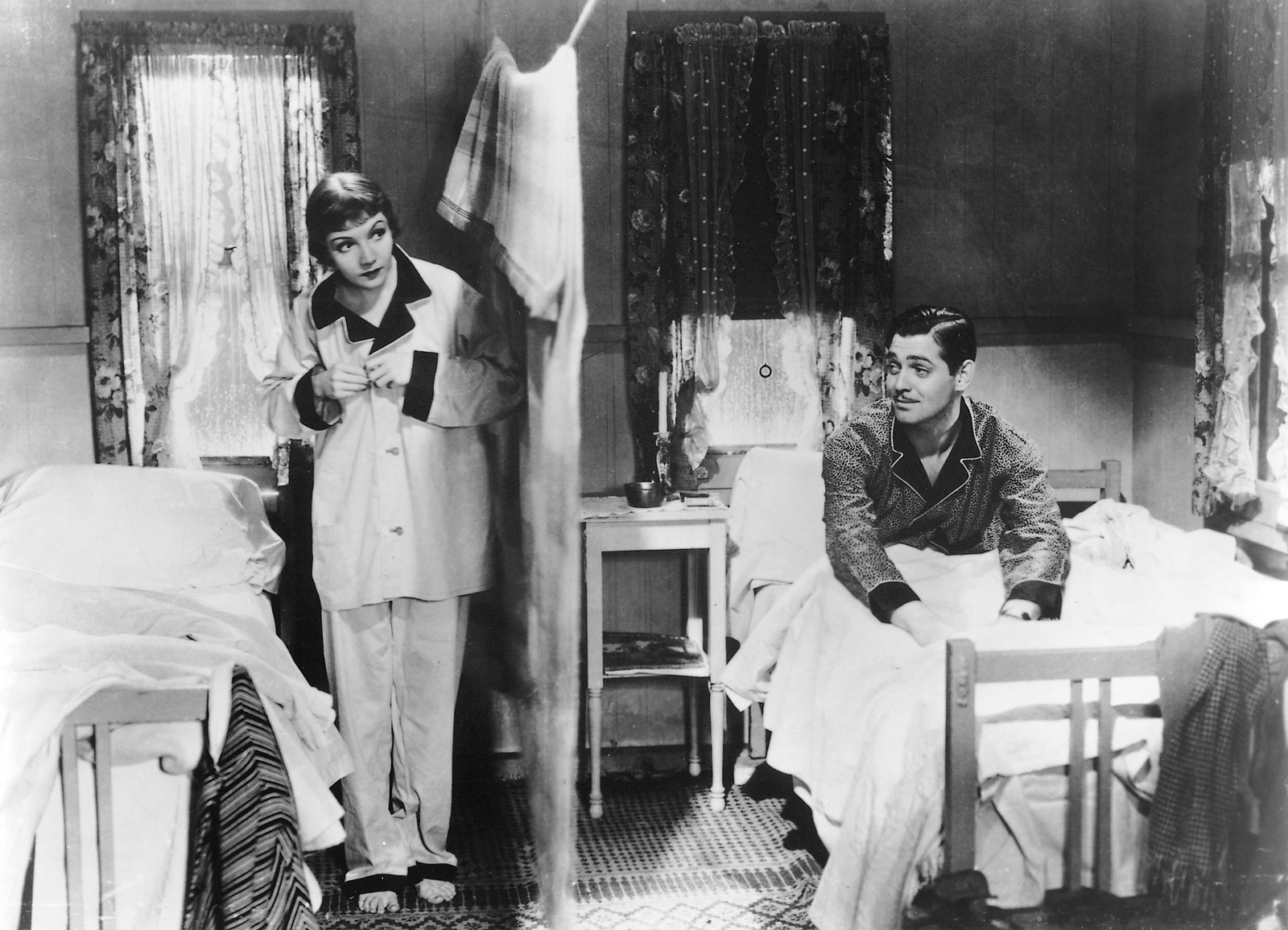
Ask any Howard Hawks fan to name Hawks’ best comedies, and you’ll likely be stuck in a twenty-minute conversation. Almost everyone agrees Bringing Up Baby (1938) and His Girl Friday (1940) are top notch, but after that, the choices begin to differ. I would place Twentieth Century (1934) right up there, as well as Ball of Fire (1941). Far superior to Hawk’s own remake (A Song is Born), Ball of Fire sparkles with intelligent wordplay and shines with immediately likable characters.

Written by Charles Brackett, Thomas Monroe, and Billy Wilder, Ball of Fire is the story of seven encyclopedia writers who venture out into the world after nine years of cloistered research. Having just completed their entries on Saltpeter and Sex, they discover their books aren’t up-to-date enough for their entry on Slang. Led by Professor Bertram Potts (Gary Cooper), they encounter Sugarpuss’ O’Shea (Barbara Stanwyck), a fast-talking compendium of street idioms. They learn “shove in your clutch” means “get lost” and a “crabapple annie” is a stuffy, prudish person.

Sugarpuss O’Shea: Do you know what this means – ‘I’ll get you on the Ameche?’
Professor Bertram Potts: No.
Sugarpuss O’Shea: ‘Course you don’t. An Ameche is the telephone, on account of he invented it.
Professor Bertram Potts: Oh, no, he didn’t.
Sugarpuss O’Shea: Like, you know, in the movies.
Professor Bertram Potts: Well, I see what you mean. Very interesting. Make no mistake, I shall regret the absence of your keen mind; unfortunately, it is inseparable from an extremely disturbing body.

Though Wilder denies it was done consciously, the script plays out as a twisted Snow White and the Seven Dwarfs. Here, Snow White isn’t so innocent, the prince is one of the seven dwarfs, and the dwarfs are called on to save the day. Much of the humor derives from how sheltered the encyclopedists have become in their quest to study life from a distance. Almost all Hawks films explore the dynamics of a closed group, and how it handles threats from the outside world. Ball of Fire fits squarely into that canon, though it’s more gentle than the other top Hawks comedies (the seven men are almost the antithesis of the reporters in His Girl Friday).

Ball of Fire
(1941; directed by Howard Hawks)
MGM (DVD)

Wednesday, March 12 at 9:45 p.m. eastern on Turner Classic Movies
The Sound of Silence

The Sound of Silence

Reviews

In one of the finest books ever written about comedic film, The Silent Clowns, Walter Kerr refers to Buster Keaton as the most silent of the silent film comedians:

The silence was related to another deeply rooted quality — that immobility, the sense of alert repose we have so often seen in him. Keaton could run like a jackrabbit, and, in almost every feature film, he did. He could stunt like Lloyd, as honestly and even more dangerously. His pictures are motion pictures. Yet, though there is a hurricane eternally raging about him, and though he is often fully caught up in it, Keaton’s constant drift is toward the quiet at the hurricane’s eye.

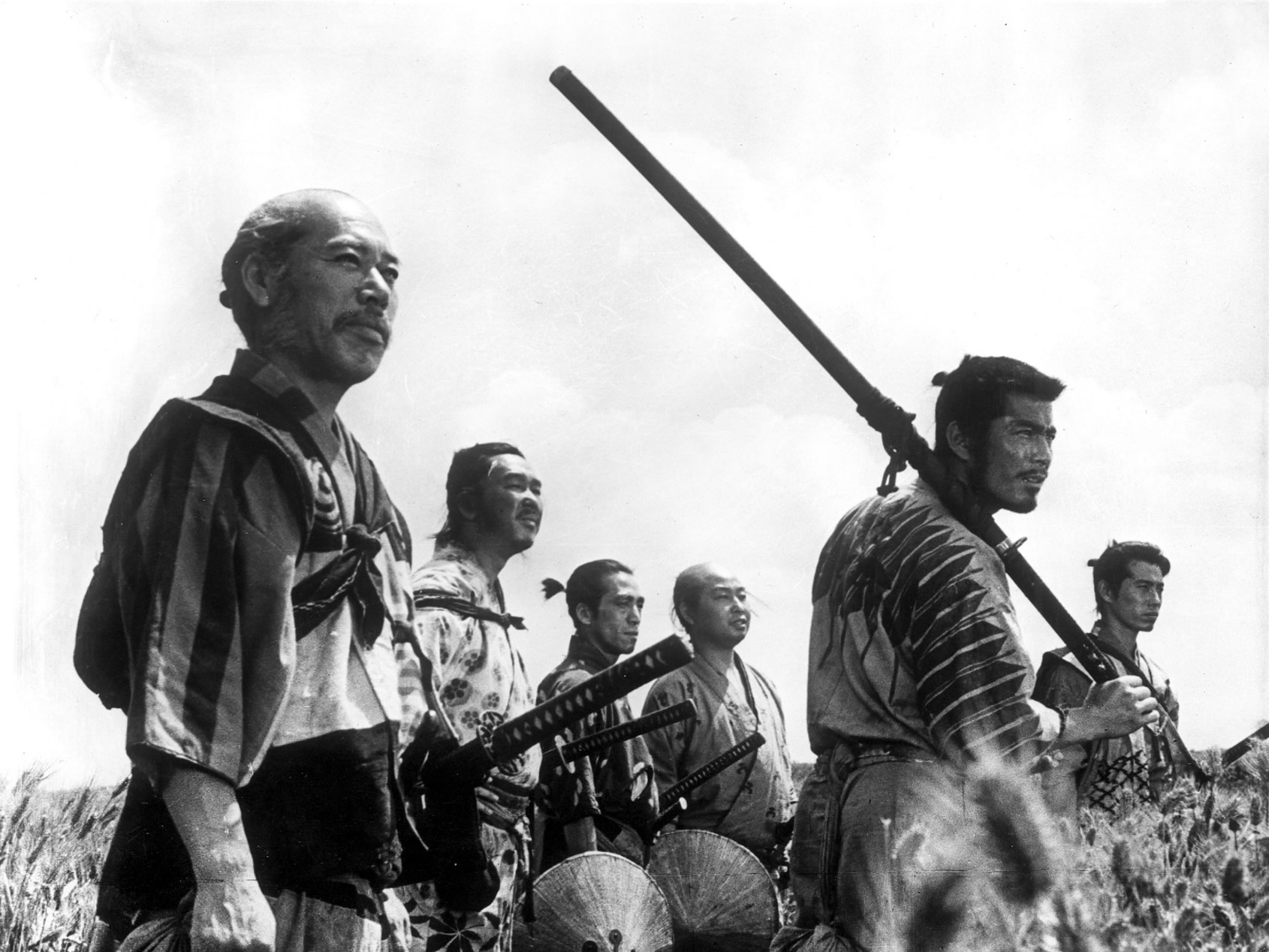
The two Keaton qualities of motion and immobility are perfectly contrasted in The General (1927). It isn’t Keaton’s funniest feature (that honor would go to Seven Chances) or his most inventive feature (that honor would go to Sherlock, Jr.). It is, however, his best blend of comedy and drama, and an ideal choice for anyone who assumes silent comedy is synonymous with empty-headed slapstick. The General has its share of laughs, gags, and pratfalls, but there’s so much more.

Here Kerr eloquently describes the climatic final scene:

As The General must be the most insistently moving picture ever made, so its climax is surely the most stunning visual event ever arranged for a film comedy, perhaps for a film of any kind. . . With all forces moving and the panorama embracing river, steep slopes, and endless forest, the train’s belly begins to droop through the burned gap in the bridge, the gap splinters wide, the understructure pulls away as the great beast seems to claw at it, and in a serpentine curve that is as beautiful as it is horrifying the train goes down to the water with its smokestack vomiting steam, a dragon breathing fire even in death. . . The awe of the moment is real: we are present in some kind of history, if only the history of four or five minutes on a day when an actual locomotive, a true burning bridge, masses of breathing men, a verifiable landscape, and a cameraman were present. Visitors to Cottage Grove, Oregon, where the shot was made, still drop by the ravine to look at the fallen locomotive; the evidence of an event remains, is still somewhat numbing.

This film has a nuanced playfulness you rarely see in comedies. One example, among many I could cite, is the famous scene when Keaton reaches out to strangle his girlfriend in frustration and then decides to kiss her instead. Is there a single moment in film or literature that better sums up the difficulty of maintaining a romantic relationship?

Another scene involves Keaton’s beloved train (The General) starting up and moving while he is sitting on the elbow-like rod that connects the engine to the wheel. Keaton is lost in thought and doesn’t realize he is moving up and down, as well as forward, until the train picks up considerable speed. We laugh because he doesn’t sense the movement right away. We also laugh (or should laugh) because this gag works strictly in a silent medium. In the real world (or in a sound film), we would wonder why he didn’t hear the engine. The in-joke for Keaton and his 1927 audience is that this is a jab at silent film conventions. If you think I’m stretching the point, you only have watch Sherlock, Jr. (1924) to see Keaton poke fun more openly at film logic and the very vocabulary of filmmaking. That’s the wonder of Keaton’s genius — his movies are satisfying on so many different levels.

The General
(1927; directed by Clyde Bruckman and Buster Keaton)
Kino Video (Blu-ray and DVD)

Tuesday, March 11 at 3:30 p.m. eastern on Turner Classic Movies