Strength in Unity

Strength in Unity

Reviews

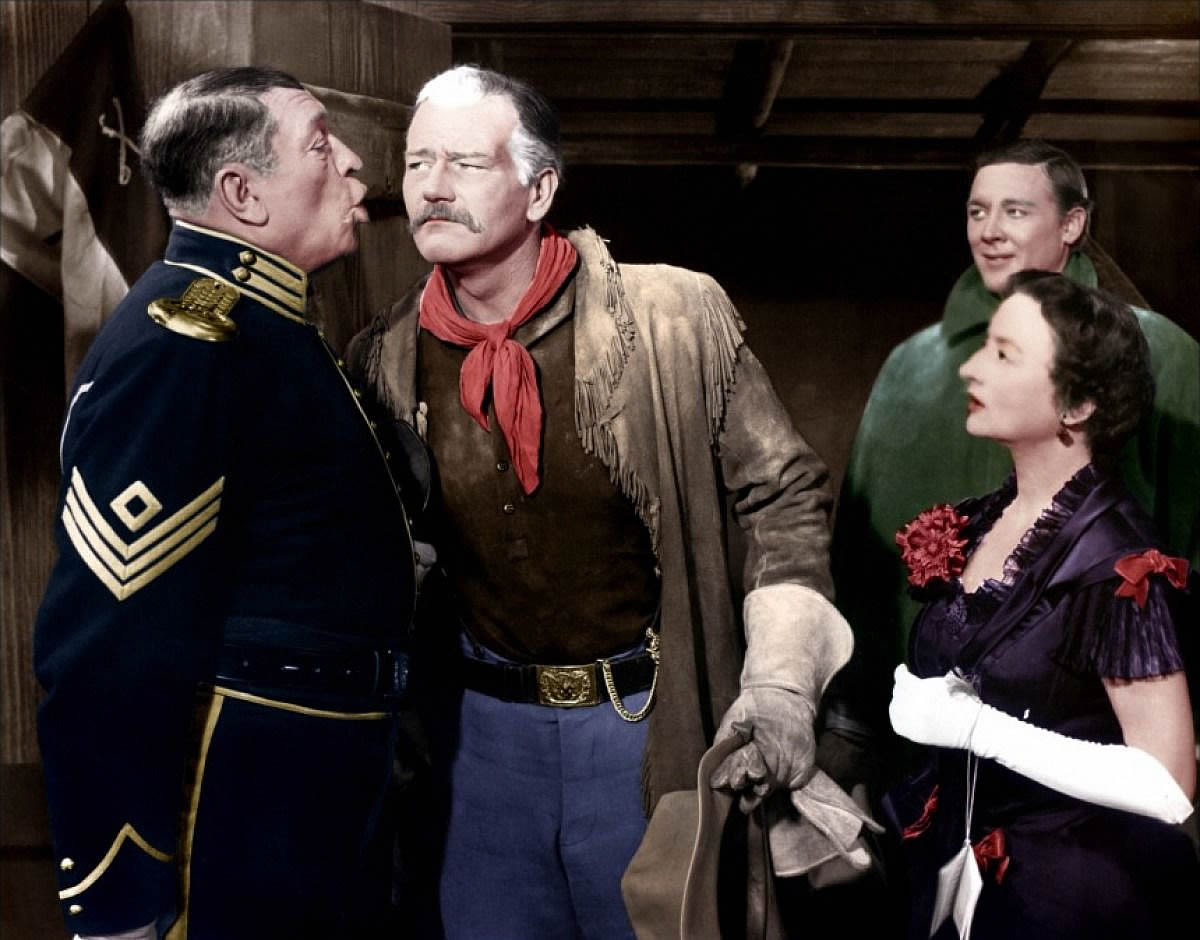
The second film in John Ford’s cavalry trilogy, She Wore a Yellow Ribbon (1949) is best viewed as a companion piece to Fort Apache (1948). Where in Fort Apache, ritual and duty are questioned and even challenged, She Wore a Yellow Ribbon affirms ritual and duty as both necessary and honorable. As a result, Captain Nathan Brittle (played by John Wayne) is a more sympathetic character than Fort Apache’s Colonel Thursday. Where Fort Apache shows how unity can be disastrous when following a misguided leader, She Wore a Yellow Ribbon shows how unity can succeed when a leader understands the long-term goals and doesn’t underestimate the enemy.

She Wore a Yellow Ribbon was well received at the time of its release. Here’s what Bosley Crowther had to say about it in his New York Times review dated November 18, 1949:

For in this big Technicolored Western Mr. Ford has superbly achieved a vast and composite illustration of all the legends of the frontier cavalryman. He has got the bold and dashing courage, the stout masculine sentiment, the grandeur of rear-guard heroism and the brash bravado of the barrack-room brawl. And, best of all, he has got the brilliant color and vivid detail of those legendary troops as they ranged through the silent “Indian country” and across the magnificent Western plains.

The story is set immediately following Custer’s Last Stand (a historical event that was the basis of the fictional confrontation in Fort Apache). Ford emphasizes that both the army and the Indian forces are unified from diverse groups. The narration explains that the uprising consists of many different Indian nations who are emboldened by Custer’s defeat. The story also provides numerous references to the cavalry being strengthened by its absorption of the Confederate soldiers.

Captain Brittle is about to retire, and a key question in the movie is whether the new soldiers will have the experience to understand not only what’s at stake, but also why a conflict isn’t inevitable. When Brittle and Sgt. Tyree (played by Ben Johnson) enter the Indian camp to try to avert a battle, it’s clear the young Indians no longer heed the wisdom of their elders. Ultimately, it’s the willingness of the cavalry to incorporate the experience of its elders (and the willingness of the young recruits to follow that wisdom) that gives the army an advantage over the Indians.

She Wore a Yellow Ribbon
(1949; directed by John Ford)
Warner Archive Collection (Blu-ray)
Turner Home Entertainment (DVD)

Thursday, February 22 at 8:00 p.m. eastern on Turner Classic Movies
Concentric Layers

Concentric Layers

Reviews

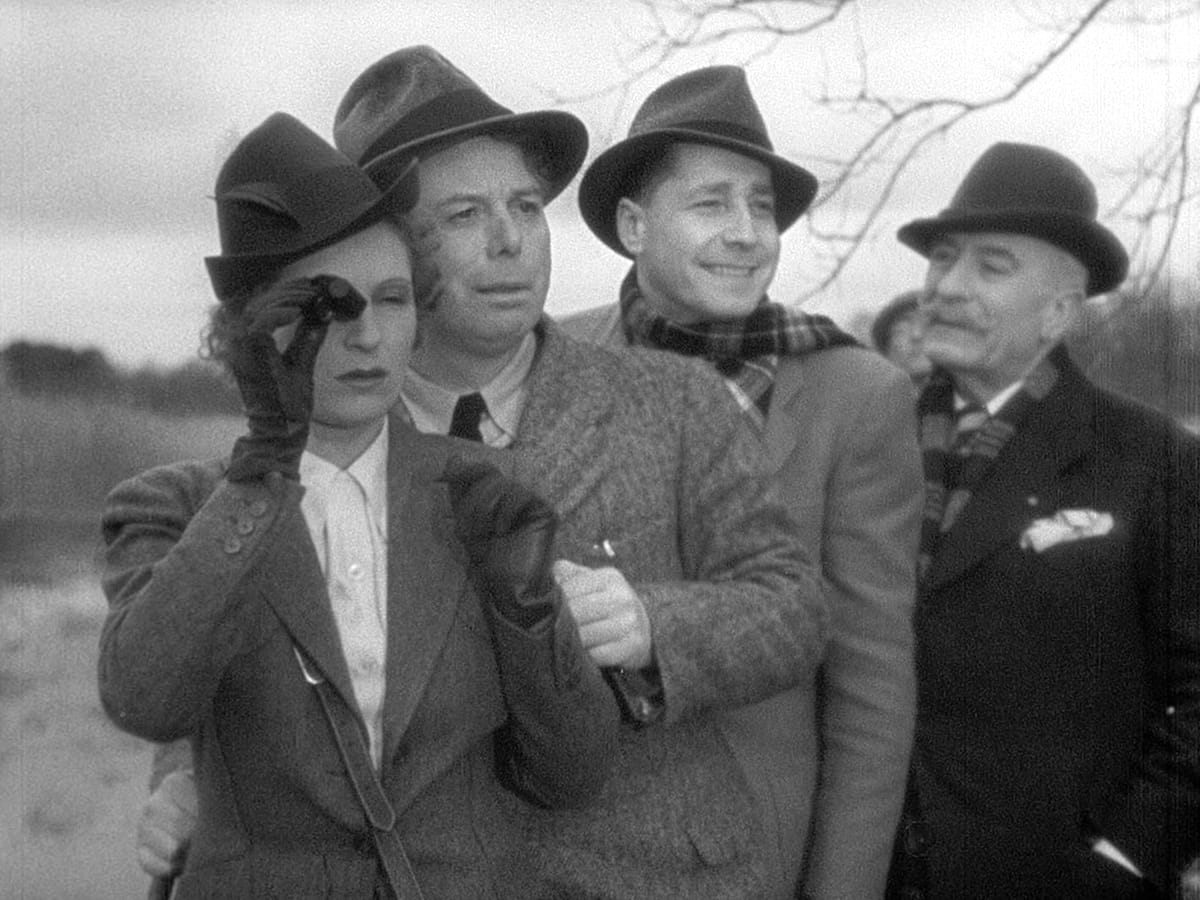
How can a film be loathed at the time of its release, yet be recognized as great many years later? The answer varies according to each film. In the case of Jean Renoir’s The Rules of the Game (1939), it could have been the unfortunate timing (the eve of war), themes that struck too close to home for its audience (especially the jabs at social hypocrisy), and a too subtle approach that was decades ahead of its time.

In his autobiography, titled My Life and My Films, Renoir describes the audience reaction that caused him to edit down the film from 113 minutes to just 85 minutes:

I was utterly dumbfounded when it become apparent that the film, which I wanted to be a pleasant one, rubbed most people up the wrong way. It was a resounding flop, to which the reaction was a kind of loathing. Despite a few favorable notices, the public as a whole regarded it as a personal insult. There was no question of contrivance; my enemies had nothing to do with its failure. At every session I attended I could feel the unanimous disapproval of the audience. I tried to save the film by shortening it, and to start with I cut the scenes in which I myself played too large a part, as though I were ashamed, after this rebuff, of showing myself on the screen. But it was useless. The film was dropped, having been judged to be ‘too demoralizing.’

Now flash ahead to 1959 when Jean Gaborit and Jacques Marechal’s reconstructed version of the film premiered at the Venice Film Festival. Just a few minutes shy of its original length, it was hailed as a masterpiece. By 1972, it rose to the number two spot (just after Citizen Kane) in Sight and Sound’s International Critic’s Poll of the best films ever made.

Why such a wide divergence of opinion over just a 20-year period? By 1959, audiences were more receptive to Renoir’s layered approach. Film was taken more seriously by the late 1950s, and other directors had adopted a similar multi-tiered style. In The Rules of the Game, Renoir sets in motion rich dramatic, moral, and character-revealing substructures that resonate and intensify as the story unfolds.

In his book Jean Renoir, André Bazin describes why this complex structure provides such a rewarding experience:

To grasp the subtle organization of The Rules of the Game we have to go from the general to the specific, from the action to the plot and from the plot to the scene. To grasp the scheme of the film, we must see the music boxes, the bearskin which gives Octave so much trouble, the agony of the little rabbit, and the game of hide-and-seek in the corridors of the château as the essential realities of the film from which unroll the dramatic spirals of each particular scene. This accounts for the integrity and independence of each scene relative to the scenario as a whole. But it also explains the unique quality and orientation of these scenes, which develop cinematically in concentric layers, much like the grain of sand within an oyster gradually growing into a pearl.

I’ve found that over the years The Rules of the Game grows in stature with each viewing. It’s a lively film that’s warm-spirited and light-hearted, despite its sometimes weighty concerns. It plays as both farce and tragedy, and uses a broad brush to conjure a range of emotions. This truly is one of the finest films ever made.

The Rules of the Game
(1939; directed by Jean Renoir)
The Criterion Collection (Blu-ray and DVD)

Monday, January 15 at 4:00 p.m. eastern on Turner Classic Movies
Dizzying Heights

Dizzying Heights

Reviews

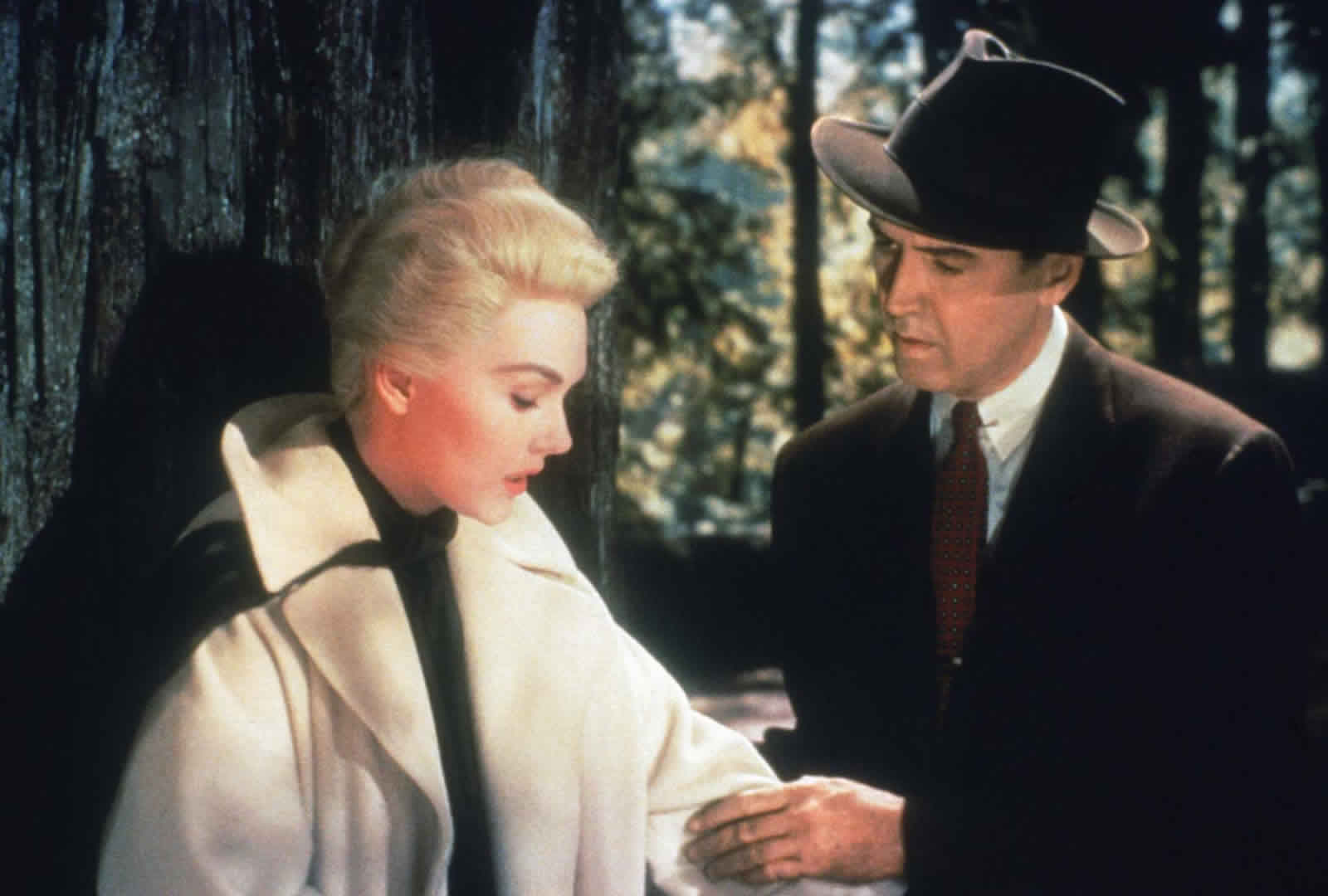
With so many fine films to his credit, it’s a challenge to pin down Hitchcock’s best film. For my money, the best one is Vertigo. That’s especially evident in the restored print that’s available on Blu-ray and DVD.

Perhaps the most rarefied of Hitchcock’s films, Vertigo is difficult to talk about without giving away important plot elements. If you haven’t seen it, don’t read too much about it. Just watch it, and then watch it again to see how carefully the film is constructed. Just as he does in Psycho, Hitchcock leaves a trail of bread crumbs so repeat viewers can enjoy the story with a renewed sense of awareness.

Vertigo is unusual in its use of associative color. In a 1962 interview with Françoise Truffaut, Hitchcock explained how the color green signals the main character’s state of mind:

At the beginning of the picture, when James Stewart follows Madeleine to the cemetery, we gave her a dreamlike, mysterious quality by shooting through a fog filter. That gave us a green effect, like fog over the bright sunshine. Then, later on, when Stewart first meets Judy, I decided to make her live at the Empire Hotel in Post Street because it has a green neon sign flashing continually outside the window. So when the girl emerges from the bathroom, that green light gives her the same subtle, ghostlike quality. After focusing on Stewart, who’s staring at her, we go back to the girl, but now we slip that soft effect away to indicate that Stewart’s come back to reality.

Pay close attention to Bernard Herrmann’s music. Though not as groundbreaking (or influential) as his score for Psycho, the Vertigo score reinforces the dreamlike and ghostlike qualities Hitchcock referred to in his interview with Truffaut. As in Psycho, the music makes even a simple drive down the highway rich with emotional meaning.

Vertigo
(1958; directed by Alfred Hitchcock)
Universal Studios (Blu-ray and DVD)

Monday, December 25 at 8:00 p.m. eastern on Turner Classic Movies
You’ve Got Comedy

You’ve Got Comedy

Reviews

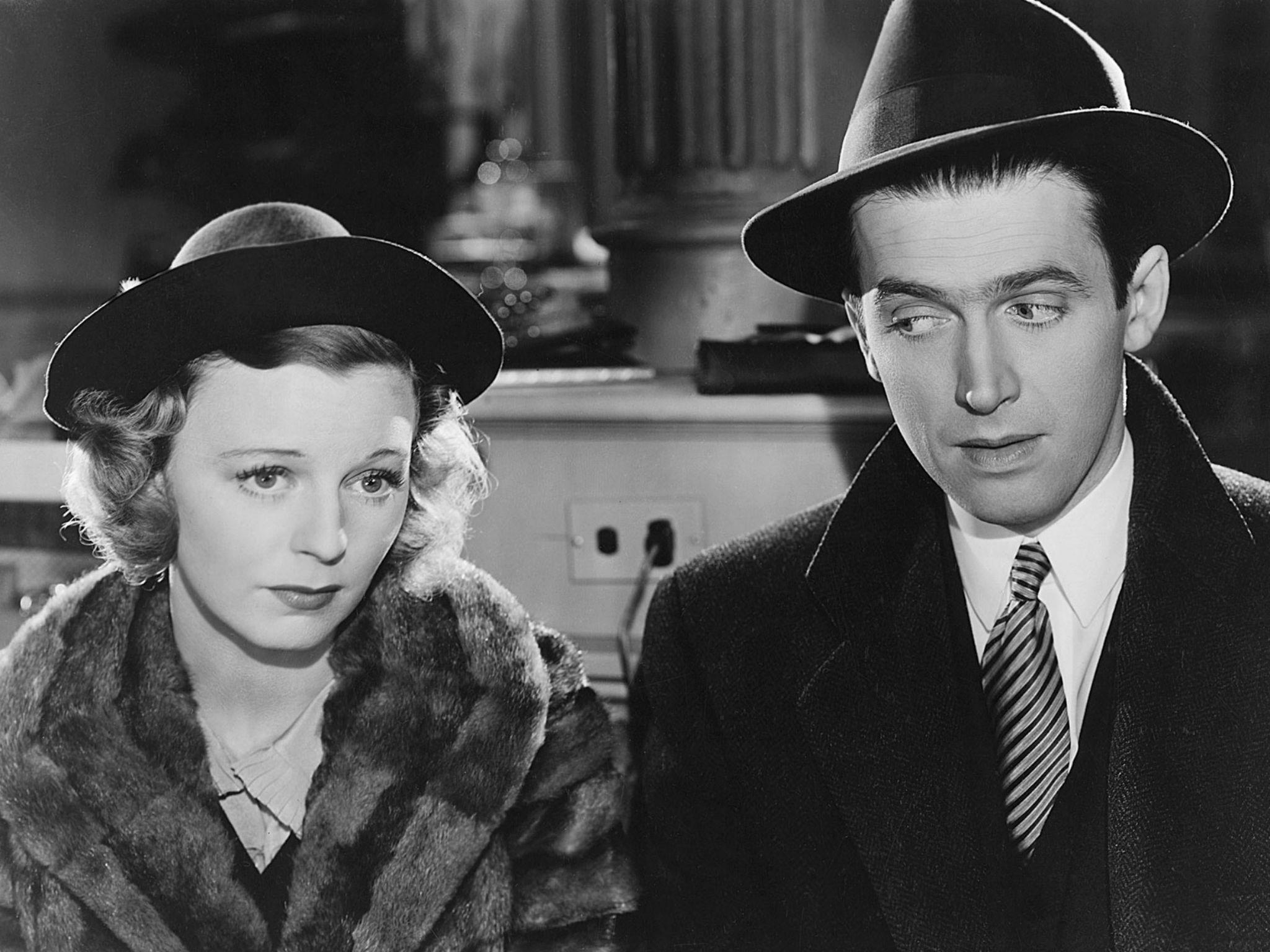
Some stories are so good, they’re worth telling over and over again. Take, for example, The Shop Around the Corner (1940), Ernst Lubitsch’s romantic comedy starring Margaret Sullavan and James Stewart. It was remade in 1949 as In the Good Old Summertime, with Judy Garland and Van Johnson. In 1963, it was converted into a Broadway musical, titled She Loves Me. And more recently, it was remade as yet another movie, You’ve Got Mail (1998) with Meg Ryan and Tom Hanks.

At its core, the story is quite simple, which is why it’s so easily adapted. A man and woman, who dislike each other intensely in person, have each found love anonymously in a correspondence with a stranger. What they don’t know – and we do – is that they’re corresponding with each other.

The plot wasn’t entirely original to Lubitsch. Screenwriter Samson Raphaelson adapted it from a Hungarian play. Even though Lubitsch isn’t credited with the screenplay, he and Raphaelson worked closely to write the dialogue on all their collaborations. Here’s an example of the dialogue from the film:

Marton: Remember the girl I was corresponding with?
Pirovitch: Ah, yes . . . about those cultural subjects.
Marton: Well, after a while, we came to the subject of love, naturally, but on a very cultural level.
Pirovitch: What else can you do in a letter?
Marton: Pirovitch, she’s the most marvelous girl in the world . . .
Pirovitch: Is she pretty?
Marton: She has such ideals, such a point of view on things . . . She’s so far above the girls you meet today, there’s simply no comparison.
Pirovitch: So she’s not so very pretty.

In a letter to Herman G. Weinberg (written on July 10, 1947 — just months before his death), Lubitsch suggested his three best films were Trouble in Paradise (1932), Ninotchka (1939), and The Shop Around the Corner. Lubitsch cited The Shop Around the Corner as his best “human comedy.” He wrote, “Never did I make a picture in which the atmosphere and the characters were truer than in this picture.” He chose Trouble in Paradise for its style and Ninotchka for its satire.

While Lubitsch is the master of the sophisticated comedy, you don’t always identify with his characters in the same way you identify with the characters in the comedies of Frank Capra and Leo McCarey. That’s certainly not the case with this film. With its sparkling dialogue, winning performances, and measured pacing, it’s one of the best comedies of the 1940s.

The Shop Around the Corner
(1940; directed by Ernst Lubitsch)
Warner Home Video (Blu-ray and DVD)

Tuesday, December 19 at 6:15 p.m. eastern on Turner Classic Movies
Better Than Kane?

Better Than Kane?

Reviews

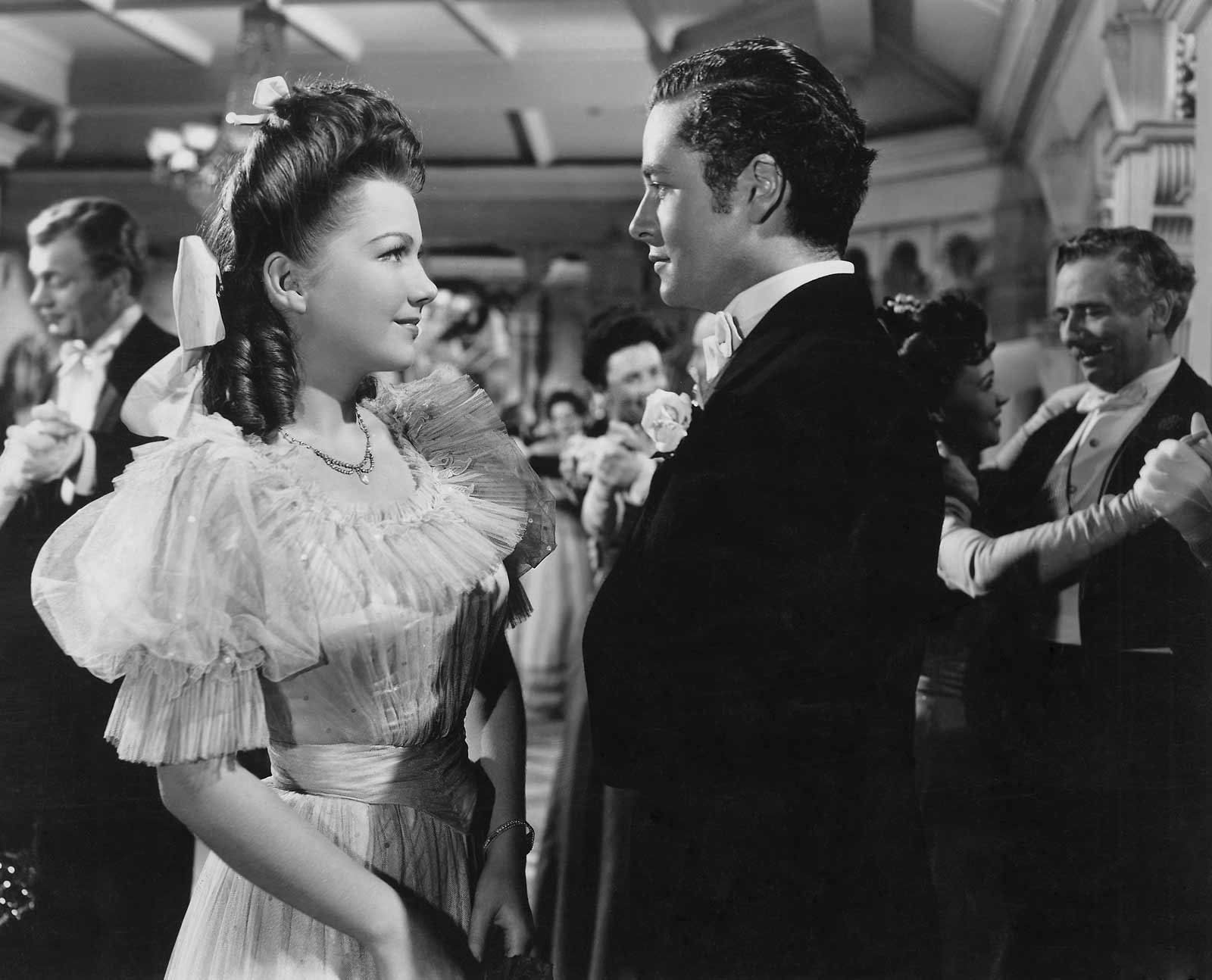
Is Ambersons better than Kane? If you’re talking about the first part of the film, then the answer is yes. The problem with The Magnificent Ambersons (1942), which Orson Welles directed just a year after Citizen Kane, is it was re-edited and given a happier ending. In his book Orson Welles, Joseph McBride quotes Welles as saying:

About forty-five minutes were cut out — the whole heart of the picture really — for which the first part had been a preparation . . . The film has a silly ending . . . just ridiculous . . . It bears no relation to my script.

Welles didn’t exaggerate about the missing 45 minutes. At its sneak preview in the spring of 1942, the film ran 132 minutes. After a re-edit, second preview, second re-edit, and third preview, the studio released it at 88 minutes — on a double bill with a Lupe Velez film. Welles was filming in South America at the time, presumably unaware of the extent of the changes. Almost all of the last part of the film was scrapped, a new ending was shot, and some earlier scenes were trimmed, including what had been a long and intricately conceived dolly-shot of the party at the mansion.

Compared with Kane, Ambersons has a more seamless visual and narrative flow. Speaking of Ambersons’ fluid style, Françoise Truffaut wrote, “This film was made in violent contrast to Citizen Kane, almost as if by another filmmaker who detested the first and wanted to give him a lesson in modesty.” The two films do have a lot in common including deep-focus photography, overlapping dialogue, and a tightly integrated musical score by Bernard Herrmann.

In its present form, The Magnificent Ambersons is a flawed masterpiece. Up until the last few minutes, it holds up well. The ending is abrupt and inconsistent with the rest of the story, but on the whole, Ambersons is a very satisfying film. Look for the sleigh ride scene, which is an unparalleled mix of dialogue, movement, and music. It may be the finest piece of nostalgic fictional film ever recorded.

The Magnificent Ambersons
(1942; directed by Orson Welles)
The Criterion Collection (Blu-ray and DVD)

Sunday, November 19 at 11:30 a.m. eastern on Turner Classic Movies
A Comedy of Thrills

A Comedy of Thrills

Reviews

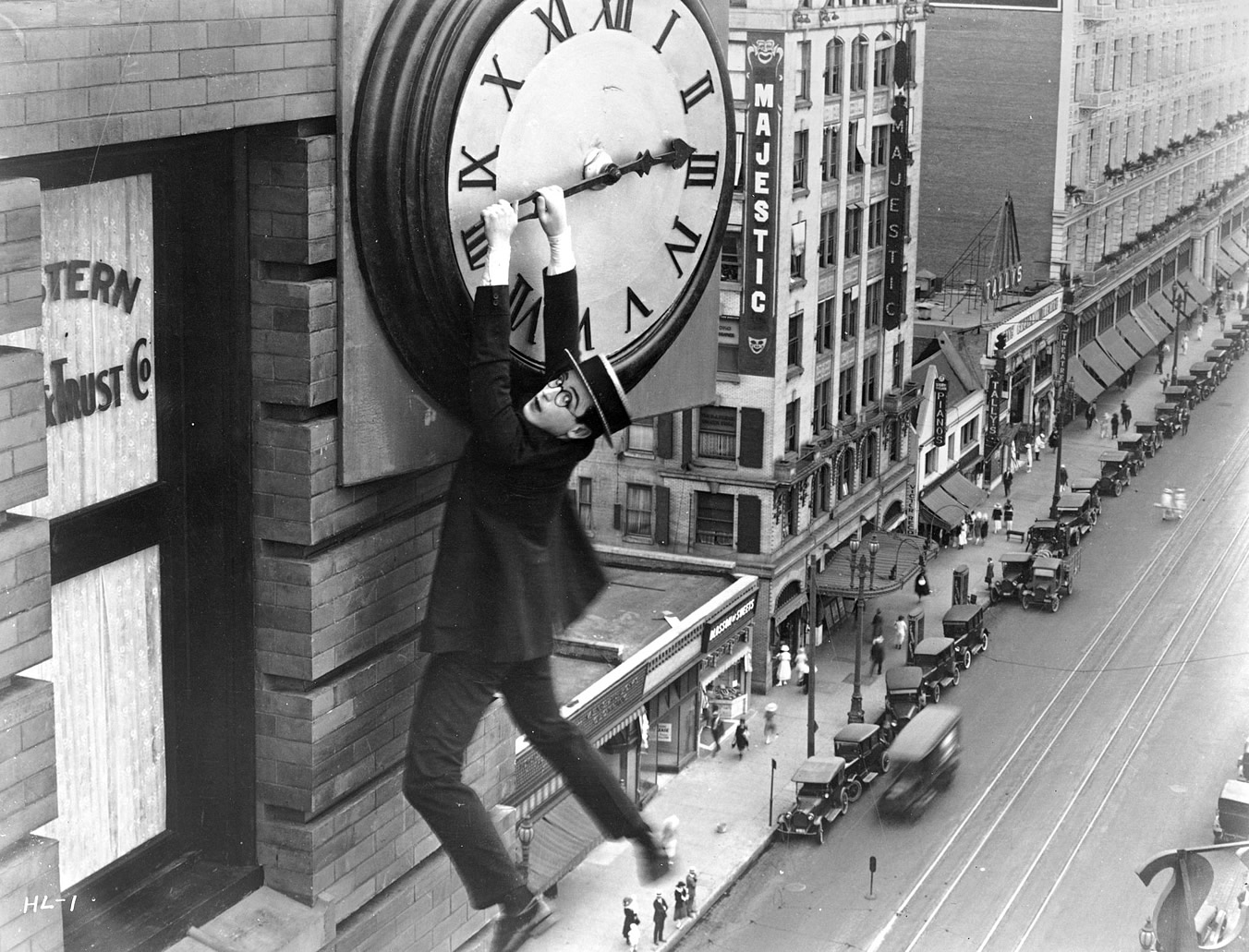
It’s one of the most enduring images from silent comedy — Harold Lloyd grasps the hand of a massive clock as he hangs perilously over a busy street. The image became an emblem for the daredevil stunts that were popular during the era, in part because Lloyd appears so ordinary and out-of-place. The source for the image is Lloyd’s feature-film Safety Last (1923), which combines genuine thrills with intricately constructed humor.

In his tribute to the great silent comedian, titled “Harold Lloyd: A Rediscovery,” Andrew Sarris wrote that Safety Last:

. . . established for all time the spatial metaphor for an American rise to the top in the midst of a fear of falling. As Lloyd became known as the comedian who would do anything for a laugh, the character he played became known as the jazz-age climber who would do anything to succeed . . . There is a wildly lyrical moment when Lloyd is swinging crazily from a rope, a moment that Keaton might have extended in time for its feelings of freedom and exhilaration. Lloyd treats this moment as an interruption in the ultimate climb, and quickly returns to the business at hand. On the other hand, Lloyd gives us glimpses of an impervious city, and this makes the spectacle more frighteningly real and majestically social. The spectacular climax of Safety Last undoubtedly influenced Chaplin’s cabin-teetering-on-the-cliff sequence in The Gold Rush (1925).

While Safety Last is one of Lloyd’s best features, it doesn’t blend the comedy and characters as successfully as his later silents, especially The Freshman (1925) and The Kid Brother (1927). The film is split into two parts: everything that leads up to the climb, and the climb itself.

The pre-climb portion provides some memorable gags and extended set pieces. One of the cleverest gags comes at the very beginning when we’re surprised to see Lloyd about to be executed by hanging (a hint at his coming ordeal with the climb). The visual elements are then deconstructed, almost Keaton-like, to show that each cliché — prison bars, rope, priest, and inconsolable mother — was misinterpreted.

Later, we see Lloyd as a sales clerk where he battles (sometimes quite literally) swarms of bargain-obsessed women. It’s one of the most laugh-worthy sequences from the 1920s. This too presages the upcoming climb, suggesting the obstacles he’ll encounter and the ingenuity he’ll need to complete his goal.

Safety Last
(1923; directed by Fred Newmeyer and Sam Taylor)
The Criterion Collection (Blu-ray and DVD)

Friday, September 29 at 3:00 p.m. eastern on Turner Classic Movies
Give ’em the Dickens

Give ’em the Dickens

Reviews

The novels of Charles Dickens should be ripe for film adaptation. The plucky heroes, sentimental plots, and rich background characters would be instantly recognizable if translated to the screen properly. That’s the problem. What film could possibly live up to the novels, which often run a thousand pages or more? (Dickens was usually paid according to the number of words published.)

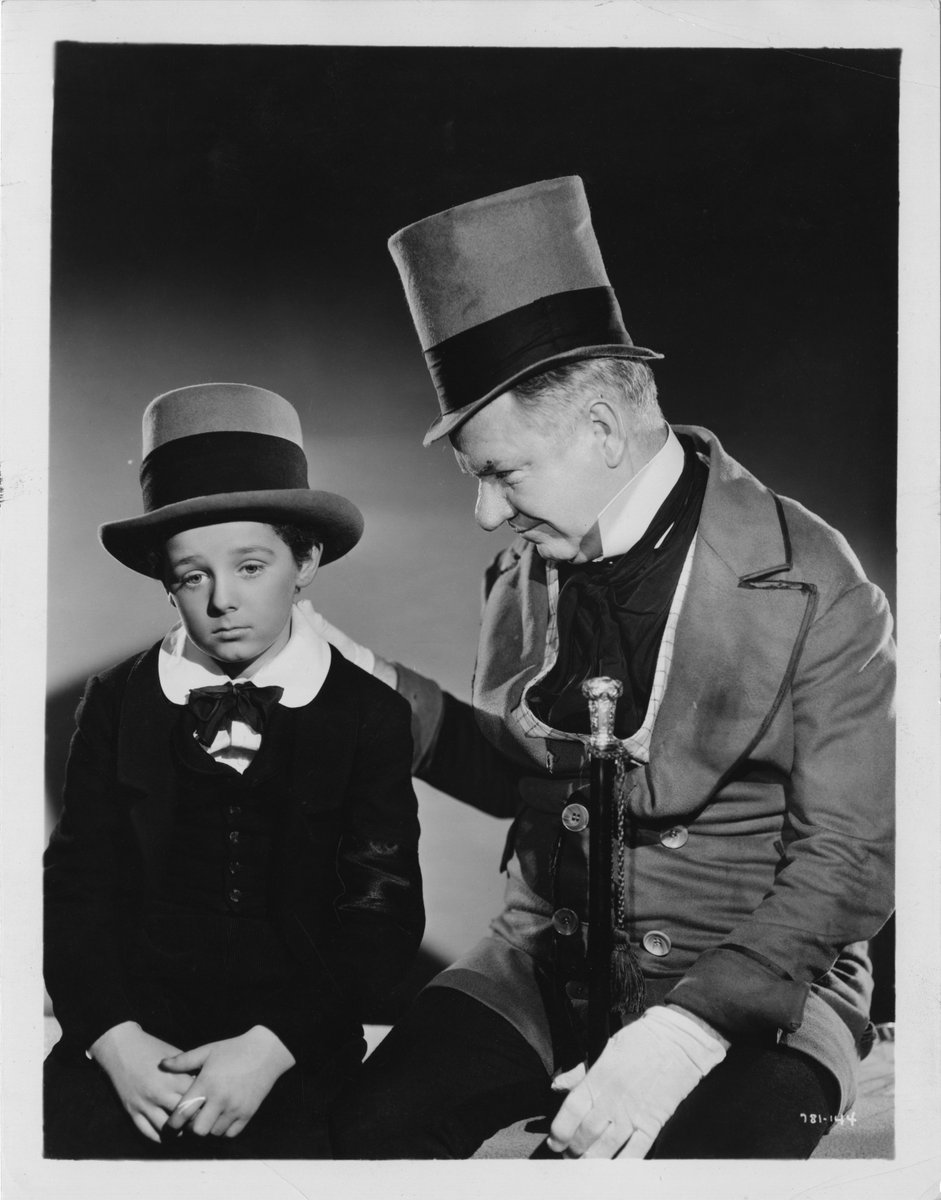
After decades of mixed results, three film adaptations stand out from the rest: David Copperfield (1935; directed by George Cukor), Great Expectations (1946; directed by David Lean), and Oliver Twist (1948; directed by David Lean). While the two Lean films stress the darker side of Dickens, the Cukor effort is pure Hollywood — in the good sense of the phrase. It’s impossible now to re-read the novel without imagining Edna May Oliver as the irrepressible Betsey Trotwood, Roland Young as the slimy Uriah Heep, Lennox Pawle as the off-in-a-cloud Mr. Dick, and Freddie Bartholomew as the stalwart young David Copperfield.

Most inspired of all was the casting of W.C. Fields as Mr. Micawber. Cukor recounts his impression of Fields to interviewer Gavin Lambert:

He was charming to work with, his suggestions and adlibs were always in character. There was a scene in which he had to sit at a desk writing, and he asked me if he could have a cup of tea on the desk. When he got agitated, he dipped his pen into the teacup instead of the inkwell. Another time he was sitting on a high stool and asked for a wastepaper basket so he could get his feet stuck in it. Physically he wasn’t quite right, wasn’t bald as Dickens describes Micawber — but his spirit was perfect.

Some critics have complained that Cukor’s David Copperfield is less than the sum of its parts — that the film doesn’t rise above its carefully conceived set pieces and vignettes. I disagree. While the film loses some momentum once the main character becomes a man (Frank Lawton was less than optimally cast as the adult David), that’s equally true of the novel and other film or television adaptations of the book. Dickens was better at portraying childhood hopes and fears than the mature aspirations of those same children as adults.

David Copperfield
(1935; directed by George Cukor)
Warner Home Video (DVD)

Saturday, September 23 at 2:15 a.m. eastern (late Fri,. night) on Turner Classic Movies

Character

Character

Reviews

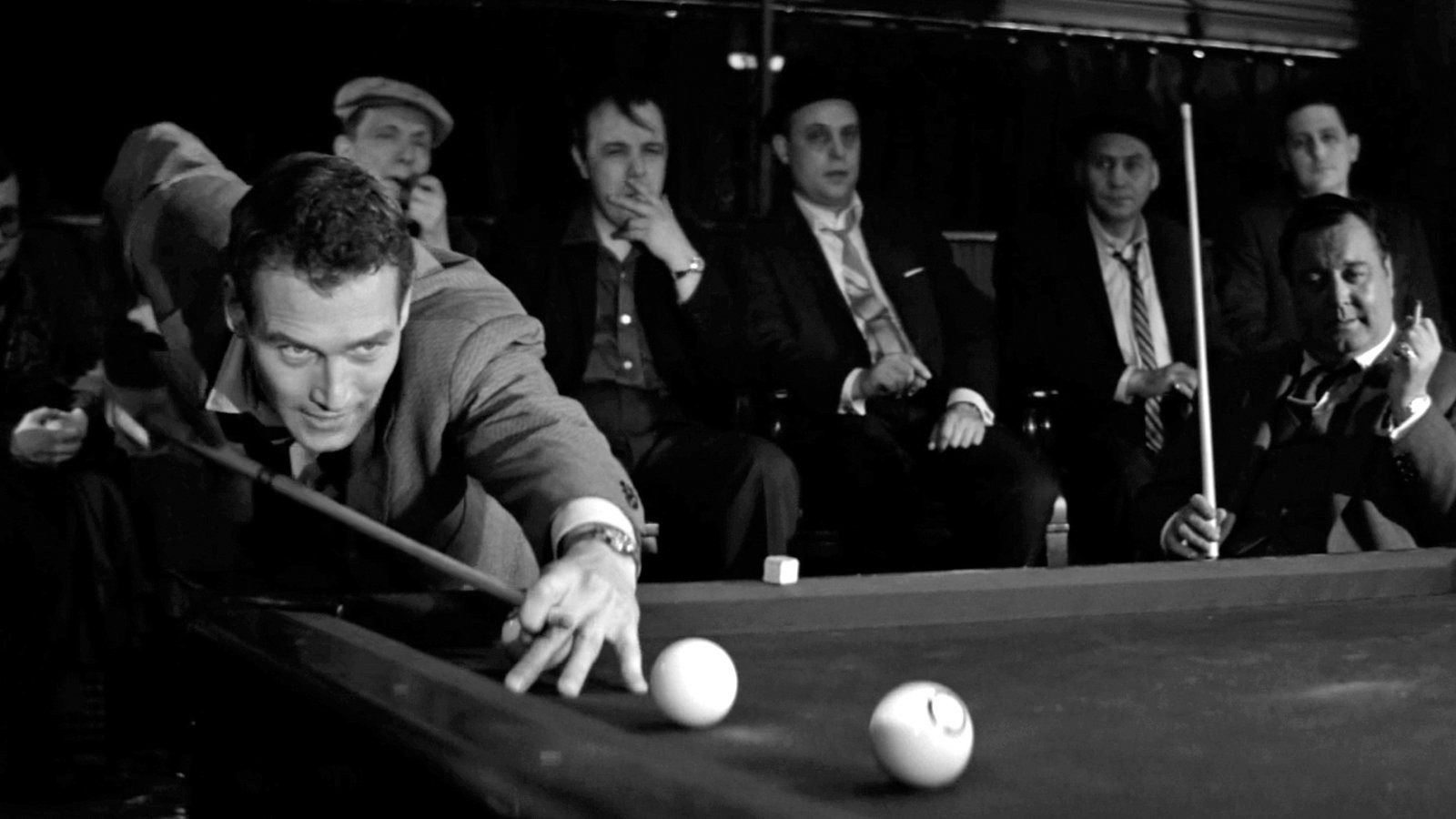
The Hustler (1961) is one of the best sports film ever made, though it doesn’t feel like a sports film. Gone is the pure exhilaration you feel when the hero succeeds, or the gritty resolve you experience when the hero faces a temporary setback. Director Robert Rossen’s earlier sports movie, Body and Soul (1947), hews closer to the conventions of the genre. Despite an overlay of self-doubt and personal angst, its story plays out as a competitive match where victory is still all important.

With The Hustler, character is the central focus. For pool hustler Fast Eddie (played by Paul Newman in a breakthrough role), winning isn’t just about succeeding in the game, it’s also about succeeding in life. He has the necessary skills to win, but is held back by a lack of character. When Eddie’s manager tells him he has talent, Eddie asks, “So what beat me?” Without hesitation, the manager answers, “Character.” We cheer for Eddie and want him to win, but we also see the tense relationship between an unclear head and a disciplined body, more so in this film than perhaps in any other.

Another strength of this remarkable movie is its ability to focus that same character-defining microscope onto the other strong personalities in the story. This is very much an ensemble piece, which draws equally electrifying performances from George C. Scott (Eddie’s slimy manager), Piper Laurie (Eddie’s troubled girlfriend), and Jackie Gleason (Eddie’s self-assured competitor — Minnesota Fats). The story improves with each viewing, as you pick up the subtle interactions among the characters.

All four actors were nominated for Best Actor Academy Awards (Scott declined his nomination). The Hustler earned nine nominations in all, including Best Picture, but won only for “Best Cinematography, Black-and-White” and “Best Art Direction/Set Decoration, Black-and-White.” Newman won an Oscar for his portrayal of Fast Eddie 25 years later, in Martin Scorsese’s sequel The Color of Money (1986). Was it meant to be a reward for his earlier role? Probably, though we’ll never know for sure.

The Hustler
(1961; directed by Robert Rossen)
20th Century Fox (Blu-ray and DVD)

Tuesday, July 18 at 8:00 p.m. eastern on Turner Classic Movies
Greatest American Play

Greatest American Play

Reviews

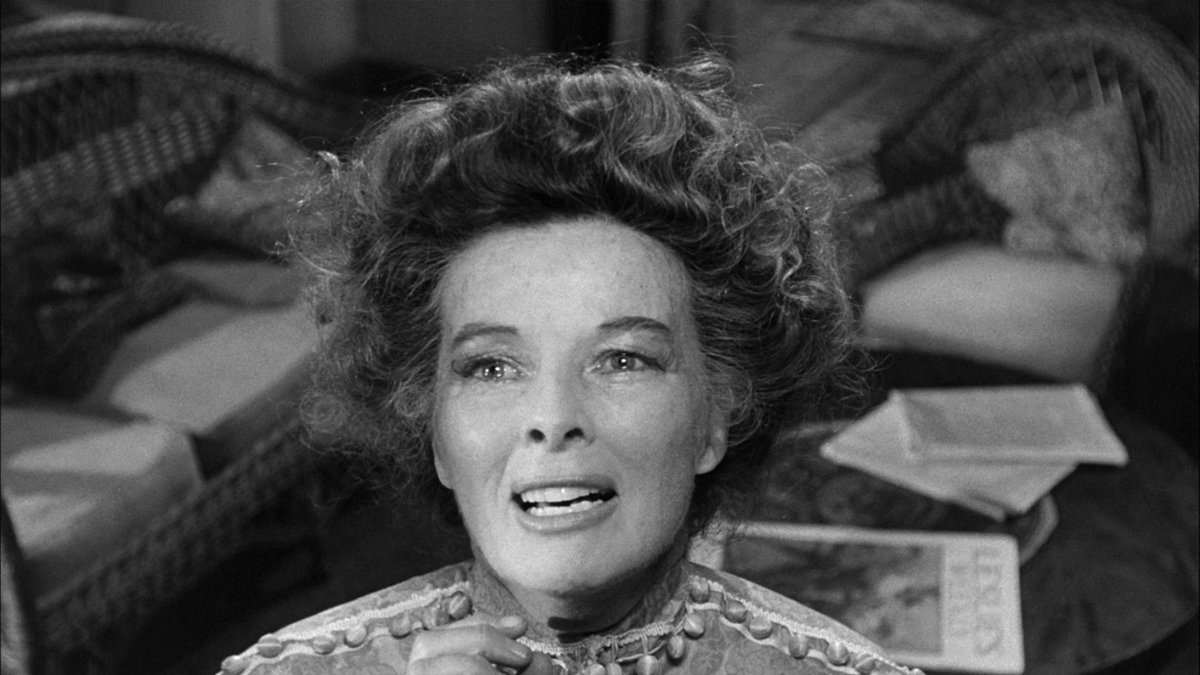
What if you took the greatest American play and turned it into a film using an ideal group of actors? That’s exactly what happened with Long Day’s Journey into Night (1962).

Deeply autobiographical and searing in its emotional power, the play wasn’t supposed to be made public until 1988. Completed in 1942, Eugene O’Neill asked his publisher Random House to seal the play in its vault until 25 years after his death. Following O’Neill’s death in 1953, his wife transferred the rights to Yale University, which nullified the agreement with Random House.

As a result, it was performed on Broadway and published in 1956, three year’s after the playwright’s death. The Broadway production featured Fredric March (as James Tyrone), Florence Eldridge (as Mary Tyrone), Jason Robards, Jr. (as “Jamie” Tyrone), and Bradford Dillman (as Edmund Tyrone). It received the Tony award for Best Play, and March received the Tony for Best Actor.

Only Jason Robards, Jr. repeated his role for the film version. Sidney Lumet, the film’s director, cast British actor Ralph Richardson as Jamie Tyrone. One of the greatest Shakespearean actors of his generation (along with Laurence Olivier and John Gielgud), Richardson was already familiar to American audiences through such as films as The Heiress (1949), Richard III (1955), Our Man in Havana (1959), and Exodus (1960).

Katharine Hepburn was cast as Mary Tyrone. Her previous movie, Suddenly, Last Summer (1959), was also based on a dramatic play, though her entire career was preparation for what was probably the most demanding role of her lifetime. Former child actor Dean Stockwell was chosen to portray young Edmund. Only 26 at the time, Stockwell holds his own among the three more experienced actors.

As a tribute to their extraordinary performances, all four won acting awards at the 1962 Cannes Film Festival. Hepburn was honored as Best Actress, and the three male leads shared the award for Best Actor.

As good as the play and performances are, this film isn’t for everyone. It reaches into the depths of the human psyche and explores — perhaps better than any other work of art — the complex love-hate relationships among family members that build up over the years. This isn’t your typical family, fortunately, and it’s even more frightening to think these events largely mirror O’Neill’s own experiences (the Edmund character is based on O’Neill).

If you haven’t seen the film, do give it try. There isn’t anything else like it. The 1950s and 1960s opened up the floodgates for movies based on dramatic Broadway plays. None have the strength and intensity of this film. If any play deserves to be called the American Hamlet or the great American play, this would have to be it.

Long Day’s Journey into Night
(1962; directed by Sidney Lumet)
Olive Films (Blu-ray and DVD)

Thursday, June 8 at 8:00 p.m. eastern on Turner Classic Movies
Thin Is In

Thin Is In

Reviews

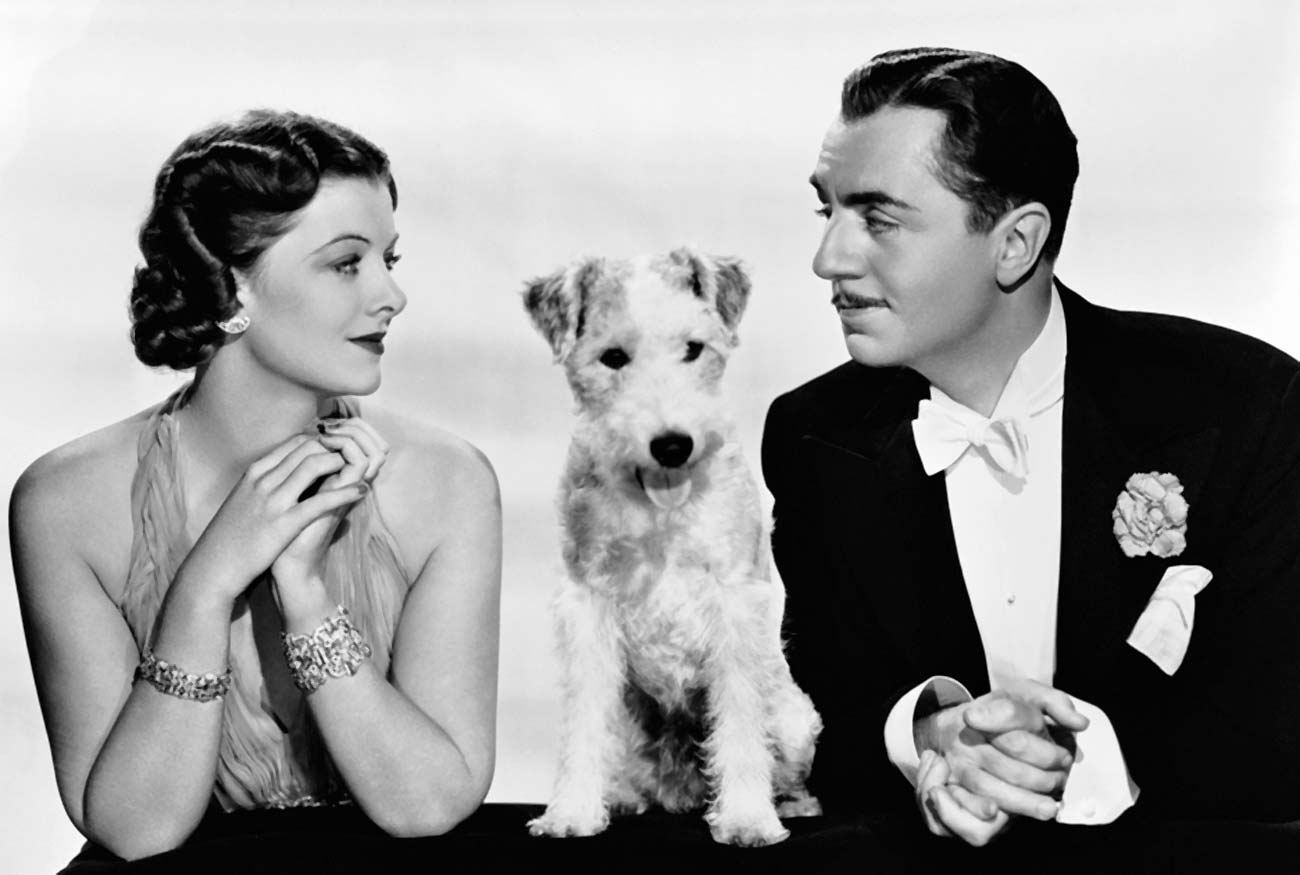
The Thin Man (1934) is the first of six comic detective films featuring William Powell and Myrna Loy as Nick and Nora Charles. There have been many recurring romantic pairings over the years (Katherine Hepburn and Spencer Tracy, for example), though this may be the most successful pairing involving the same set of characters.

In this first film, the Thin Man is a murder suspect, not the hero, which is why the second film was titled After the Thin Man (1936). By the third film, the distinction was lost, and the name became associated with Nick Charles. A similar misunderstanding occurred with the Frankenstein movies. Frankenstein was the scientist, not the scientist’s creation. The public had associated the name with the monster, and Hollywood wasn’t about to argue the point.

The Thin Man series benefits from dialogue and situations that showcase the urbane talents of Powell and Loy. Unfortunately, the later scripts aren’t nearly as rewarding. Though they’re still worth watching, the quality dropped after the second film.

Here are examples of dialogue from the first film that illustrate the couple’s offbeat relationship:

Nora: Waiter, will you serve the nuts? I mean, will you serve the guests the nuts?

Nick: How’d you like Grant’s tomb?
Nora: It’s lovely. I’m having a copy made for you.

Nora: Pretty girl.
Nick: Yes. She’s a very nice type.
Nora: You got types?
Nick: Only you, darling. Lanky brunettes with wicked jaws.

Nick: Oh, it’s alright, Joe. It’s alright. It’s my dog. And, uh, my wife.
Nora: Well you might have mentioned me first on the billing.

Canine star Asta is another reason for the popular success of the series. The same dog (real name Skippy) played prominent roles in two of the best screwball comedies: as Mr. Smith in The Awful Truth (1937) and George in Bringing Up Baby (1938). Several dogs played the part of Asta over the course of the Thin Man series, which lasted until 1947. Whether they were Skippy’s offspring or Skippy look-alikes is still unknown.

The Thin Man
(1934; directed by W.S. Van Dyke)
Warner Home Video (Blu-ray and DVD)

Wednesday, May 10 at 8:00 p.m. eastern on Turner Classic Movies