Word Play

Word Play

Reviews

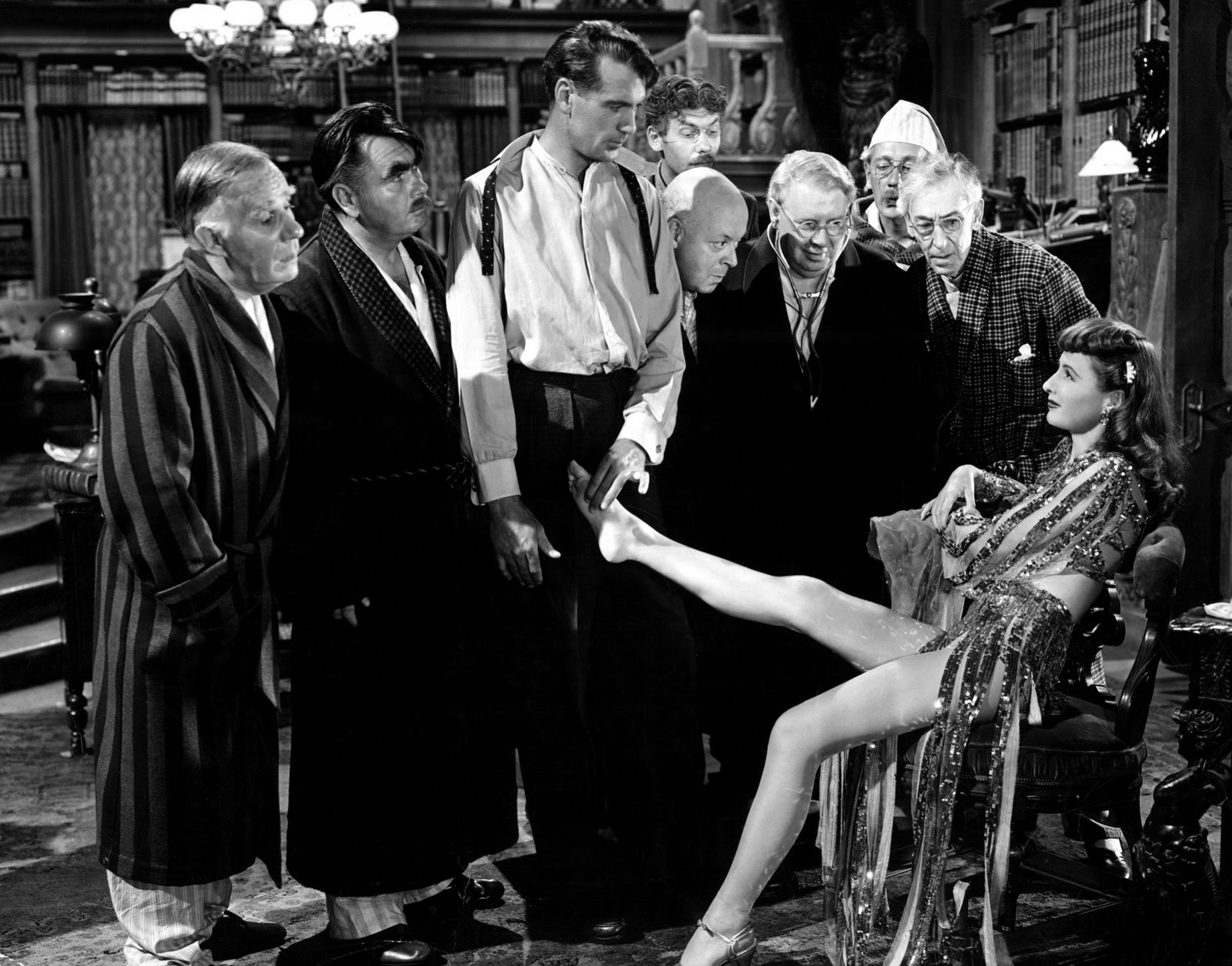
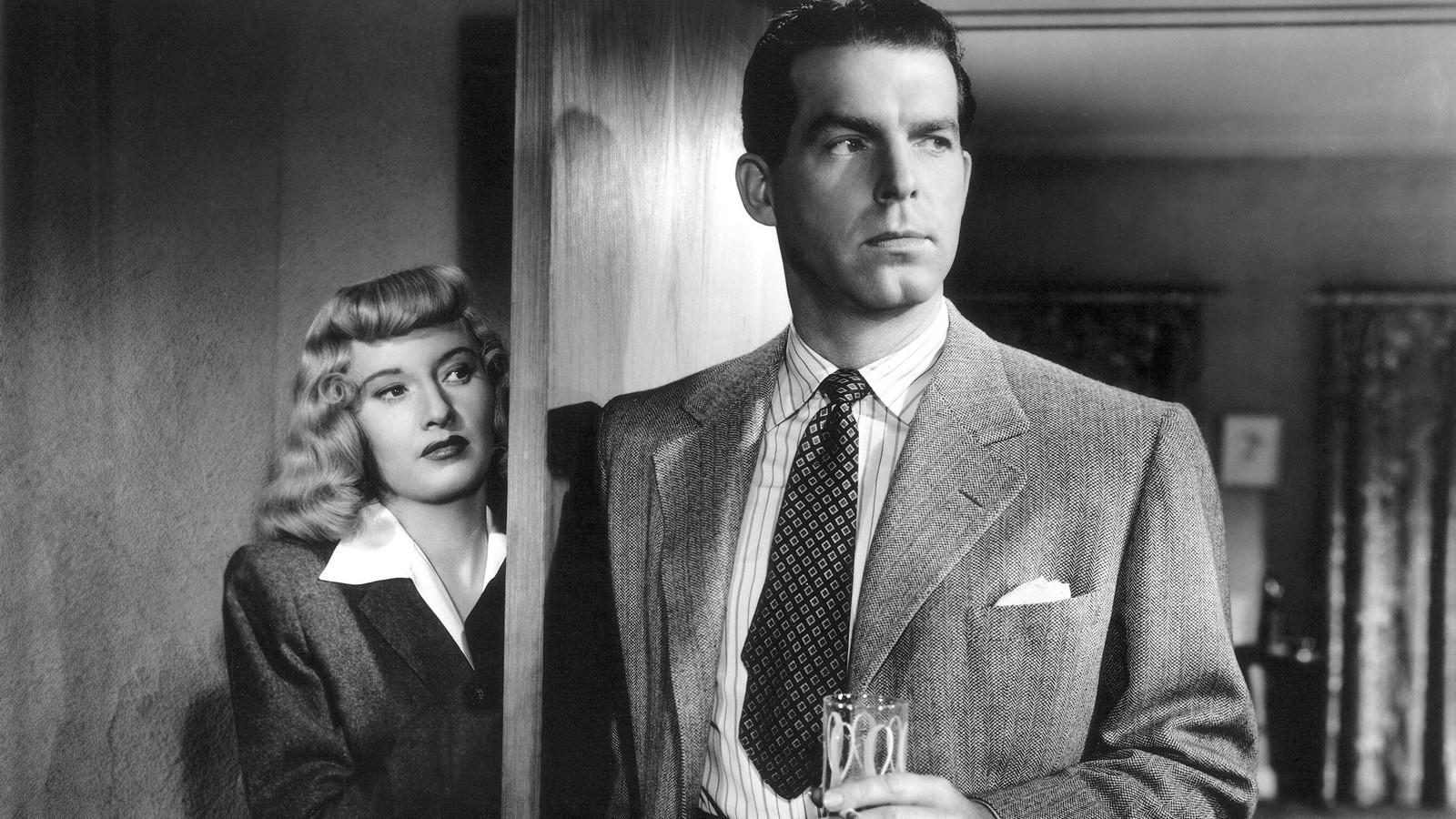
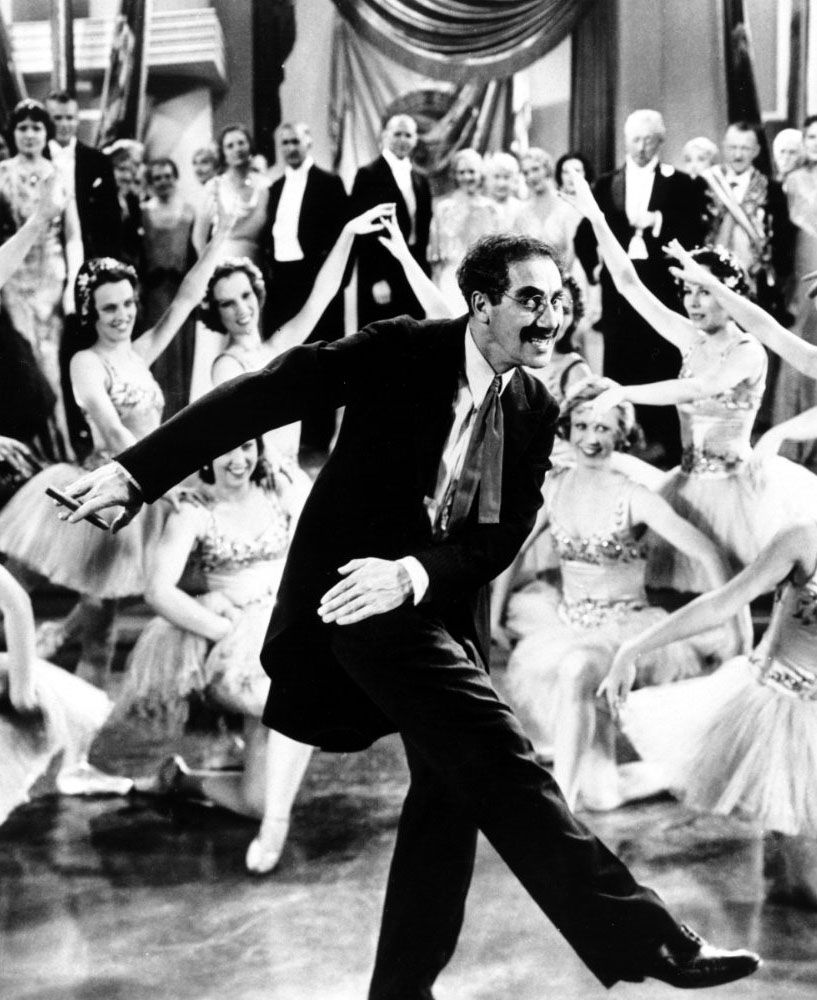
Ask any Howard Hawks fan to name Hawks’ best comedies, and you’ll likely be stuck in a twenty-minute conversation. Almost everyone agrees Bringing Up Baby (1938) and His Girl Friday (1940) are top notch, but after that, the choices begin to differ. I would place Twentieth Century (1934) right up there, as well as Ball of Fire (1941). Far superior to Hawk’s own remake (A Song is Born), Ball of Fire sparkles with intelligent wordplay and shines with immediately likable characters.

Written by Charles Brackett, Thomas Monroe, and Billy Wilder, Ball of Fire is the story of seven encyclopedia writers who venture out into the world after nine years of cloistered research. Having just completed their entries on Saltpeter and Sex, they discover their books aren’t up-to-date enough for their entry on Slang. Led by Professor Bertram Potts (Gary Cooper), they encounter Sugarpuss’ O’Shea (Barbara Stanwyck), a fast-talking compendium of street idioms. They learn “shove in your clutch” means “get lost” and a “crabapple annie” is a stuffy, prudish person.

Sugarpuss O’Shea: Do you know what this means – ‘I’ll get you on the Ameche?’
Professor Bertram Potts: No.
Sugarpuss O’Shea: ‘Course you don’t. An Ameche is the telephone, on account of he invented it.
Professor Bertram Potts: Oh, no, he didn’t.
Sugarpuss O’Shea: Like, you know, in the movies.
Professor Bertram Potts: Well, I see what you mean. Very interesting. Make no mistake, I shall regret the absence of your keen mind; unfortunately, it is inseparable from an extremely disturbing body.

Though Wilder denies it was done consciously, the script plays out as a twisted Snow White and the Seven Dwarfs. Here, Snow White isn’t so innocent, the prince is one of the seven dwarfs, and the dwarfs are called on to save the day. Much of the humor derives from how sheltered the encyclopedists have become in their quest to study life from a distance. Almost all Hawks films explore the dynamics of a closed group, and how it handles threats from the outside world. Ball of Fire fits squarely into that canon, though it’s more gentle than the other top Hawks comedies (the seven men are almost the antithesis of the reporters in His Girl Friday).

Ball of Fire
(1941; directed by Howard Hawks)
MGM (DVD)

Wednesday, March 12 at 9:45 p.m. eastern on Turner Classic Movies

The Sound of Silence

The Sound of Silence

Reviews

In one of the finest books ever written about comedic film, The Silent Clowns, Walter Kerr refers to Buster Keaton as the most silent of the silent film comedians:

The silence was related to another deeply rooted quality — that immobility, the sense of alert repose we have so often seen in him. Keaton could run like a jackrabbit, and, in almost every feature film, he did. He could stunt like Lloyd, as honestly and even more dangerously. His pictures are motion pictures. Yet, though there is a hurricane eternally raging about him, and though he is often fully caught up in it, Keaton’s constant drift is toward the quiet at the hurricane’s eye.

The two Keaton qualities of motion and immobility are perfectly contrasted in The General (1927). It isn’t Keaton’s funniest feature (that honor would go to Seven Chances) or his most inventive feature (that honor would go to Sherlock, Jr.). It is, however, his best blend of comedy and drama, and an ideal choice for anyone who assumes silent comedy is synonymous with empty-headed slapstick. The General has its share of laughs, gags, and pratfalls, but there’s so much more.

Here Kerr eloquently describes the climatic final scene:

As The General must be the most insistently moving picture ever made, so its climax is surely the most stunning visual event ever arranged for a film comedy, perhaps for a film of any kind. . . With all forces moving and the panorama embracing river, steep slopes, and endless forest, the train’s belly begins to droop through the burned gap in the bridge, the gap splinters wide, the understructure pulls away as the great beast seems to claw at it, and in a serpentine curve that is as beautiful as it is horrifying the train goes down to the water with its smokestack vomiting steam, a dragon breathing fire even in death. . . The awe of the moment is real: we are present in some kind of history, if only the history of four or five minutes on a day when an actual locomotive, a true burning bridge, masses of breathing men, a verifiable landscape, and a cameraman were present. Visitors to Cottage Grove, Oregon, where the shot was made, still drop by the ravine to look at the fallen locomotive; the evidence of an event remains, is still somewhat numbing.

This film has a nuanced playfulness you rarely see in comedies. One example, among many I could cite, is the famous scene when Keaton reaches out to strangle his girlfriend in frustration and then decides to kiss her instead. Is there a single moment in film or literature that better sums up the difficulty of maintaining a romantic relationship?

Another scene involves Keaton’s beloved train (The General) starting up and moving while he is sitting on the elbow-like rod that connects the engine to the wheel. Keaton is lost in thought and doesn’t realize he is moving up and down, as well as forward, until the train picks up considerable speed. We laugh because he doesn’t sense the movement right away. We also laugh (or should laugh) because this gag works strictly in a silent medium. In the real world (or in a sound film), we would wonder why he didn’t hear the engine. The in-joke for Keaton and his 1927 audience is that this is a jab at silent film conventions. If you think I’m stretching the point, you only have watch Sherlock, Jr. (1924) to see Keaton poke fun more openly at film logic and the very vocabulary of filmmaking. That’s the wonder of Keaton’s genius — his movies are satisfying on so many different levels.

The General
(1927; directed by Clyde Bruckman and Buster Keaton)
Kino Video (Blu-ray and DVD)

Tuesday, March 11 at 3:30 p.m. eastern on Turner Classic Movies
Pushing the Envelope

Pushing the Envelope

Reviews

Some films are beautiful, and some films are strangely exotic. However, there are only a few films that are both beautiful and strangely exotic. Black Narcissus (1947) is one of those few. Quite simply, it’s one of the most beautiful films every made. It was once cited by the Technicolor company as the best example of what could be achieved with color in film.

Cinematographer Jack Cardiff pushed the envelope with color and shadow in this film, especially as it relates to placing the characters within or apart from their surroundings. Cardiff used outlines of color, often against contrasting hues, to strengthen the mood of the scene and to physically convey a sense of that character’s emotional state. You can see the influence of Vermeer, Rembrandt, and Van Gogh in many of his shots.

As you take in the sweeping vistas, keep in mind that not a single frame of the film was shot on location. Much of the credit here goes to the movie’s production designer Alfred Junge, as well as to Peter Ellenshaw, who painted the mattes that evoke the distant mountains and castle.

Co-directors Michael Powell and Emeric Pressburger were equally daring in their experimentation. In one 12-minute sequence near the end, where the action quickly moves toward an inevitable climax, there’s no dialogue. In the sequence, the directors matched the visuals to the music, rather than the other way around. And while there’s more than enough plot to interest the audience, much of the dramatic tension comes from a heightened sense of space and its influence on the characters.

The story revolves around a group of nuns who attempt to establish a dispensary and school in the Himalayan mountains. The isolation takes its toll on the Sisters — emotionally, religiously, and sexually. One flashback scene, in which Sister Clodagh (played by Deborah Kerr) remembers her past love life, was cut from the U.S. release of the film so as not to offend the Catholic Legion of Decency.

Powell would keep pushing the envelope creatively until Peeping Tom (1960). That’s when many in Britain thought he had pushed too far. In addition to Black Narcissus, his other great films include The Thief of Bagdad (1940), 49th Parallel (1941), The Life and Death of Colonel Blimp (1943), I Know Where I’m Going! (1945), A Matter of Life and Death a.k.a. Stairway to Heaven, The Red Shoes (1948), and The Small Back Room (1949). All are well worth watching.

Black Narcissus
(1947; directed by Michael Powell and Emeric Pressburger)
The Criterion Collection (Blu-ray and DVD)

Tuesday, February 13 at 6:15 p.m. eastern on Turner Classic Movies
A Great and Simple Theme

A Great and Simple Theme

Reviews

If you haven’t heard of the director Frank Lloyd, you’re not alone. Even though he directed, produced, and/or appeared as an actor in more than 180 films from 1912 through 1955, he isn’t well known. He is best remembered for his masterful direction of Mutiny on the Bounty (1935). Lloyd was the ideal choice to helm this true-life British naval mutiny from the late 18th century.

Born in Scotland, Lloyd watched his father install turbines and engines into all kinds of boats, including Tall Ships. His family traveled throughout Scotland, England, and Wales as his father looked for work. When Lloyd became a Hollywood film director, he searched for interesting tales about ships and the sea. Before being offered Mutiny on the Bounty, he had directed a surprising number of boat- and sea-related films, including The Sea Hawk (1924), Winds of Chance (1925), The Eagle of the Sea (1926), The Divine Lady (1929), Weary River (1929), and Cavalcade (1933).

Lloyd knew he could turn the incident into a rousing, yet deeply human motion picture. He later wrote:

When I finished reading Mutiny on the Bounty, I felt a definite excitement running through me. I knew I’d follow the simply history of a little ship – a character in itself – on a long journey. That aboard is a small group of men, courageous, sometimes sullen, always genuine. That the ship and the men reached Paradise and saw its beauty, were forced to leave that Beauty and mutinied. I knew that there was a thrilling adventure, a great and simple theme, the qualities of laughter and grief, and superb characters. And I knew that I could sell a combination like that to any audience.

The production was no small undertaking. It took two years to complete with a budget of almost two million dollars. Clark Gable had to be convinced to shave off his “lucky mustache,” because facial hair wasn’t allowed in His Majesty’s Navy at the time. Charles Laughton contacted the London tailor shop that had outfitted the real Captain Bligh 150 years earlier, in order to recreate Bligh’s uniform. The portly Laughton lost 55 pounds so he could match Bligh’s exact measurements.

The result is one of Hollywood’s best seafaring movies (John Ford’s The Long Voyage Home may be the very best). It was a huge hit for MGM, despite the staggering $1,905,000 budget. It went on to earn $4,460,000 at the box office and win an Oscar for Best Picture.

In 1962, the story was remade as Mutiny on the Bounty, with Marlon Brando as Fletcher Christian and Trevor Howard as Captain Bligh. There’s a strange link between the two movies. Movita Castaneda, who played Fletcher Christian’s Tahitian wife in the original film, later married the real-life Marlon Brando, the Fletcher Christian in the remake.

The story was remade yet again in 1984 as The Bounty, with Mel Gibson as Fletcher Christian and Anthony Hopkins as Captain Bligh. The 1984 film is the better of the two remakes. It also adheres more closely to the historical facts by portraying Bligh as repressed and authoritative, rather than mad and egotistical.

If you’ve seen only the usual print of this film on television, prepare to be duly impressed by the recently-released Blu-ray. It features a photochemical restoration of a recently discovered original nitrate camera negative. The print looks great with a consistently sharp image and smooth graytones. The audio is clear throughout, though there’s some shrillness in the louder portions, which is fairly common with movies from the early- to mid-1930s.

Both the Blu-ray and DVD include an interesting short, titled Pitcairn Island Today (1935), which shows the descendants of the crew and their living conditions on the island.

Mutiny on the Bounty
(1933; directed by Frank Lloyd)
Warner Home Video (Blu-ray and DVD)

Thursday, February 6 at 8:00 p.m. eastern on Turner Classic Movies
A Fine Lubitsch

A Fine Lubitsch

Reviews

Ernst Lubitsch had no equal when it came to crafting sophisticated comedies. One of the first sound-era Hollywood directors known and revered by the public, his “Lubitsch touch” represented the pinnacle of intelligent humor. His version of The Merry Widow (1934) still towers over other comedies.

As Herman G. Weinberg pointed out in his book The Lubitsch Touch, “This time the first ‘Lubitsch touch’ came right under the credit titles as a magnifying glass sought in vain to find the tiny mythical kingdom where the action takes place.”

Ostensibly based on the operetta of the same name (which Erich von Stroheim used as the basis for his 1925 silent film), Lubitsch and screenwriters Ernest Vajda and Samson Raphaelson essentially threw out the plot and started from scratch.

Jeanette MacDonald is the wealthy widow who owns 52 percent of every cow in the small country of Marshovia. Maurice Chevalier is the playboy prince who is given the task of wooing her back from Paris, so her riches will remain in the kingdom.

Supported by an outstanding cast of character actors — including Edward Everett Horton, Una Merkel, Sterling Holloway, and Hermann Bing — The Merry Widow is guaranteed to bring a smile to your face and a feeling of nostalgia for a golden age of screen comedy.

This movie is available on DVD, though it’s available only as a Manufactured on Demand (MOD) disc. That’s a DVD-R format. As a result, it may not play properly on some PC-based DVD drives or DVD recorders. I had no problems playing it on my PC-based DVD and Blu-ray drives, though your results may vary. This MOD disc should be issue-free with most standalone DVD and Blu-ray players (the kind you connect to a home TV).

The video and audio quality on this disc is first rate. Warner has done an excellent job of transferring this film at a suitably high bit rate (8000 kbps for the video and 192 kbps for the audio). The image had plenty of contrast and detail, and the sound (especially important for the musical numbers) was clear and never shrill. It looked great projected onto a 100-inch screen. Highly recommended.

The Merry Widow
(1934; directed by Ernst Lubitsch)
Warner Archive Collection (DVD)

Monday, February 3 at 6:15 a.m. eastern on Turner Classic Movies
A Film of Episodes

A Film of Episodes

Reviews

The 39 Steps (1935) is one of Hitchcock’s most accomplished early films. It’s also the movie that caught the eye of Hollywood, and the rest — as they say — is history. On the surface, it’s a story about spies and vital information that can’t fall into the wrong hands. Dig deeper, and you’ll find a thrilling adventure of a man wrongly accused of a crime (a favorite Hitchcock theme), as well as a romantic comedy that’s centered on an unlikely couple.

Based on a famous novel by John Buchan, the author was initially upset with the changes Hitchcock made for the film. Years later, he acknowledged Hitchcock had improved the story. In a 1962 interview with Françoise Truffaut, Hitchcock explained his approach to adapting the story:

I worked on the scenario with Charles Bennett, and the method I used in those days was to make a treatment complete in every detail, except for the dialogue. I saw it as a film of episodes, and this time I was on my toes. As soon as we were through with one episode, I remember saying, ‘Here we need a good short story.’ I made sure the content of every scene was very solid, so that each one would be a little film in itself.

Given Hitchcock’s remarks, it’s a wonder the movie doesn’t feel disjointed. Hitchcock was such a skilled director at this point in his career, he was able to hold the episodes together through the strength of the characters and thrill of the chase. As in many of Hitchcock’s films, the origins of the crime or espionage are unimportant. We don’t care what the 39 steps are, and neither does Hitchcock. He even has to insert a few lines at the end to remind us what all the hubbub was about.

The film is filled with deftly rendered vignettes, such as the sequence with the farmer and his wife. Richard Hannay (played by Robert Donat) encounters them as he flees the police. Based on just a few gestures and glances, we immediately understand the couple’s relationship. When a handcuffed Hannay evades detection by joining a Salvation Army parade, and then is mistaken for a political speaker (he’s hustled onto the platform to improvise an election speech), we willingly go along for the ride. And when those same handcuffs bind Hannay with a woman (played by Madeleine Carroll) who despises him, we savor the improbable circumstances that ultimately bring the two together together. The 39 Steps is only 81 minutes long, but it has more thrills, comedy, romance, and understated wit than the vast majority of films you’ll see. As Hitchcock explained to Truffaut in the interview, “You use one idea after another and eliminate anything that interferes with the swift pace.”

The two-disc-set DVD of The 39 Steps includes a bonus documentary titled The Art of Film: Vintage Hitchcock. It’s an excellent introduction to Hitchcock’s early British films, which include The Man Who Knew Too Much (1934), Sabotage (1936), Young and Innocent (1937), and The Lady Vanishes (1938).

The 39 Steps
(1935; directed by Alfred Hitchcock)
The Criterion Collection (Blu-ray and DVD)

Wednesday, January 22 at 9:30 p.m. eastern on Turner Classic Movies
A Rousing Good Time

A Rousing Good Time

Reviews

Captain Blood (1935) is the first of three exceptional swashbuckling films from an unlikely trio: director Michael Curtiz, composer Erich Wolfgang Korngold, and actor Errol Flynn. While the other two films — The Adventures of Robin Hood (1938) and The Sea Hawk (1940) — are better known, Captain Blood is in many ways the superior film because the trio hadn’t yet settled comfortably into the format.

Known to be hard working, but temperamental, Curtiz was an odd choice to direct a pirate movie. The genre hadn’t been popular since the Douglas Fairbanks films of the 1920s, though it experienced a sudden resurgence in 1935 with the release of both Captain Blood and Mutiny on the Bounty. This was Korngold’s first original film score, and it forever associated his name with classic action-adventure films. The three films just wouldn’t be the same without Korngold’s rousing scores. And 26-year-old Flynn wasn’t supposed to play the title role that propelled him to fame almost overnight. Robert Donat had been the first choice based on his success the previous year in The Count of Monte Cristo. He turned down the part because of poor health.

The studio wasn’t able to spend a lot of money on this project. If you look closely, you’ll notice the ships in the battle scenes aren’t full size. Instead, Curtiz and cinematographer Hal Mohr used miniatures, process photography, and clips from the 1924 silent version of The Sea Hawk.

Though clearly a product of Hollywood, this film has an international pedigree. Curtiz had fled his native Hungary in 1918 when the communist regime nationalized the film industry. Korngold, the son of a well-known music critic, had emigrated from Vienna earlier in 1935. Flynn grew up on the Australian island state of Tasmania. And co-star Olivia de Havilland was born in Tokyo, though her parents were British.

Captain Blood
(1935; directed by Michael Curtiz)
Warner Home Video (DVD)

Friday, January 17 at 8:15 a.m. eastern on Turner Classic Movies
Artistic Spirit

Artistic Spirit

Reviews

A great film depends on everything coming together into an unlikely alignment. If a director, actor, screenwriter, cinematographer, composer, or other essential component is lacking, you may end up with only an interesting film that shows promise.

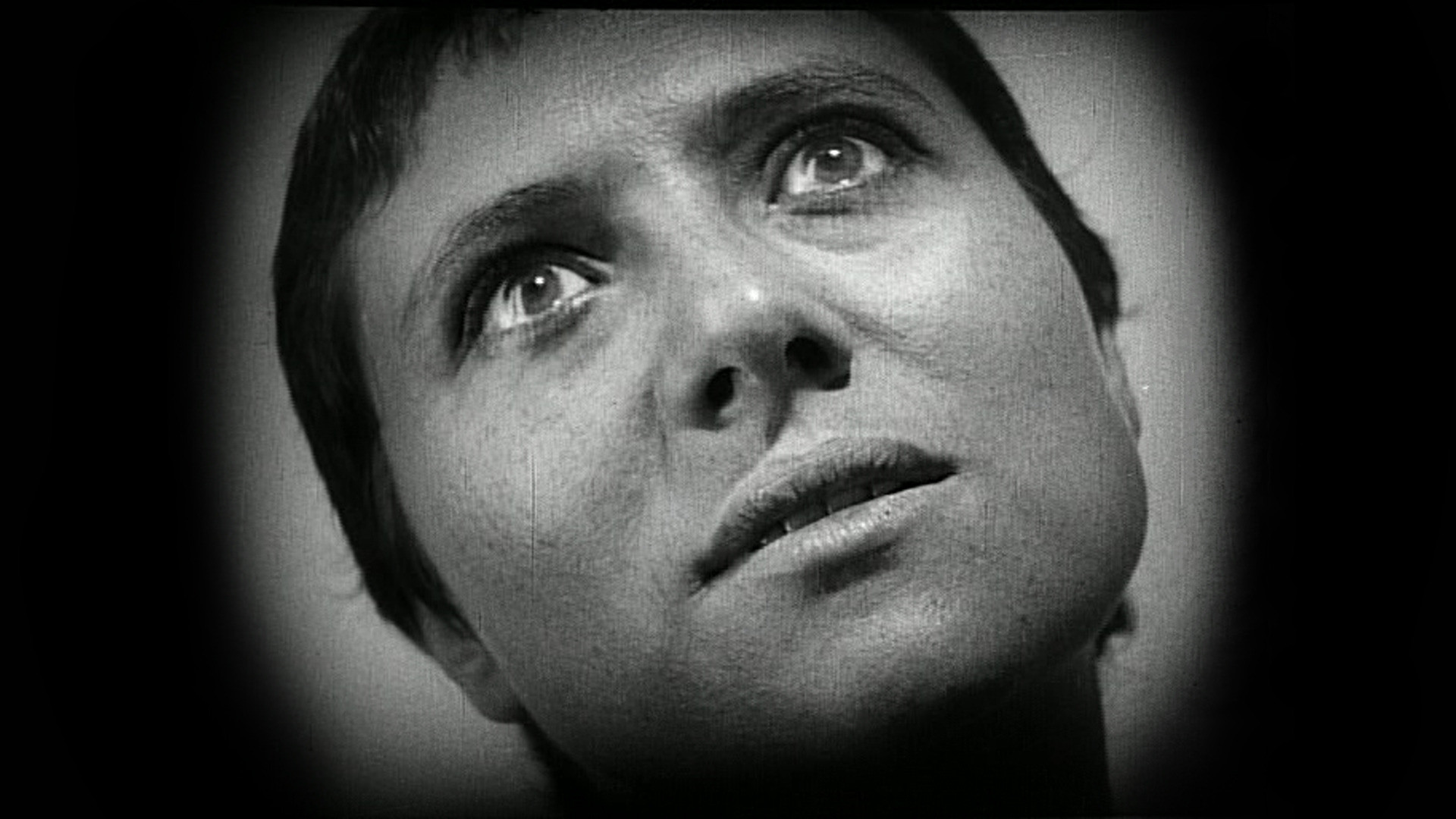
With The Red Shoes (1948), so many things that could have gone wrong, didn’t. Michael Powell could have chosen to use actors who could dance, rather than dancers who could act. His strategy was high risk, but promised to pay off big — if he could find the right dancers. Basing the story on a dark fairy tale from Hans Christian Anderson was equally perilous, unless Emeric Pressburger’s script could successfully emphasize the warmth and humanity of the ballet company, as much as their artistic spirit and integrity of purpose. And inserting a 17-minute ballet sequence, not at the end of the movie as an emotional climax, but near the middle to place the emotional conflicts into stark relief, would have been commercially foolish if not handled skillfully. That all these things succeeded so spectacularly, when any one of them could easily have failed, is a credit to those involved, but also a fortunate happenstance that all the participants agreed to come onboard.

Much of the audience’s empathy is dependent on the acting talent of Moira Shearer, who was just 21 years old at the time. A dancer at Sadler’s Wells (later renamed the Royal Ballet), Shearer wasn’t eager to put her dancing career on hold, as she explains in this 1994 interview with Brian McFarlane for An Autobiography of British Cinema:

I held out against that film for a whole year. The director Michael Powell was extremely put out by my continued refusal. It never occurred to him that a young girl wouldn’t be overwhelmed by his offer. But I didn’t like the story or the script, which seemed a typical woman’s magazine view of the theatre, and I also realized he knew very little about the ballet. Also, at that time, 1946, I had just started to dance the ballerina roles in the big classics and the last thing I wanted to do ‘was to interrupt this difficult work with a sugary movie.’ Powell bombarded me for weeks in 1946 and I remember thinking, ‘I have to get rid of this man.’ However, he finally got the message and went off in a huff, saying to me, ‘I am now going around the world to find the perfect girl for this part.’ He came back a year later; presumably he hadn’t found his perfect girl, though he had now engaged Leonide Massine and Robert Helpmann, both of whom I knew well, as dancer-actors and to arrange the choreography. Powell went on and on at me and I think he must have bombarded Ninette de Valois because she called me to her office and amazed me by saying, ‘For God’s sake, child, do this film and get it off your chest — and ours, because I can’t stand that man bothering us any longer!’ I asked one question, ‘If I do it, can I come straight back to Covent Garden when the film is complete?’ and her answer was, ‘Yes, of course you can.’ And I did — but not happily. There was a lot of jealousy and bad feeling. I’m afraid I was very naive. Helpmann told me later that the only reason de Valois wanted me to make the film was to give advance publicity in America for the first coast-to-coast tour of her company in 1949. Which, of course, is what happened.

Jack Cardiff also wasn’t eager to join the project. He had worked as the cinematographer for Powell on A Matter of Life and Death (1946) and Black Narcissus (1947), but wasn’t enthralled with the idea of photographing a movie about a ballet company. Powell asked Cardiff to regularly attend the ballet at Covent Garden, where he saw the possibilities of what he could bring to the film. One example was a special camera Cardiff designed that let him vary the film speed while the dancers performed. By slowing down their movements imperceptivity, he enhanced the visual impression they were soaring through the air or reaching extreme heights. Cardiff was probably the finest Technicolor cinematographer ever, and two of his films — Black Narcissus and The Red Shoes — are often cited as the best examples of what can be achieved with the Technicolor process.

Though risky, The Red Shoes was a financial success. In the U.S., it began quietly with a 110-week run at The Bijou in New York City and was then picked up for national distribution. It had a strong influence on Hollywood musicals. The extended ballet-like sequences in An American in Paris (1951) and Singin’ in the Rain (1952) might never have been approved without proof there was an eager audience for this merging of art forms.

The Red Shoes
(1948; directed by Michael Powell and Emeric Pressburger)
The Criterion Collection (Blu-ray and DVD)

Sunday, January 12 at 11:45 a.m. eastern on Turner Classic Movies
Glorious Excess

Glorious Excess

Reviews

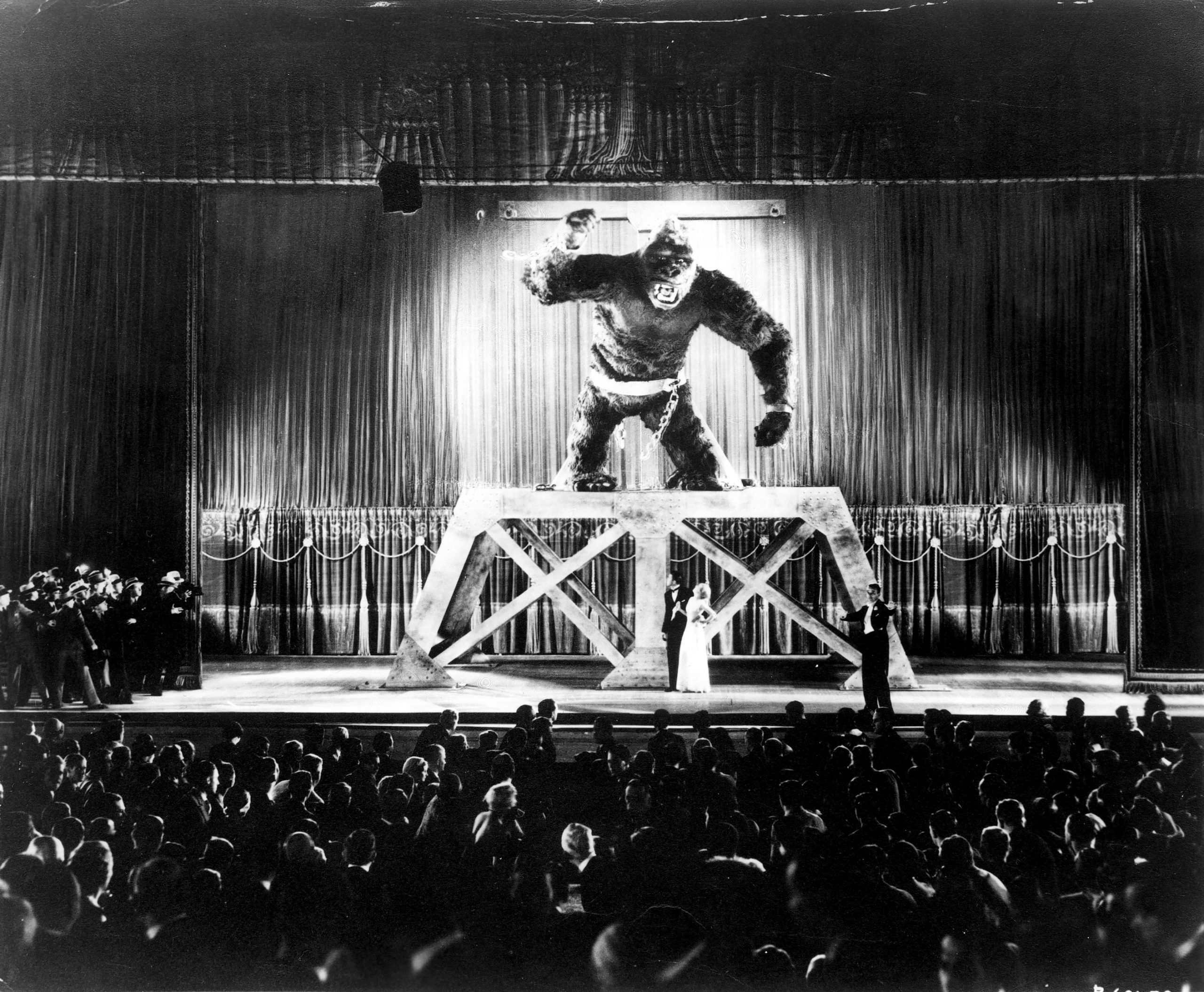
How do you top the untoppable? That was the problem facing Busby Berkeley and the Warner Bros. Studio back in 1933. Following the success that same year of 42nd Street and Gold Diggers of 1933, how could they make the script funnier, the pacing faster, and — most importantly — the spectacular musical numbers even more spectacular? The answer was Footlight Parade (1933), which is funnier, faster, and more spectacular than its two predecessors.

Footlight Parade may surprise you if you haven’t seen many classic films. You may be aware of Busby Berkeley’s campy musical numbers, but you may not realize how strong the comedic elements are in the earlier (and superior) Berkeley films. Just as Top Hat (1935) is just as good a romantic comedy as it is showcase for great dancing, the first two-thirds of Footlight Parade holds its own against most comedies. The last third of the movie consists almost entirely of the three musical numbers — each one bigger (and more improbable) than the last.

If you haven’t watched Yankee Doodle Dandy (1942), you may also be surprised to see James Cagney dance in this film. In fact, he started out as a dancer and was cast as a gangster in The Public Enemy (1931) only after switching roles.

And if you haven’t seen many pre-code Hollywood films from the early 1930s, you may be amazed by how modern they feel, especially in their verbal and sexual frankness. It isn’t anything you couldn’t hear on network television today, but it may be a shock to hear this coming from your grandmother’s or great-grandmother’s generation. One of the musical numbers revolves around a honeymoon hotel where all the guests go by the name of Mr. and Mrs. Smith.

Here are a few highlights from the movie’s dialogue, which have a refreshing depression-era we’re all in this together attitude:

Chester Kent: Hello, Vivian. This is Miss Rich. My secretary, Miss Prescott.
Nan Prescott: I know Miss Bi….. Rich, if you remember.

Nan Prescott: [to Vivian] As long as there are sidewalks, you’ve got a job.

Charlie Bowers: Is there anything I can do?
Chester Kent: Yeah. See that window over there?
Charlie Bowers: Yeah.
Chester Kent: Take a running jump and I think you can make it.

In my college days, we used to run Footlight Parade regularly during final exams. Just as depression-era audiences craved an escape from their daily trials and tribulations, the exam-weary students responded positively to the film’s snappy comebacks, flawless comic timing, and — yes — glorious excesses contained in the musical numbers. Granted, it’s all a bit silly, but who doesn’t need a bit of silly every now and then?

Footlight Parade
(1933; directed by Lloyd Bacon, musical numbers by Busby Berkeley)
Warner Home Video (Blu-ray and DVD)

Saturday, January 11 at 12:00 p.m. eastern on Turner Classic Movies
Rata-Tat-Tat

Rata-Tat-Tat

Reviews

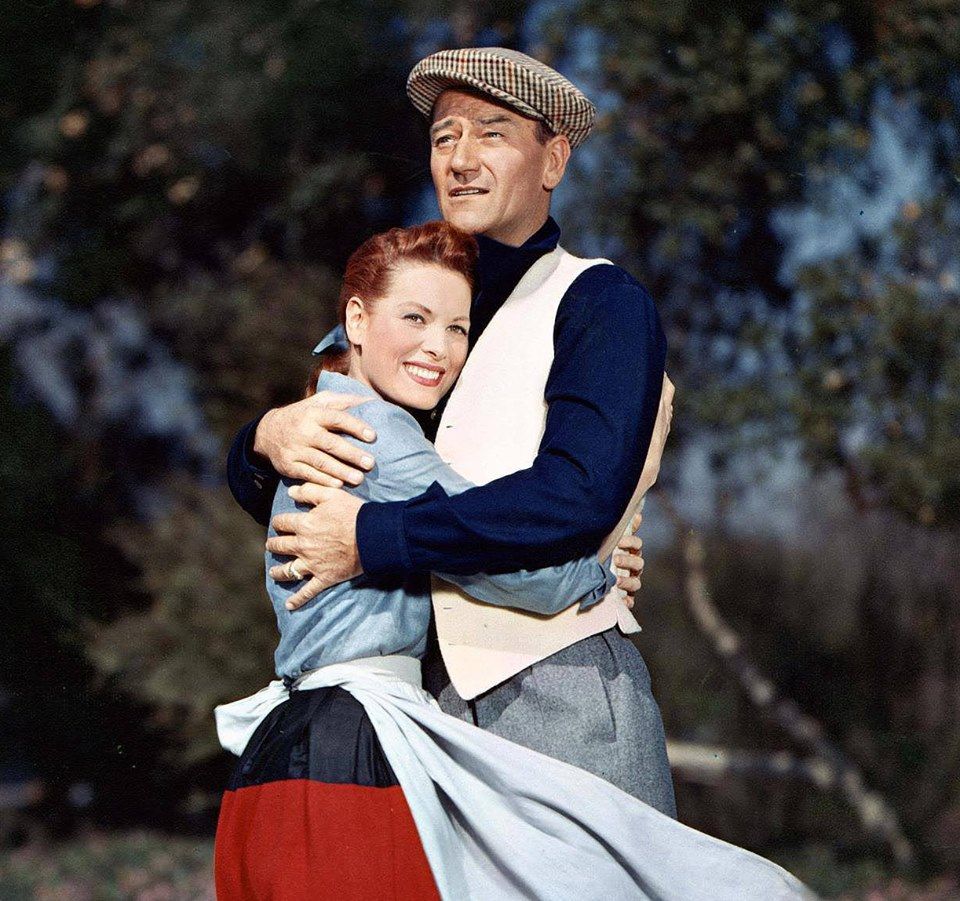
Howard Hawks is the least appreciated of the great American directors. It took the critics from the Parisian magazine Cahiers du Cinema in the 1950s to recognize the consistent style and world view behind such dissimilar films as Scarface (1932), Bringing Up Baby (1938), Air Force (1943), The Big Sleep (1946), Red River (1948), The Thing from Another World (1951), and Gentlemen Prefer Blondes (1953). Of Hawks’ many best-of-breed genre films, Scarface is the most underrated. Producer Howard Hughes withheld the film from circulation in the U.S. after its initial release, so it was almost impossible to see until the 1970s. You had a better chance of seeing the film if you lived in Paris than if you lived in New York or Los Angeles.

Scarface is far more complex thematically and visually than Little Caesar (1930) or The Public Enemy (1931), and much more satisfying. Tony and his henchmen attend a theatrical performance of Rain, another cautionary tale about a man who tries to impose his will on others. Tony has to leave the theater early, missing the downfall of the play’s tragic figure, in order to set in motion the events that will lead to his own downfall. Like the men in Hawks’ Only Angels Have Wings and Air Force, Tony and his gang react to life-threatening situations by creating their own rules of conduct and honor. The group is fiercely loyal until someone deliberately crosses the line to threaten the cohesiveness of the group. In virtually all his films, Hawks explores the interplay between individual initiative and group co-operation. It’s the dynamic push-pull between these two forces that drives the characters’ actions and moves the story forward to its logical conclusion. With the Hawks comedies, that universe is turned completely upside down.

Hawks and scriptwriter Ben Hecht populate the sets in Scarface with symbolic Xs and crosses. Look closely, and you’ll see them throughout the film, particularly at critical junctures in the plot. During the production of the film, Hawks ran afoul of the studio censors, who were repelled by the large number of murders and cold-hearted glee with which the gangsters carry out their revenge. Hawks was forced to insert a high-minded introduction and clumsy moral-indignation scene to soften what was thought to be a dangerously immoral film. Hawks also had to tone down the ending. He had wanted Tony (played by Paul Muni) to end face down in a pile of horse manure.

This isn’t just the best gangster movie ever made. It’s a landmark film of the early 1930s, and the first mature work by one of Hollywood’s preeminent directors.

Scarface
(1932; directed by Howard Hawks)
Universal (Blu-ray and DVD)

Tuesday, January 7 at 8:00 p.m. eastern on Turner Classic Movies