Beyond Intellect

Beyond Intellect

Reviews

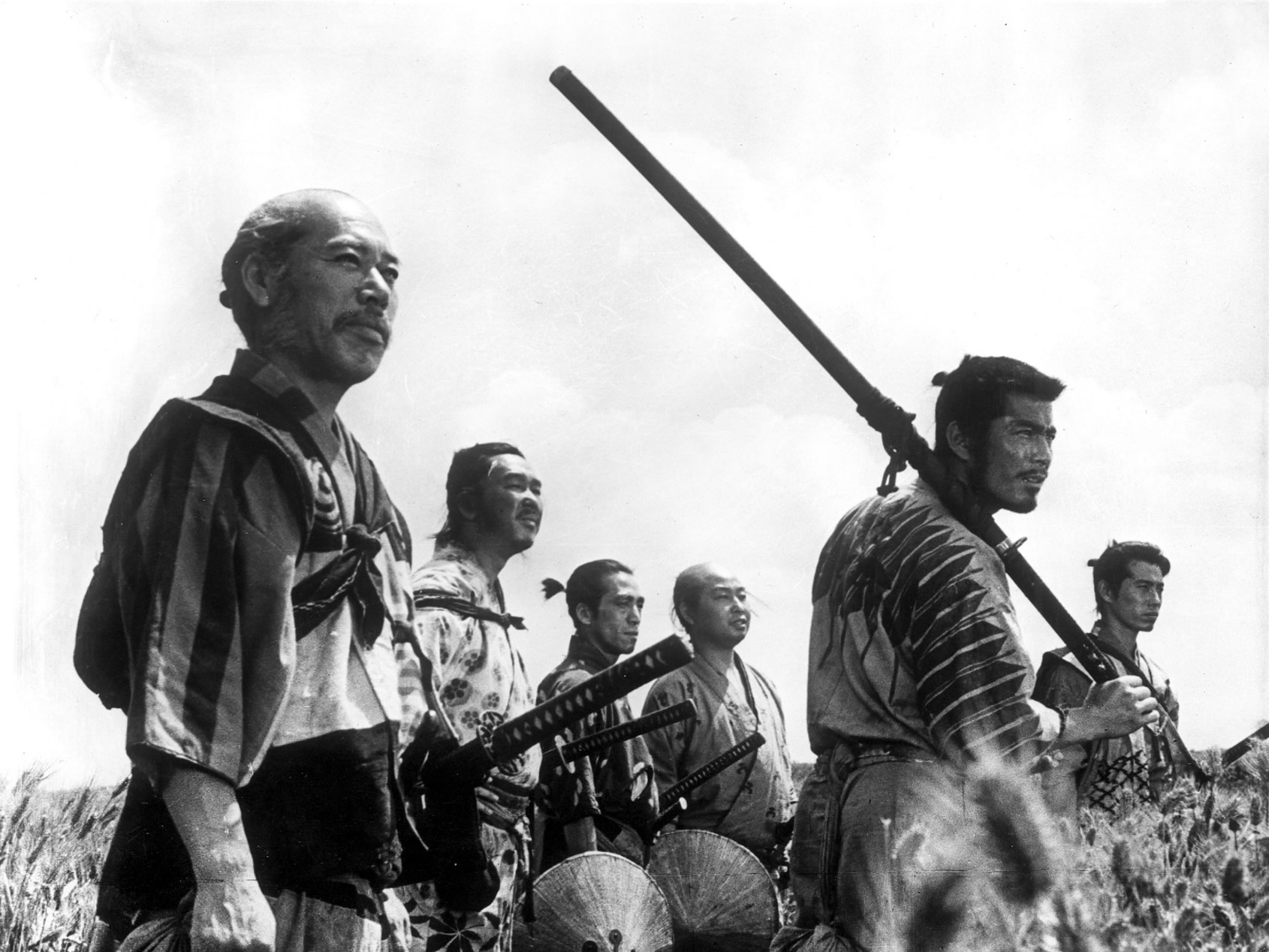
Many of today’s teenagers have never seen a classic foreign film. So what would be the best one to show a teenager if you wanted to pique his or her interest in foreign films? The best choice might be Seven Samurai (1954). Because Kurosawa was so strongly influenced by Hollywood films (especially the Western genre), Seven Samurai’s moral contrasts are immediately familiar. At the same time, this film is unmistakably Japanese in its approach.

Here’s what Japanese-film historian Donald Richie had to say in his seminal book Japanese Cinema:

In many ways, Seven Samurai is both the opposite and the continuation of Rashomon. The earlier film represents the limitations of the intellect: four stories, each completely intellectualized, all mutually incompatible, and all, in their way, ‘true.’ Seven Samurai on the other hand, steps beyond intellectualization. It says that only those acts which spring from emotion are valid acts; that action thus motivated is itself truth. This truth is one which remains, though universally applicable, particularly Japanese. It is one which is shared with Zen and with the haiku, as well as the films of Ozu and Kurosawa — the emotions comprehend where the intellect falters. The basic dichotomy is one recognized and insisted upon in Japan just as much as in the West, and Kurosawa’s humanism, his Dostoevsky-like compassion, remains his final and strongest statement.

Like Ford and Renoir, Kurosawa was able to portray his characters compassionately without resorting to clichés or overt sentimentality. At its core, Seven Samurai is an action film that abhors violence, a film about cooperation that celebrates individuality, and a film about the world’s heartlessness that encourages simple kindness.

Few films succeed so grandly both as visceral entertainment and as an artful commentary on the human condition. Both elements are bound together so seamlessly, it’s impossible to tell where one ends and the other begins. That may be the truest measure of the most successful films and novels — that we can be simultaneously entertained and enriched as though there was no difference at all between the two qualities.

Seven Samurai
(1954; directed by Akira Kurosawa)
The Criterion Collection (Blu-ray and DVD)

Tuesday, June 8 at 12:00 p.m. eastern (late Mon. night) on Turner Classic Movies

The Forgotten Man

The Forgotten Man

Reviews

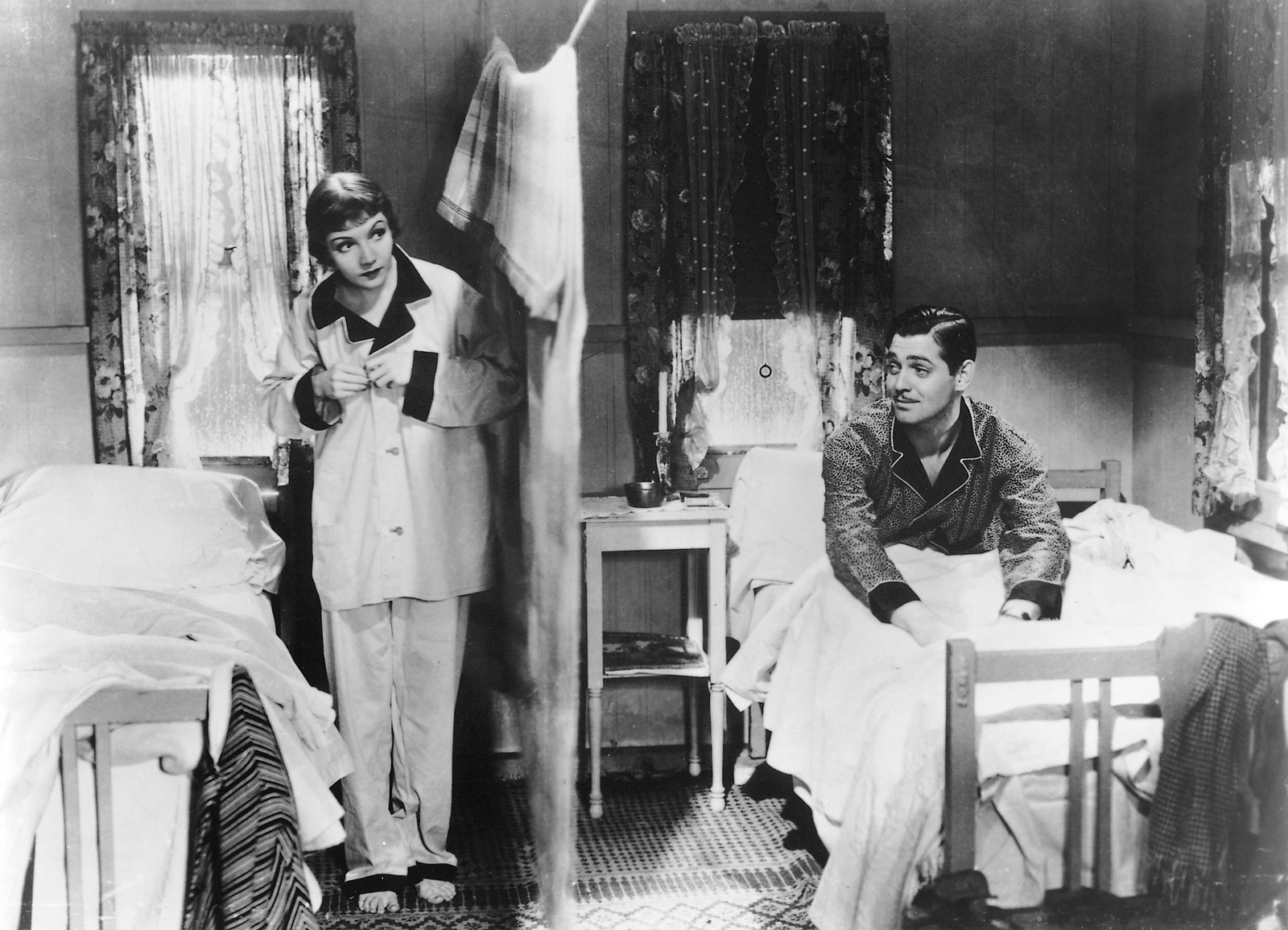
While the screwball comedy is a byproduct of the Great Depression, not every screwball comedy reflects the era head-on. My Man Godfrey (1936) is both a spoof of — and a commentary on — the financial inequities at the time. The movie-going public was well aware the Depression was hitting the poor much harder than the wealthy, so poking fun at the idle rich was a staple of the genre. The prevailing attitude? We’re all in this together, so don’t get snooty or high-hat just because you’re well off.

Unlike the previous year’s Ruggles of Red Gap, where a real butler finds himself in the wild west, My Man Godfrey’s butler may not be what he appears to be. Both films poke fun at rich Americans who have plenty of dollars, but no sense. Godfrey is more direct in its satire, and like Sullivan’s Travels (1941), its message for social equality (in the midst of economic inequality) is front and center.

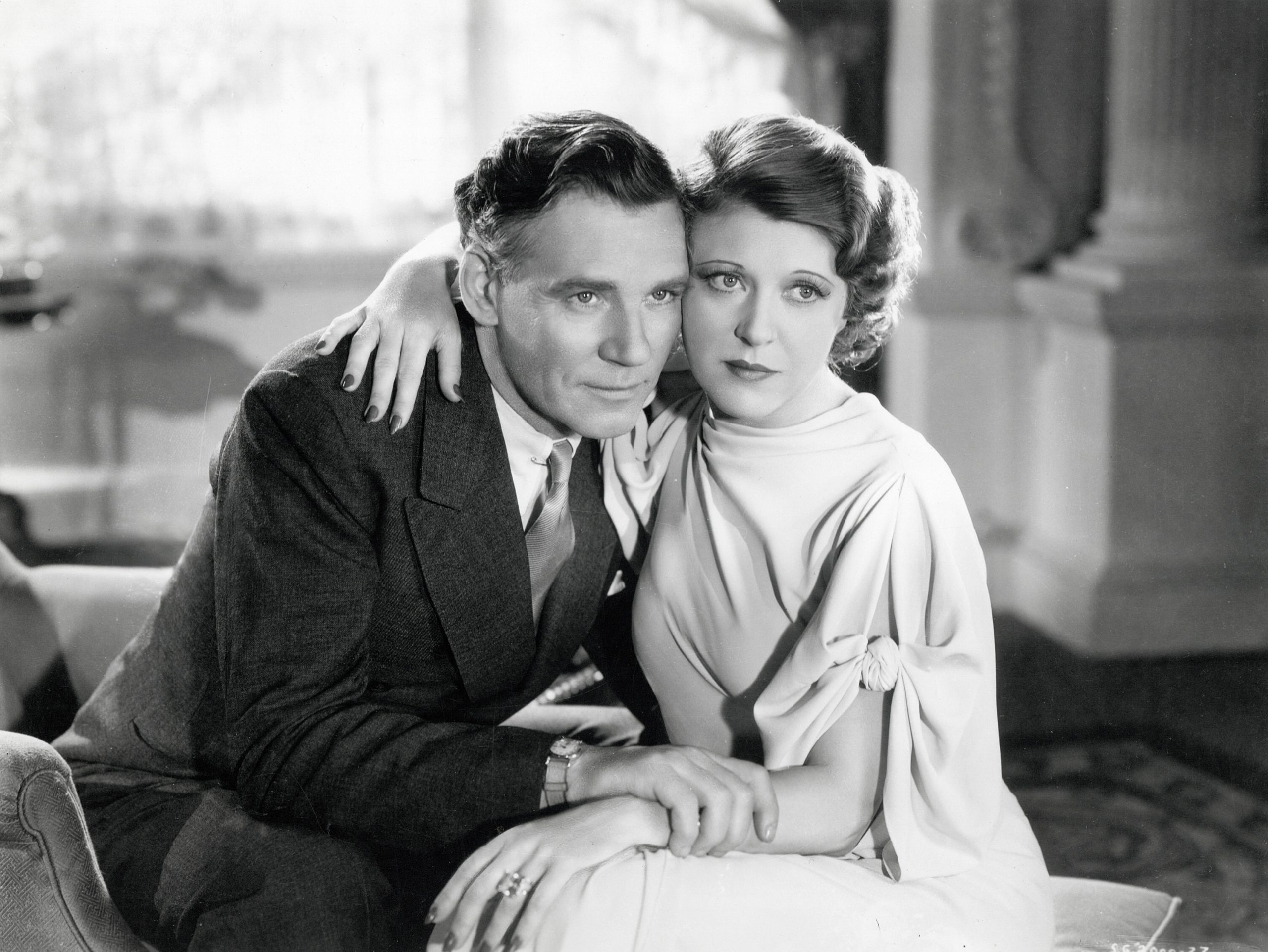
William Powell is perfectly cast as Godfrey the butler, who knows more about money and manners than his employers (echoing Charles Laughton’s role in Ruggles of Red Gap). Carole Lombard plays Irene, a spoiled heiress who is bored with her frivolous life — though she doesn’t know it yet. Here’s an example of the interplay between Powell and Lombard:

Godfrey: Do you mind telling me just what a scavenger hunt is?
Irene: Well, a scavenger hunt is exactly like a treasure hunt, except in a treasure hunt you try to find something you want, and in a scavenger hunt you try to find something that nobody wants.
Godfrey: Hmm, like a forgotten man?
Irene: That’s right, and the one who wins gets a prize, only there really isn’t a prize. It’s just the honor of winning, because all the money goes to charity, that is, if there is any money left over, but there never is.
Godfrey: Well, that clears the whole matter up beautifully.

This was the first film to be nominated for all four acting Oscars: Best Actor, Best Actress, Best Supporting Actor, and Best Supporting Actress. Coincidentally, it was the very first year for the two supporting awards. My Man Godfrey was also nominated for the writing and directing Oscars. To this day, it’s the only film to be nominated for all six awards and not be nominated for Best Picture. And to this day, it’s the only film to be nominated for all six awards and not win any of them.

My Man Godfrey
(1936; directed by Gregory La Cava)
The Criterion Collection (Blu-ray and DVD)

Sunday, July 6 at 12:00 p.m. eastern on Turner Classic Movies

Crowd Control

Crowd Control

Reviews

Fritz Lang’s first American film after fleeing the Hitler regime in Germany, Fury (1936) is a terrifying look at how good people can go bad when swayed by the darker instincts of a crowd. The incredible scenes where the mob tries to lynch an innocent man recall the workers frantically fleeing the city in Metropolis and the angry calls for justice against the child murderer in M.

David O. Selznick brought Lang to MGM in 1934. He languished at the studio for months and was nearly fired. Given one last chance, Lang was handed a four-page outline titled Mob Rule. MGM told Lang and writer Barlett Cormack they would need to develop it into a script for Lang to direct.

Lang didn’t speak English very well at the time, so he looked around for inspiration. He found that inspiration in the form of newspaper clippings, as he explains in a 1965 interview with Peter Bogdanovich:

I followed a habit I had in Europe (and still have) of collecting newspaper clippings — I have used them for a lot of my pictures. We found a lynching case that had happened in San Jose, California, a few years before I made the film, and we used many newspaper clippings for the script.

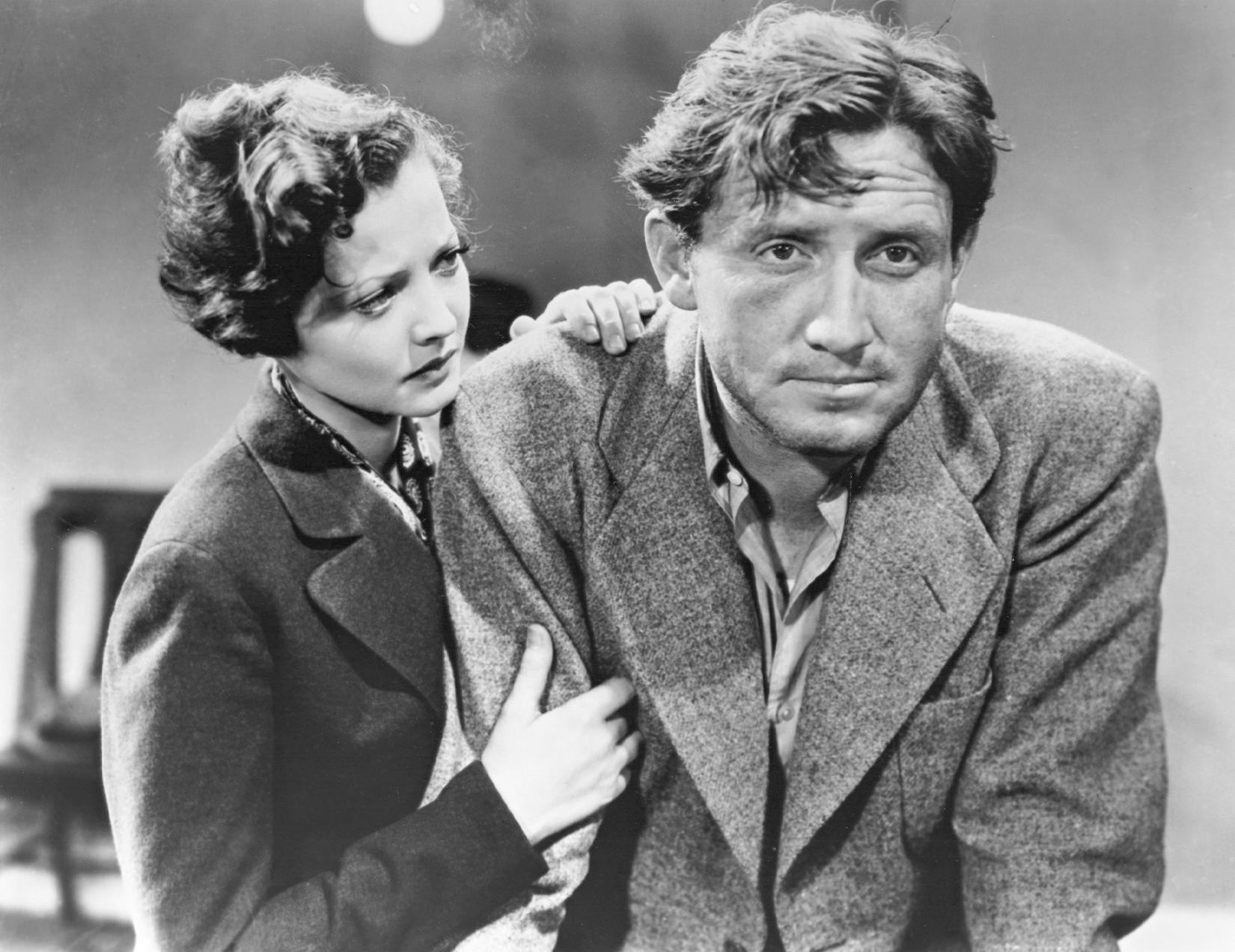
Spencer Tracy turns in a gripping performance as Joe Wheeler, a man jailed for a crime he didn’t commit. Sylvia Sidney portrays his loyal girlfriend. The film also provides early roles for long-time character actors Walter Brennan and Ward Bond.

While it would be easy to dismiss Fury as a transitional film where Lang is learning how to deal with the restrictions of the Hollywood studio system, I find it has an unusual rawness and intensity. Lang must have seen something in it. Fury was his favorite film among the ones he directed in the U.S.

Fury
(1936; directed by Fritz Lang)
Warner Home Video (DVD)

Saturday, July 5 at 6:00 a.m. eastern on Turner Classic Movies

Double Trouble

Double Trouble

Reviews

The best film noir centers on fate. Characters are destined to commit a crime because they can’t escape their past. Or a fatal flaw keeps them from seeing the obvious truth, so the tension builds as we’re unable to warn the characters, as we might be able to do in real life.

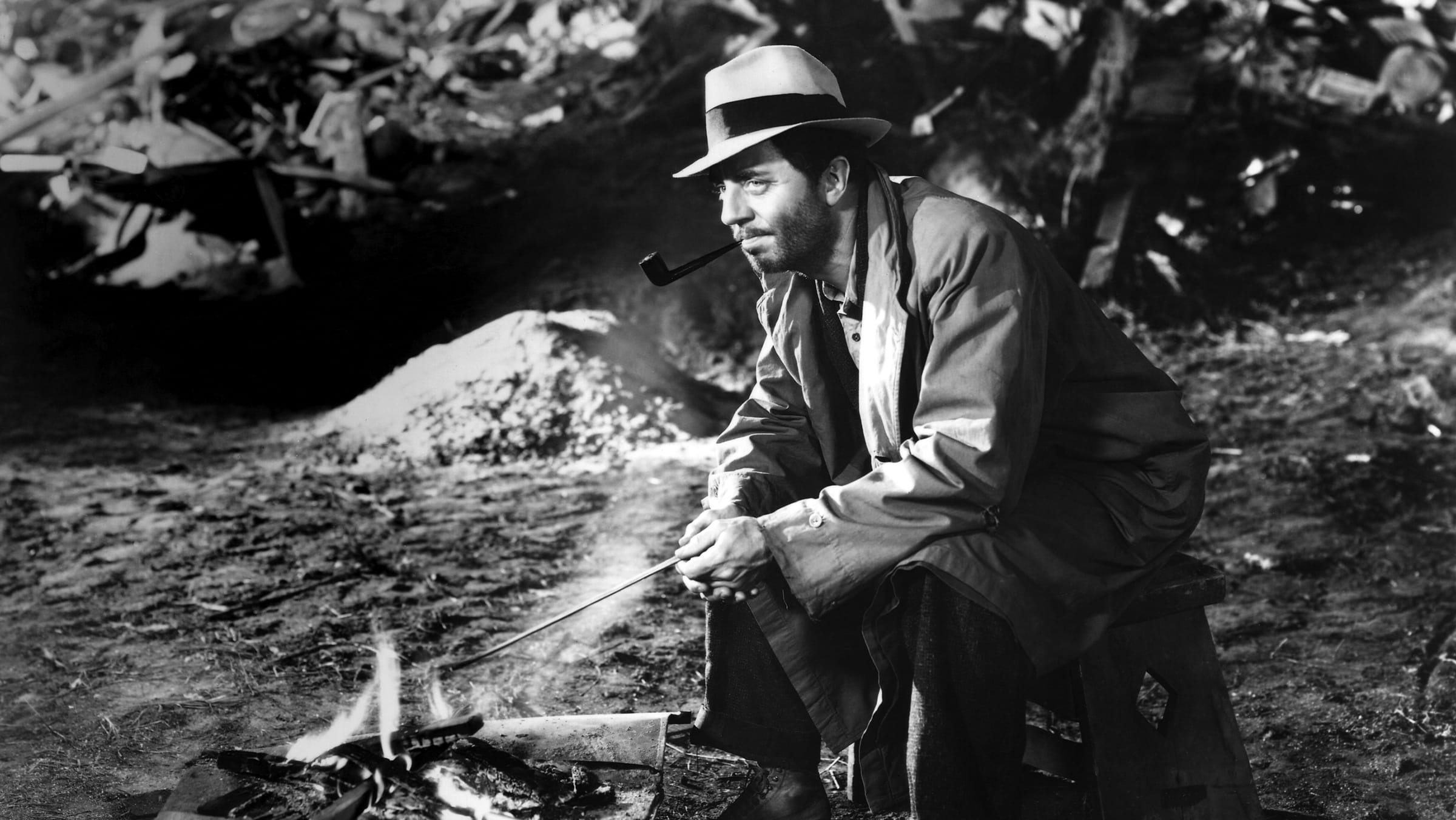
Double Indemnity (1944) is almost a textbook film noir. The voice over and flashbacks reinforce the inevitability of the outcome. We already know Walter Neff (played by Fred MacMurray) has committed a crime, has been shot, and will likely be caught. As we watch the flashbacks, we accept the inevitable outcome, knowing nothing can prevent him from being used by Phyllis Dietrichson (played by Barbara Stanwyck).

With the whodunit out of the way, we can sit back and enjoy the unfolding story. Walter’s self assurance and mocking humor are seen for what they are — a cover for a weak character that’s no match for Phyllis’ cunning manipulation.

Double Indemnity was only the third film that Billy Wilder had directed, though he had already made his mark in Hollywood as a writer for such classic films as Midnight (1939), Ninotchka (1939), Hold Back the Dawn (1941), and Ball of Fire (1941).

The movie is based on a James M. Cain story which first appeared in 1935 in Liberty Magazine. Cain was not available to work on the screenplay, so Wilder called in novelist Raymond Chandler, who is best known today for creating the character of private detective Philip Marlowe.

Chandler had a great ear for dialogue. He also knew how to successfully extend a metaphor far beyond what anyone thought was humanly possible. Wilder knew how to take a complicated plot and make it completely understandable when transferred to the screen. He was also a master of restrained cynicism. Together they wrote one of the best scripts of the 1940s.

Here’s a small sample:

Phyllis: Mr. Neff, why don’t you drop by tomorrow evening about eight-thirty. He’ll be in then.
Walter: Who?
Phyllis: My husband. You were anxious to talk to him weren’t you?
Walter: Sure, only I’m getting over it a little. If you know what I mean.
Phyllis: There’s a speed limit in this state, Mr. Neff. Forty-five miles an hour.
Walter: How fast was I going, officer?
Phyllis: I’d say about ninety.
Walter: Suppose you get down off your motorcycle and give me a ticket.
Phyllis: Suppose I let you off with a warning this time.
Walter: Suppose it doesn’t take.
Phyllis: Suppose I have to whack you over the knuckles.
Walter: Suppose I bust out crying and put my head on your shoulder.
Phyllis: Suppose you try putting it on my husband’s shoulder.
Walter: That tears it.

With Double Indemnity, everything works together in lockstep — the script, the direction, the acting, the lighting, everything. Elements from this movie are copied and adapted every decade, as new directors strive to rekindle the magic. None have surpassed it. And why bother? When we have the original to enjoy and cherish.

Double Indemnity
(1944; directed by Billy Wilder)
Universal Studios (Blu-ray and DVD)

Saturday, June 28 at 8:00 p.m. eastern on Turner Classic Movies

A Cut Above

A Cut Above

Reviews

Mention the topic of foreign films to some people, and you may elicit a wince or frown. They think of hard-to-decipher films such as Bergman’s Persona (1966), austere films such as Dreyer’s Gertrud (1964), or confrontational films such as Fellini’s Satyricon (1969). Add in the difficulty of reading the subtitles, and you don’t have to travel far to find film fans who avoid anything foreign.

Fortunately, there are many foreign language films that are eminently approachable. They’re warm, upbeat, and easily digested. And truth be told, the approachable ones are often as good as the more demanding ones. In my opinion, Fellini’s Amarcord (1973) is as fine as (1963). But why choose between them, when you can savor both?

This brings us to Cinema Paradiso (1989). You would have to be hardhearted not to be touched emotionally by this film, yet it’s much more than a warmhearted story. It’s nostalgic not just for a way of life that had disappeared, but also for a style of filmmaking that had grown out-of-style. Ennio Morricone’s excellent musical score intensifies the experience, as it strikes the right mood in just the right places. Not surprisingly, Cinema Paradiso won the 1990 Oscar for Best Foreign Language Film.

As good as the 124-minute theatrical release is, the 174-minute re-edited version is even better. You’ll have to rent or purchase the DVD to see the longer cut, which is more complete than the original 155-minute Italian release of the film. While all three versions are centered on the relationship between a young fatherless boy and a solitary movie projectionist, the newer version spends more time with the boy as an adult as he searches for Elena, his lost love.

Given the 124-minute running time listed on the TCM website, it looks like HTCM will be showing the theatrical version. Don’t worry about not seeing the longer version first, as the theatrical version stands up well on its own.

Cinema Paradiso
(1989; directed by Giuseppe Tornatore)
Miramax (Blu-ray and DVD)

Thursday, June 5 at 8:00 p.m. eastern on Turner Classic Movies

Taking a Chance

Taking a Chance

Reviews

Winchester ’73 (1950) is an important film for many reasons. It’s the first in a string of five top-notch westerns made over a five-year period that were directed by Anthony Mann and star James Stewart. The other four are Bend of the River (1952), The Naked Spur (1953), The Far Country (1955), and The Man from Laramie (1955).

You could argue that Winchester ’73 is the first modern western. It brings the flawed protagonist from the film noirs over to the westerns. Mann had already made a name for himself with his skillful direction of tough-guy psychological dramas, including T-Men (1947), Raw Deal (1948), and Side Street (1949). By 1950, he was well prepared to reinvigorate the western genre by giving it a darker, more anguished hero.

The success of Winchester ’73 is largely responsible for the rebirth of the genre in the 1950s, and its tone would lead to other revisionist westerns, such as John Ford’s The Searchers (1956) and Sam Peckinpah’s The Wild Bunch (1969). It isn’t fair, however, to say there were no dark westerns prior to 1950. Howard Hawks’ Red River (1948) points in this direction, though the John Wayne character isn’t the protagonist of that film.

Winchester ’73 is also notable for its contribution to the break up of the studio system. Mann couldn’t afford to pay Stewart his usual salary, so Stewart agreed to take a percentage of the profits. That turned out to be a smart move, because Winchester ’73 went on to gross $4.5 million in the U.S. That encouraged similar deals between other actors and production companies, and this alternative method of compensation broke the studios’ control in determining which movies actors would appear in and how much they would be paid.

Stewart was a big star at the time (Harvey was released that same year), though he hadn’t appeared in a western since Destry Rides Again (1939). He was taking a risk, as was Mann, in making a moody western. The public may not have accepted the usually upbeat Stewart as having deep unresolved psychological issues. Obviously, the public was able to handle the complexity, and this type of role proved to be a creative shot in the arm for Stewart, who would go on to play brooding roles in the other Mann-Stewart westerns, as well as Hitchcock’s Rear Window (1954) and Vertigo (1958).

Winchester ’73
(1950; directed by Anthony Mann)
Universal Studios (DVD)

Wednesday, May 28 at 1:00 a.m. eastern (late Tues. night) on Turner Classic Movies

Richly Rewarding

Richly Rewarding

Reviews

Sergeant York (1941) poses a problem for film scholars. Immensely popular at the time of its release, the movie doesn’t quite fit into director Howard Hawks’ canon. Hawks didn’t have much leeway with the story, which was based on the true-life events of the best known and highest decorated hero of World War I. Released less than six months before the Pearl Harbor attack, Sergeant York addresses the mixed feelings in the U.S. about entering World War II.

One issue for some film scholars, who sometimes cite this as one of Hawks’ least successful efforts, is the fact that its themes are so clearly telegraphed to the audience. Even if you accept the notion that it isn’t a true-blue Hawks film, there was little else Hawks could do, given that his audience already knew York’s story so well. The element of surprise is gone, and any drama that might arise from York’s momentous decision is muted by the inevitable outcome. As a result, the film feels more conventional than Hawks’ other films, which delight us in their unexpected twists and turns, as the characters and story move in and out of Hollywood norms.

While we gain a better understanding of Hawks by seeing the common threads woven throughout his films, it can be equally instructive to see how he handles material that’s somewhat at odds with his usual style of working. Sergeant York isn’t an archetypal Hawks film. It is, however, richly rewarding when judged on its own merits.

The first part of the movie shows an economy of words and gestures that speak volumes about the inner lives of the isolated mountain community. The disparity between the rural and battlefield portions of the film was noted in contemporary reviews. Here’s what Bosley Crowther had to say in his July 3, 1941 review from The New York Times:

That is all there is to the story, but in the telling of it — of the first part, anyhow — the picture has all the flavor of true Americana, the blunt and homely humor of backwoodsmen and the raw integrity peculiar to simple folk. This phase of the picture is rich. The manner in which York is persuaded to join the fighting forces and the scenes of actual combat betray an unfortunate artificiality, however — in the battle scenes, especially; and the overly glamorized ending, in which York returns to a spotless little farm, jars sharply with the naturalness which has gone before. The suggestion of deliberate propaganda is readily detected here.

Even though Hawks was constrained by the characters and plot (Alvin York was still alive at the time), this is very much a Hawks film. York’s Tennessee mountain community parallels the isolated groups in Only Angels Have Wings (1939), His Girl Friday (1940), Ball of Fire (1941), and The Thing from Another World (1951). Religious principle versus patriotic duty becomes the Hawksian conflict that potentially separates York from his community and ultimately allows him to re-assert his individuality within the group.

Sergeant York
(1941; directed by Howard Hawks)
Warner Home Video (DVD)

Saturday, May 24 at 9:45 a.m. eastern on Turner Classic Movies

Lasting Impression

Lasting Impression

Reviews

What’s better than a chilling ghost story? How about four ghost stories rolled into one? Kwaidan (1965) is based on a collection of Japanese ghost stories published in 1904. The author was Lafcadio Hearn, a folklorist of Greek-Irish ancestry, who based his stories on translations of old Japanese texts.

Sixty years later, Japanese director Masaki Kobayashi transformed four of those stories into one of the most beautiful ghost movies ever made. Highly stylized with lavish sets and lighting effects that resemble surreal paintings as much as realistic settings, the movie is less frightening than dreamlike, with images that seep deep into your consciousness. Speak with anyone who has seen it, and you’ll discover it makes a strong impression. It’s fair to say the recent renaissance in Japanese horror films — sometimes referred to J-horror — can be traced directly back to this movie (and, to a lesser extent, to Ugetsu).

In each of the four stories, humans come face to face with the supernatural in the guise of materialized ghosts. How the humans react will determine whether they’ll be harmed by the experience. In the first story, “The Black Hair,” a man leaves his loving wife for a rich woman, realizes his mistake, and returns to find his wife, who is strangely unchanged. The second story, titled “The Woman of the Snow,” centers on a promise made by a woodcutter that he won’t reveal the phantom who saved his life with her icy breath. In the third story, “Hoichi, the Earless,” a blind musician tries to protect himself from the spirits of two warrior clans. His protection is to paint prayers all over his body. And in the last tale, titled “In a Cup of Tea,” a warrior sees the reflection of someone else when he gazes into his tea. Later, that same figure challenges him to a duel.

The DVD includes only the movie and theatrical trailer. Given that the film runs 161 minutes, I’m happy the available space on the disc is devoted mostly to the movie. Anamorphically enhanced for widescreen televisions, the transfer is a wonder to behold. Kwaidan leaves a lasting impression — but only if you’re able to see it in a richly detailed print.

Kwaidan
(1965; directed by Masaki Kobayashi)
The Criterion Collection (Blu-ray and DVD)

Thursday, May 15 at 1:15 a.m. eastern (late Wed. night) on Turner Classic Movies

Classic Comedy Dialogue

Classic Comedy Dialogue

Reviews

Marx Brothers fans usually fall into two camps: those who think Duck Soup (1933) is their best film, and those who think A Night at the Opera (1935) is their best film. The strongest argument in favor of A Night at the Opera is the stateroom scene. It’s the funniest sequence the Marx Brothers ever created. I’m in the Duck Soup camp. I think the slow portions of A Night at the Opera tend to drag it down a bit. And while no single sequence in Duck Soup quite matches the stateroom scene, it’s more consistently entertaining.

Much of the credit has to go to Duck Soup’s writers. Bert Kalmar and Harry Ruby worked together on the story, and Arthur Sheekman and Nat Perrin provided additional dialogue. It also didn’t hurt to have Groucho (Rufus T. Firefly), Chico (Chicolini), and Margaret Dumont (Mrs. Teasdale) to deliver the lines. Here are some examples:

Rufus T. Firefly: Not that I care, but where is your husband?
Mrs. Teasdale: Why, he’s dead.
Rufus T. Firefly: I bet he’s just using that as an excuse.
Mrs. Teasdale: I was with him to the very end.
Rufus T. Firefly: No wonder he passed away.
Mrs. Teasdale: I held him in my arms and kissed him.
Rufus T. Firefly: Oh, I see, then it was murder. Will you marry me? Did he leave you any money? Answer the second question first.

Mrs. Teasdale: Notables from every country are gathered here in your honor. This is a gala day for you.
Rufus T. Firefly: Well, a gal a day is enough for me. I don’t think I could handle any more.

Rufus T. Firefly: Now, what is it that has four pairs of pants, lives in Philadelphia, and it never rains but it pours?
Chicolini: Atsa good one. I give you three guesses.
Rufus T. Firefly: Now let me see. Has four pair of pants, lives in Philadelphia… Is it male or female?
Chicolini: No, I no think so.
Rufus T. Firefly: Is he dead?
Chicolini: Who?
Rufus T. Firefly: I don’t know. I give up.
Chicolini: I give up, too.

Prosecutor: Chicolini, when were you born?
Chicolini: I don’t-a remember. I was just a little baby.

Prosecutor: Something must be done! War would mean a prohibitive increase in our taxes.
Chicolini: Hey, I got an uncle lives in Taxes.
Prosecutor: No, I’m talking about taxes — money, dollars!
Chicolini: Dollars! There’s-a where my uncle lives! Dollars, Taxes!

Duck Soup benefits by having a first-class director at the helm. Leo McCarey had directed many of the best Laurel and Hardy silent comedies. His previous sound comedies, especially Let’s Go Native (1930) and The Kid from Spain (1932), show an inventive and improvisational style that would blend well with the Marx Brothers. Unfortunately, Duck Soup was a flop at the box office. As a result, it was their last film at Paramount. MGM gave them another chance, though their freewheeling approach would prove to be at odds with the MGM factory system. Their comedies following A Night at the Opera and A Day at the Races are pale imitations of their earlier classic films.

Duck Soup
(1933; directed by Leo McCarey)
Universal Pictures Home Entertainment (Blu-ray and DVD)

Saturday, May 10 at 12:15 a.m. eastern (late Fri. night) on Turner Classic Movies

Uncompromised Dedication

Uncompromised Dedication

Reviews

If the historical figure at the center of The Passion of Joan of Arc (1928) could be said to embody uncompromised dedication, the same could be said of the film’s director, Carl Theodore Dreyer. Consisting entirely of close-ups and medium shots, with only the sparest of backgrounds, Dreyer relentlessly focuses in on the characters and conflicts. It may be the closest we’ve ever come to a pure narrative cinema. As you might expect, reactions to this pared-down style vary. Most film historians view this as one of the greatest silent films ever made. I wholeheartedly agree. Others see it as too extreme. You’ll have decide for yourself.

Much of the emotional appeal of this film can be attributed to the remarkable performance by Maria Falconetti as Jeanne d’Arc. It is often cited as the finest performance ever committed to celluloid. In a 1965 interview with Cahiers du Cinéma, Dreyer explains how he chose Falconetti for the part:

I went to see her one afternoon and we spoke together for an hour or two. I had seen her at the theatre. A little boulevard theatre whose name I have forgotten. She was playing there in a light, modern comedy and she was very elegant in it, a bit giddy, but charming. She didn’t conquer me at once and I didn’t have confidence in her immediately. I simply asked her if I could come to see her the next day. And during that visit, we talked. That is when I sensed that there was something in her to which one could make an appeal. Something that she could give; something, therefore that I could take. For, behind the make-up, the pose, behind that modern and ravishing appearance, there was something. There was a soul behind that facade. If I could see her remove the facade it would suffice me. So I told her that I would very much like, starting the next day, to do a screen test with her. ‘But without make-up,’ I added, ‘with your face completely naked.’ She came, therefore, the next day ready and willing. She had taken off her make-up, we made the tests, and I found on her face exactly what I had been seeking for Joan of Arc: a rustic woman, very sincere, who was also a woman who had suffered. But even so, this discovery did not represent a total surprise for me, for, from our first meeting, this woman was very frank and, always, very surprising.

Dreyer based the script on the original trial transcripts from the year 1431, as well as a novel by Joseph Delteil. The film took a year and a half to complete, in part because Dreyer insisted that the costumes, church, courtyard, gestures, and other aspects of the production were as authentic as possible. The whole construction was painted pink, rather than white, to give it a gray tint against the sky.

According to Ebbe Neergaard’s book Carl Dreyer: A Film Director’s Work, Dreyer demanded absolute silence and banished anyone who wasn’t needed whenever Falconetti had an important scene. Neergaard writes, “She was, as it were, activated into expressing what Dreyer could not show her, for it was something that could only be expressed in action, not speech, and she alone could do it, so she had to help him. And she realized that this could only be done if she dropped all intellectual inhibitions and let her feelings have free access from her subconscious to her facial expression.”

The Passion of Joan of Arc
(1928; directed by Carl Theodore Dreyer)
Criterion Collection (Blu-ray and DVD)

Thursday, May 1 at 3:00 a.m. eastern (late Wed. night) on Turner Classic Movies